
Geometry: Plane Shapes & Their Properties – JSS1 Mathematics Lesson Note (Third Term)
Download Lesson NoteLesson note at a glance
- Subject
- Mathematics
- Class
- JSS1
- Term
- Third Term
- Topic
- Geometry: Plane Shapes & Their Properties
- Order
- Topic 2 of 7 this term
- Reading time
- 4 min
Plane shapes are flat, two-dimensional shapes, and they can be regular or irregular. Triangles have three straight sides and three angles. Quadrilaterals have four straight sides, four vertices and interior angles that add up to 360°. This note describes the types of triangles and quadrilaterals and the properties of each.
Behavioural objectives
By the end of the lesson, students should be able to:
- state the two types of plane shapes;
- define a triangle and name its types;
- state the properties of equilateral, isosceles, scalene and right-angled triangles;
- define a quadrilateral and state its properties;
- describe the rectangle, rhombus, square, parallelogram, trapezium and kite;
- explain why a square is also a rectangle.
What are plane shapes?
There are two types of plane shapes: regular and irregular shapes.
What is a triangle?
A triangle is a three-sided plane shape with three angles.
Types and properties of triangles
Equilateral triangles
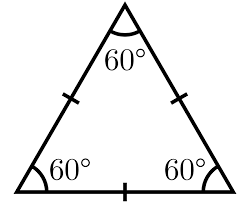
Triangles with all three sides equal in length and all three angles equal in magnitude are called equilateral triangles. The angles in a triangle add up to 180°, and the three angles of an equilateral triangle are the same size, so each angle is 60°.

Isosceles triangles
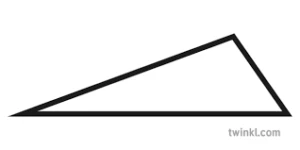
Isosceles triangles are triangles with two sides equal in length and two angles equal in magnitude.

Scalene triangles
A scalene triangle has no sides equal in length and no angles equal in magnitude.
Right-angled triangles
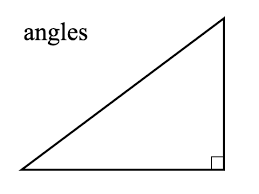
Right-angled triangles are triangles with one of their angles equal to 90° (that is, a right angle).
What is a quadrilateral?
“Quadrilateral” means “four sides” (quad means four, lateral means side). A quadrilateral has four sides. It is 2-dimensional (a flat shape), closed (the lines join up), and has straight sides. Quadrilaterals are four-sided polygons.
Types of quadrilaterals
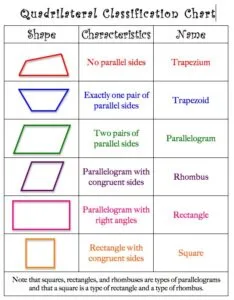
There are special types of quadrilaterals:
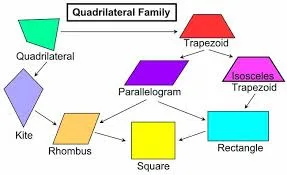
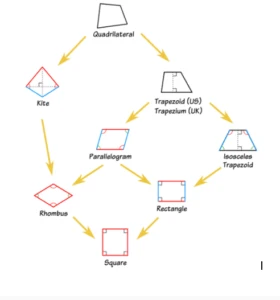
Some types are also included in the definition of other types. For example, a square, a rhombus and a rectangle are also parallelograms.
Properties of quadrilaterals
- Four sides.
- Four vertices (corners).
- Interior angles sum to 360°.
- Exterior angles sum to 360°.
Things to know
- Diagonals are line segments that join two opposite vertices (corners).
- Two sides are adjacent if they share a common vertex.
- Two angles are adjacent if they share a common side.
Rectangle
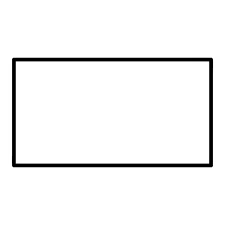
A rectangle is a closed, four-sided plane shape with four right angles (90°). Opposite sides are parallel and equal in length.
Rhombus
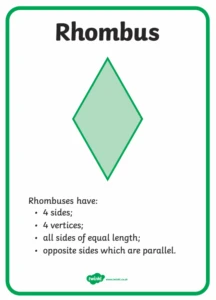
A rhombus is a quadrilateral with both pairs of opposite sides parallel and all sides the same length, that is, an equilateral parallelogram. Opposite angles are equal. A rhombus is sometimes called a rhomb, a diamond or a lozenge.
The diagonals (dashed lines in the second figure) meet in the middle at a right angle. In other words, they “bisect” (cut in half) each other at right angles.
Square
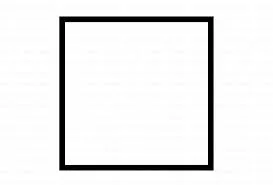
The term “square” can mean either a square number or a geometric figure. As a figure, it is a convex quadrilateral with sides of equal length that are positioned at right angles to each other, as illustrated above. In other words, a square is a regular polygon with four sides.
Parallelogram
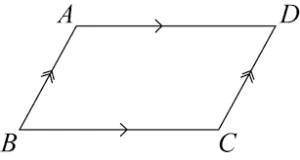
A parallelogram has opposite sides parallel and equal in length. Also, opposite angles are equal (angles “a” are the same, and angles “b” are the same).
Note: Squares, rectangles and rhombuses are all types of parallelograms.
Trapezium

Isosceles trapezium
Kite

A kite has two pairs of sides. Each pair is made up of adjacent sides (they meet) that are equal in length. The angles are equal where the pairs meet. The diagonals (dashed lines) meet at a right angle, and one of the diagonals bisects (cuts equally in half) the other.
A rhombus is a special case of the kite.
What are irregular quadrilaterals?
The only regular quadrilateral is a square. All other quadrilaterals are irregular.
Why is a square also a rectangle?
Quadrilateral definitions are inclusive. For example, a square is also a rectangle, so we include the square in the definition of a rectangle. We do not say, “Having all 90° angles makes it a rectangle, except when all sides are equal, then it is a square.”
This may seem odd, because in daily life we think of a square as not being a rectangle. In mathematics, it is one.
Using the chart below, you can answer questions such as:
- Is a square a type of rectangle? (Yes)
- Is a rectangle a type of kite? (No)
Evaluation
- What is a triangle?
- What is the size of each angle in an equilateral triangle? Give a reason.
- State the four properties of a quadrilateral.
- Describe how the diagonals of a rhombus meet.
- Is a square a type of rectangle? Explain your answer.
Assignment
- Name the four types of triangles and state one property of each.
- Explain why a square, a rectangle and a rhombus are all parallelograms.
This term's Mathematics topics
JSS1 Third Term · 7 topics
- Simple Equation
- Geometry: Plane Shapes & Their Properties
- Area & Perimeter of Plane Shapes
- Three Dimensional Shapes
- Statistics: Mean, Median & Mode
- Identification & Properties of Angles
- Construction
Third Term Mathematics Lesson Notes for Other Topics
Numbers 1-250
Read the full lesson note.
Data Collection
Read the full lesson note.
Numbers 241-250
Read the full lesson note.
Numbers 231-240
Read the full lesson note.
Two-Dimensional Shapes
Read the full lesson note.

Numbers 221-230
Read the full lesson note.
Weight
Read the full lesson note.
Numbers 211-220
Read the full lesson note.
Length Measurement
Read the full lesson note.
Numbers 201-210
Read the full lesson note.
Money (Continued)
Read the full lesson note.
Numbers 190-200
Read the full lesson note.

Nigerian Currencies
Read the full lesson note.
Numbers 181-190
Read the full lesson note.
Subtraction
Read the full lesson note.
Lesson Notes for Other Classes

Basic 1 Lesson Note
The complete lesson note to guide your studies.

Basic 2 Lesson Note
The complete lesson note to guide your studies.

Basic 3 Lesson Note
The complete lesson note to guide your studies.

Basic 4 Lesson Note
The complete lesson note to guide your studies.

Basic 5 Lesson Note
The complete lesson note to guide your studies.

Basic 6 Lesson Note
The complete lesson note to guide your studies.

