
Week 2: Speech Work, Reading, Structure, Grammar, Writing, Dictation – Basic 4 English Lesson Note (First Term)
Download Lesson NoteTopic: Week 2: Speech Work, Reading,Structure, Grammar, Writing, Dictation
Lesson note at a glance
- Subject
- English Studies
- Class
- Basic 4
- Term
- First Term
- Topic
- Week 2: Speech Work, Reading, Structure, Grammar, Writing, Dictation
- Order
- Topic 2 of 9 this term
- Reading time
- 11 min
- TOPIC – PASSAGES BASED ON THE NARRATIVE OF REAL LIFE STORIES
LEARNING AREA
Choose one of the following stories –
- The Twins Who Reported His Dishonest Brother
- The Pupils Who Returned The Lost Money
- The Taxi Driver Who help The Blind Man To Cross The Road
PERFORMANCE OBJECTIVES
By the end of the lesson, the pupils should have attained the following objectives (cognitive, affective and psychomotor) and should be able to –
- read the passage on the true life stories.
- identify the new words and sentences structures in the passage.
- use them in sentences of their own.
- do oral comprehension on the passage read.
- identify the function of the link words.
ENTRY BEHAVIOUR
Reading an writing
INSTRUCTIONAL MATERIALS
The teacher will teach the lesson with the aid of:
- Course books
- Supplementary readers
- Pictures pupil’s stories
METHOD OF TEACHING – Choose a suitable and appropriate methods for the lessons.
Note – Irrespective of choosing methods of teaching, always introduce an activities that will arouse pupil’s interest or lead them to the lessons.
REFERENCE MATERIALS
- Scheme of Work
- 9 – Years Basic Education Curriculum
- Course Book
- All Relevant Material
- Online Information
CONTENT OF THE LESSON
Focus Points –
- Narration of a real life story for the main points.
- Building up points and linking them.
- Use of connectives to develop the idea of the points.
PRESENTATION
To deliver the lesson, the teacher adopts the following steps:
- To introduce the lesson, the teacher revises the previous lesson. Based on this, he/she asks the pupils some questions:
- Narrates the story in the class the language to be met in the passage.
- Identifies and discuss the main point in the story.
Pupil’s Activities – Discuss the main points of the life story and make up similar sentences to the ones in the story.
- Leads pupils to role – play the story.
Pupil’s Activities – Practice sentences structure provided in the story.
- Draws attention of pupils to use of linking words in the passage.
Pupil’s Activities – Discuss how the main ideas in the stories are developed and how linking words are used.
- Discusses the story using varied questions to test pupils comprehension.
Pupil’s Activities – Do moral oral or aural discussions based on the stories and go over the stories stressing specific points.
CONCLUSION
* To conclude the lesson for the week, the teacher revises the entire lesson and links it to the following week’s lesson.
* Next Lesson – English Studies (Primary 4)
LESSON EVALUATION
Pupils to:
- read the passage correctly.
- identify correctly the new words and sentences structure in their discussion and use them to make sentences of their own.
- identify the link words.
- TOPIC – DIALOGUE FURTHER PRACTICE IN EXCUSING, POSSIBILITY, OBLIGATION, PERMISSION, ETC.
PERFORMANCE OBJECTIVES
By the end of the lesson, most of the pupils should have attained the following objectives –
- use each of the modal auxiliaries in sentences in contextual situations as so to bring out their meaning.
- discuss their shades of meaning.
- reading passage or stories in which these are used, after oral practice and intonation.
- use some of the words in the stories to build up sentences.
ENTRY BEHAVIOUR
The pupils
INSTRUCTIONAL MATERIALS
The teacher will teach the lesson with the aid of:
- Any approved course book.
- Relevant (real objects)
METHOD OF TEACHING
Choose a suitable and appropriate methods for the lessons.
Note – Irrespective of choosing methods of teaching, always introduce an activities that will arouse pupil’s interest or lead them to the lessons.
REFERENCE MATERIALS
- Scheme of Work
- 6 – Years Basic Education Curriculum
- Course Book
- All Relevant Material
CONTENT OF THE LESSON
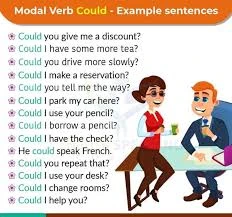
LESSON FOCUS
PRACTICE IN EXCUSING, POSSIBILITY AND OBLIGATIONS
- ‘Can’ meaning possible.
Examples:
- Can Segun wash his plates?
- Can I run.
- Can I take his textbook?
- Can Mr. Michael borrow his neighbour hoe and cutlass?
- ‘May’ implying possible permission.
Examples:
- May I borrow your books please?
- Father May correct the children in public.
- ‘Have to’ meaning obligations.
Example
- Mother must not be disobeyed.
- ‘Ought to’ meaning what is right.
Examples:
- Your ought to sweep you class.
PRACTICE DIALOGUE
Pupil’s Activities –
Ayomide – Can I tell you my secret? or please, permit me to tell you a secret.
Olamide – Yes, I am listening.
Or
Ayomide – Can I tell you something new?
Olamide: You may (or can) if you like.
Ayomide – Daddy has permitted me to go to the national stadium to watch that football match.
PRESENTATION
To deliver the lesson, the teacher adopts the following steps.
- To introduce the lesson, the teacher revises the previous lesson. Based on this, he/she asks the pupils some questions;
- Lists the modal auxiliaries – can, cannot, may, may not, have to, has to, don’t have to, ought to, ought not to, etc.
Pupil’s Activities – Make sentences with modal auxiliaries.
- Creates short stories around the family.
Pupil’s Activities – Work in short scene to practice the use of modal auxiliaries.
- Constructs a dialogue for the same purpose.
Pupil’s Activities – Practice the use of auxiliaries in the given stories.
- Teacher’s Activities – Make more sentences with modal auxiliaries.
CONCLUSION
- To conclude the lesson for the week, the teacher revises the entire lesson and links it to the following week’s lesson.
- Next Lesson –
LESSON EVALUATION
Ask pupils to:
- use each of the modal auxiliaries in sentences in contextual situations as so to bring out their meaning.
- discuss their shades of meaning.
- Read passage or stories in which these are used.
- use some of the words in the stories to build up sentences effectively.
- RECOMMENDED READING PASSAGE
LEARNING OBJECTIVES
By the end of the lesson, most of the pupils should have attained the following objectives –
- identify new and difficult words.
- read the passage.
- skim for the main points in passage.
- scan for the specific information.
- answer the questions in complete sentences.
ENTRY BEHAVIOR
The pupils can read and write.
INSTRUCTIONAL MATERIALS
The teacher will teach the lesson with the aid of:
- Course book
- Dictionary
- Pictures
METHOD OF TEACHING
Choose a suitable and appropriate methods for the lessons.
Note – Irrespective of choosing methods of teaching, always introduce an activities that will arouse pupil’s interest or lead them to the lessons.
REFERENCE MATERIALS
- Scheme of Work
- 9 – Years Basic Education Curriculum.
- Course Book
- All Relevant Material
- Online information
CONTENT OF THE LESSON
FOCUS LESSON
- New Words and their meaning
- Reading Comprehension – A reading passage selected from the course book based on regard and concern for interest of others.
D: Topic: READING TO FIND THE MAIN POINTS
Note – For reading focus, let pupils read the passage first.
PRESENTATION
To deliver the lesson, the teacher adopts the following steps.
- To introduce the lesson, the teacher revises the previous lesson. Based on this, he/she asks the pupils some questions.
- Teacher organizes pupils in groups or pairs depending on the size of the class.
- Teacher make list of new words or difficult words on the board.
- Teacher guides pupils as groups or pairs for find the meaning of each word using dictionary.
Pupil’s Activities – Find the meaning of the new words.
- Teacher uses the new and pupil’s responses to introduce the lesson.
Pupil’s Activities Pay attention to the lesson to the lesson introduction.
- Teacher allows groups or pairs reading before independently reading.
- Teacher reads and discussion the content of the passage.
Pupil’s Activities – Participate actively in the discussion.
- Teacher highlights the main points.
Pupil’s Activities – Read the passage to skim for the main points.
- Teacher distinguishes the theme and subject matter of the passage.
- Teacher summarizes the lesson on the board with using appropriate lesson evaluation and guides pupils to answer in a complete sentence.
Pupil’s Activities – Participate actively in the summary of the lesson by responding to questions in complete sentences and write as instructed.
CONCLUSION
To conclude the lesson for the week, the teacher revises the entire lesson and links it to the following week’s lesson.
LESSON EVALUATION
Teacher asks pupils to:
- read the passage correctly.
- skim for the main points.
- state the specific information in the passage.
- answers questions in complete sentences.
- TOPIC – FILL IN THE GAPS WITH WORDS
PERFORMANCE OBJECTIVES
By the end of the lesson, most of the pupils should have attained the following objectives-
- choose appropriate words from a given list.
- fill in the gaps in sentences to make the sentences meaningful.
ENTRY BEHAVIOURS
The pupils can reactions.
INSTRUCTIONAL MATERIALS
The teacher will teach the lesson with the aid of:
- Course book
- Passage from other
- Flash cards
METHOD OF TEACHING
Choose a suitable and appropriate methods for the lessons.
Note – Irrespective of choosing methods of teaching, always introduce an activities that will arouse pupil’s interest or lead them to the lessons.
REFERENCE MATERIALS
- Scheme of Work
- Years Basic Education Curriculum
- Course Book
- All Relevant Material
- Online Information-First Term Scheme of Work and Plan Lesson Notes for English Studies (Primary 4)
CONTENT OF THE LESSON
Short passages with blank spaces to be filled in with appropriate structural and lexical items
selected from a given list.
- Seun and Michael are good friends.
- They often play roughly. Seun _______ (tries/tried) to sit on a chair. Michael _______ (pull/pulled) the chair.
- Seun _______ (falls/fell) on the floor. Michael _______ (laughed/laughs) at him.
- Their teacher _______ (was/is) angry with Michael. He beat him.
PRESENTATION
To deliver the lesson, the teacher adopts the following steps:
- To introduce the lesson, the teacher revises the previous lesson. Based on this, he/she asks the pupils some questions:
- Writes a short passage leaving blank spaces in between.
Pupil’s Activities – Read the passage and get the meanings.
- Provides pupils with a list of words and expressions of which some are appropriate to fill in the blanks, guides and supervise pupil’s activities.
- TOPIC – RHYTHMIC POEM – SONG AND POEM
PERFORMANCE OBJECTIVES
By the end of the lesson, the pupils should have attained the following objectives: (cognitive, affective and psychomotor) and be able to:
- read and sing poems and songs as instruments of speech training;
- memorize and recite poems;
- sing and enjoy the song;
- discuss meaning and effect of poem; and
- identify the theme of poem.
ENTRY BEHAVIOR
The pupils are required to already have learned to sing.
INSTRUCTIONAL MATERIALS
The teacher will teach the lesson with the aid of:
- A short poem on a cardboard.
- Flash cards showing key words in the poem and songs.
- Simple poetry books.
- All relevant materials.
- Charts containing the song.
METHOD OF TEACHING – Choose a suitable and appropriate methods for the lessons.
Note – Irrespective of choosing methods of teaching, always introduce an activities that will arouse pupil’s interest or lead them to the lessons.
REFERENCE MATERIALS
- Scheme of Work
- 5 – Years Basic Education Curriculum
- Course Book
- All Relevant Material
- Online Information
CONTENT OF THE LESSON:
READ AND SING:
POEMS AND SONGS SONGS
Teacher’s/Pupil’s Activities – Choose appropriate songs and poems: Creating Music with Solfa Notation Values (Primary 3) or Children’s Rhymes I (Primary); and discuss the theme of poem (subject matter and meaning).
MEANING OF SONGS
SONGS AS ANOTHER USEFUL INSTRUMENT OF SPEECH TRAINING AND MEMORIZATION
PRESENTATION:
To deliver the lesson, the teacher adopts the following steps:
- To introduce the lesson, the teacher revises the previous lesson. Based on this, he/she asks the pupils some questions;
- Leads pupils to study the poem;
- Reads poems to pupils to arouse interest;
Pupil’s Activities – Listen to the teacher read the poem and sing the song.
- Lets pupils take turns reading the poem;
Pupil’s Activities – Take turns in reading the poem and singing the songs.
Reads the song as a poem;
- Lets the pupils read after him/her;
Pupil’s Activities – Read the poem in group chorally and individually.
Pupil’s Activities – Read the poem and sing the song to get details of the meaning.
- Encourages them to memorize the songs;
Pupil’s Activities – Memorize the poem and the song.
- Teaches the pupils to sing the song and enjoy it;
Pupil’s Activities – Learn to sing and enjoy the song.
CONCLUSION:
- To conclude the lesson for the week, the teacher revises the entire lesson and links it to the following week’s lesson.
LESSON EVALUATION
Pupils to:
- Read the song as a poem;
- memorize and recite it correctly;
- discuss the meaning and effect of the poem;
- identify the theme of the poem; and
- memorize the poem, song and enjoy it.
This term's English Studies topics
Basic 4 First Term · 9 topics
- Week 1: Speech Work, Reading, Structure, Grammar, Writing, Dictation
- Week 2: Speech Work, Reading, Structure, Grammar, Writing, Dictation
- Week 3: Speech Work, Reading, Structure, Grammar, Writing, Dictation
- Week 4: Speech Work, Reading, Structure, Grammar, Writing, Dictation
- Week 5: Speech Work, Reading, Structure, Grammar, Writing, Dictation
- Week 6: Speech Work, Reading, Structure, Grammar, Writing, Dictation
- Week 7: Speech Work, Reading, Structure, Grammar, Writing, Dictation
- Week 8: Speech Work, Reading, Structure, Grammar, Writing, Dictation
- Week 9: Speech Work, Reading, Structure, Grammar, Writing, Dictation
First Term English Studies Lesson Notes for Other Topics

Build Rhyming Words Family
Read the full lesson note.
Writing: Describe an Object
Read the full lesson note.
Vocabulary: New Words II
Read the full lesson note.
Structure: Articles "a" and "an"
Read the full lesson note.
Phonics: Rhyming Words & one Syllable Words
Read the full lesson note.
Writing - Writing of Alphabet (cont'd)
Read the full lesson note.

Vocabulary - New Words
Read the full lesson note.
Vocabulary: Objects in the Kitchen
Read the full lesson note.

Reading: Pictorial Reading
Read the full lesson note.
Structure: Action Verbs with Kitchen Objects
Read the full lesson note.
Writing: First Letters of Kitchen Objects
Read the full lesson note.
Phonics: Songs and Rhymes
Read the full lesson note.
Structure: Matching Words and Figures
Read the full lesson note.
Vocabulary: New Words III
Read the full lesson note.
Writing: 'Our House' & Two Letter Words
Read the full lesson note.
Lesson Notes for Other Classes

Basic 1 Lesson Note
The complete lesson note to guide your studies.

Basic 2 Lesson Note
The complete lesson note to guide your studies.

Basic 3 Lesson Note
The complete lesson note to guide your studies.

Basic 5 Lesson Note
The complete lesson note to guide your studies.

Basic 6 Lesson Note
The complete lesson note to guide your studies.

JSS1 Lesson Note
The complete lesson note to guide your studies.

