
Duties of the Nigerian Prison Service – Basic 2 Security Education Lesson Note (Third Term)
Download Lesson NoteLesson note at a glance
- Subject
- Security Education
- Class
- Basic 2
- Term
- Third Term
- Topic
- Duties of the Nigerian Prison Service
- Order
- Topic 5 of 8 this term
- Reading time
- 3 min
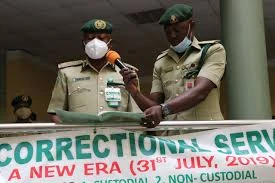
Learning Objectives: By the end of this lesson, pupils should be able to:
- highlight the duties of the Nigerian Prison Service
Lesson Content:
Review: What is the Nigerian Prison Service? The Nigerian Prison Service takes care of people who have been caught by police and sentenced by courts to stay in prison as punishment for their crimes.
Main Duties of the Nigerian Prison Service:
- Safe Custody of Prisoners:
- Keep criminals locked up safely so they cannot escape
- Guard prisoners 24 hours every day
- Make sure dangerous criminals don’t hurt other people
- Provide secure buildings and cells for prisoners
- Count prisoners regularly to make sure none are missing
- Prisoner Care and Welfare:
- Give prisoners food and clean water daily
- Provide medical care when prisoners are sick
- Give prisoners clean clothes and bedding
- Ensure prisoners have proper shelter
- Allow prisoners to have visitors (family members)
- Rehabilitation Programs:
- Teach prisoners useful skills like carpentry, tailoring, and farming
- Help prisoners learn to read and write
- Provide counseling to help prisoners change their behavior
- Organize religious services for prisoners
- Help prisoners prepare for life after prison
- Prison Security:
- Search prisoners and visitors for dangerous items
- Use cameras and guards to watch all prison areas
- Check that prison walls and gates are secure
- Prevent weapons and drugs from entering prison
- Control who can visit the prison
- Court Escort Services:
- Transport prisoners safely to court for their trials
- Guard prisoners during court sessions
- Bring prisoners back to prison after court
- Keep proper records of court dates and decisions
- Ensure prisoners attend all their court hearings
- Record Keeping:
- Write down information about each prisoner
- Keep records of prisoners’ crimes and sentences
- Track how long each prisoner should stay in prison
- Record visitors and prison activities
- Maintain files on prisoners’ behavior and progress
- Prison Administration:
- Manage the daily running of prisons
- Supervise prison officers and staff
- Plan prison activities and schedules
- Handle complaints from prisoners and families
- Ensure prisons follow government rules
- Public Safety:
- Protect the public by keeping criminals locked up
- Make sure dangerous people cannot harm innocent citizens
- Reduce crime by deterring others from committing crimes
- Work with police and courts to maintain law and order
Types of Prisoners They Handle:
- Convicted prisoners: People found guilty by court
- Awaiting trial prisoners: People waiting for their court cases
- Young offenders: Children who committed crimes
- Female prisoners: Women criminals (kept in separate prisons)
Prison Rules and Discipline:
- All prisoners must follow strict rules
- Prisoners wake up, eat, and sleep at specific times
- Prisoners must work and attend programs
- Good behavior can lead to early release
- Bad behavior leads to punishment
Prison Facilities:
- Cells: Where prisoners sleep
- Kitchens: Where prison food is cooked
- Workshops: Where prisoners learn skills
- Hospital: For sick prisoners
- Visiting rooms: Where families can visit
- Recreation areas: Where prisoners can exercise
Challenges Prison Officers Face:
- Dealing with dangerous and violent criminals
- Preventing prison riots and fights
- Stopping prisoners from escaping
- Managing overcrowded prisons
- Helping prisoners change their bad habits
How Prison Service Helps Society:
- Keeps dangerous people away from innocent citizens
- Gives criminals a chance to change and become better
- Reduces crime by showing consequences of breaking the law
- Protects families from harmful individuals
- Maintains peace and order in communities
Multiple Choice Exercise:
- The main duty of Nigerian Prison Service is to: a) Build houses for people b) Keep criminals safely locked up c) Sell food in markets d) Teach in schools
- Prison officers transport prisoners to: a) Shopping malls b) Restaurants c) Court for trials d) Playgrounds
- Rehabilitation programs help prisoners to: a) Escape from prison b) Learn useful skills and change their behavior c) Fight with other prisoners d) Sleep all day
- Prisons protect society by: a) Giving criminals money b) Keeping dangerous people away from innocent citizens c) Building more roads d) Teaching people how to steal
Answers: 1(b), 2(c), 3(b), 4(b)
This term's Security Education topics
Basic 2 Third Term · 8 topics
- Duties of Security Agencies: Police
- Duties of Security Agencies: FRSC and LASTMA
- Drug Abuse: Meaning and Types
- Duties of Nigerian Armed Forces: Army, Navy, and Air Force
- Duties of the Nigerian Prison Service
- Duties of Nigerian Security and Civil Defence Corps (NSCDC)
- Duties of Security Agencies: Independent Corrupt Practices Commission
- Duties of Security Agencies: Other Security Agents(KAI)
Third Term Security Education Lesson Notes for Other Topics
Relationship with Strangers
Read the full lesson note.
Eating Contaminated Food
Read the full lesson note.
Punishment for Food Fraud and Fake Drugs
Read the full lesson note.

Punishment for Bribery, Corruption, Embezzlement and Extortion
Read the full lesson note.
Punishment for False Pretense, Fraud and Burglary
Read the full lesson note.
Punishment for Advanced Fee Fraud, Money Laundering, Terrorism, and Forgery
Read the full lesson note.

Economic Crime
Read the full lesson note.

Meaning of Personal Security Management
Read the full lesson note.
Types of Crime
Read the full lesson note.

Punishment for Various Crime
Read the full lesson note.
Avoiding Criminal Behavior
Read the full lesson note.
Anti-Social Behavior
Read the full lesson note.
Violent Offenses
Read the full lesson note.
Solutions to Road Accidents
Read the full lesson note.
Sexual Offenses
Read the full lesson note.
Lesson Notes for Other Classes

Basic 1 Lesson Note
The complete lesson note to guide your studies.

Basic 3 Lesson Note
The complete lesson note to guide your studies.

Basic 4 Lesson Note
The complete lesson note to guide your studies.

Basic 5 Lesson Note
The complete lesson note to guide your studies.

Basic 6 Lesson Note
The complete lesson note to guide your studies.

JSS1 Lesson Note
The complete lesson note to guide your studies.

