
Game (Basketball: Identification and Bouncing) – Basic 2 Physical & Health Education Lesson Note (Second Term)
Download this term · ₦1,000Lesson note at a glance
- Subject
- Physical & Health Education
- Class
- Basic 2
- Term
- Second Term
- Topic
- Game (Basketball: Identification and Bouncing)
- Order
- Topic 2 of 8 this term
- Reading time
- 4 min
Learning Objectives
At the end of the lesson, pupils should be able to: i. Identify basketball ii. Perform the skill of bouncing in basketball
Introduction
This week we will focus on recognizing a basketball among other sports equipment and mastering the fundamental skill of bouncing (dribbling). These are essential first steps in becoming a basketball player.
Content
Part A: Identifying a Basketball
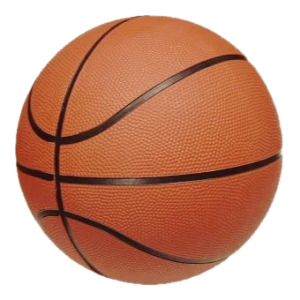
Physical Characteristics of a Basketball:
- Shape: Perfectly round like a sphere
- Color: Usually bright orange (sometimes brown or other colors)
- Surface: Has curved black lines forming a pattern across the entire ball
- Texture: Slightly rough surface with tiny bumps for better grip
- Size: Larger than a tennis ball, smaller than a soccer ball
- Weight: Not too heavy, not too light – comfortable to hold with two hands
- Material: Made of rubber or synthetic leather
How Basketball Differs from Other Balls:
- Soccer ball: Black and white panels, smoother surface
- Volleyball: Usually white with different panel design
- Tennis ball: Smaller, bright yellow or green, fuzzy surface
- Football: Oval-shaped, not round
Sounds a Basketball Makes:
- Makes a distinctive “thump-thump” sound when bounced
- Sounds different on different surfaces (gym floor vs. concrete)
- Has a satisfying bounce sound that other balls don’t make
Part B: Mastering Basketball Bouncing (Dribbling)
Understanding Bouncing Physics: When we bounce a basketball, we use force to push it down. The ball hits the ground and bounces back up because of its rubber material and the air inside it.
Step-by-Step Bouncing Technique:
- Starting Position:
- Stand with feet shoulder-width apart
- Hold the ball with both hands at chest level
- Keep your back straight and head up
- Bend your knees slightly for balance
- The Bounce Motion:
- Use your dominant hand (right if right-handed, left if left-handed)
- Place your hand on top of the ball
- Use your fingertips and palm, not just fingertips
- Push the ball down firmly toward the ground
- Don’t slap the ball – push it smoothly
- Controlling the Return:
- As the ball bounces back up, catch it with your hand
- Don’t grab it – let it come back to your palm
- Immediately push it down again
- Create a steady rhythm: push-catch-push-catch
- Advanced Bouncing Techniques:
Stationary Bouncing:
- Bounce while standing in one place
- Focus on consistent height (waist level)
- Count bounces to build rhythm
- Practice with eyes closed to develop feel
Walking While Bouncing:
- Start bouncing in place
- Take slow steps forward while continuing to bounce
- Keep the ball slightly in front of you
- Maintain steady bouncing rhythm while moving
Alternating Hands:
- Start with dominant hand
- After 10 bounces, switch to other hand
- Eventually bounce back and forth between hands
- This develops both sides of your body equally
Different Bounce Heights:
- High bounce: Push harder, ball goes up to chest level
- Low bounce: Gentle push, ball stays near knee level
- Medium bounce: Normal push, ball bounces to waist level
Common Bouncing Mistakes and How to Fix Them:
- Ball goes too far away: Keep the ball closer to your body
- Can’t catch the ball: Start with slower, gentler bounces
- Ball doesn’t bounce high enough: Push with more force
- Ball bounces too high: Use gentler force
- Looking at the ball: Practice looking ahead while bouncing
Benefits of Good Bouncing Skills:
- Develops hand-eye coordination
- Builds finger and wrist strength
- Improves balance and body control
- Teaches rhythm and timing
- Prepares for advanced basketball skills
- Increases confidence with the ball
Practice Tips for Better Bouncing:
- Start with just 5 bounces, then increase gradually
- Practice every day for short periods (5-10 minutes)
- Use both hands equally
- Practice on different surfaces when safe
- Count bounces to stay focused
- Make it fun with bouncing games
Activities
- Basketball identification game using various sports balls
- Individual stationary bouncing practice
- Bouncing while walking in straight lines
- Partner bouncing games and challenges
- Bouncing relay races
- Creative bouncing patterns and rhythms
- Group activities testing ball identification skills
Multiple Choice Exercise
- A basketball is usually: a) Very small b) Medium sized and orange c) Very big
- When bouncing a basketball, we use our: a) Feet b) Head c) Hands
- Bouncing helps us to: a) Control the ball b) Break the ball c) Hide the ball
- We should bounce the ball: a) Very high always b) With control c) Very low always
- Basketball has lines on it that look like: a) Squares b) Circles c) Curved lines
Answers: 1(b), 2(c), 3(a), 4(b), 5(c)
This term's Physical & Health Education topics
Basic 2 Second Term · 8 topics
Get Physical & Health Education as PDF and Word
Every week of Basic 2 Physical & Health Education, Second Term, formatted and ready to print. Ad-free, and the copy lock comes off.
Get this term Card, bank transfer, USSD or OPay
Basic 2 Physical & Health Education Lesson Notes for Other Topics

Game (Basketball)
Read the full lesson note.
Game (Basketball - Advanced Bouncing)
Read the full lesson note.
Game (Imitation Of Movements And Sounds)
Read the full lesson note.
Safety In Basketball
Read the full lesson note.
Swimming (Introduction And Skills)
Read the full lesson note.
Safety Rules In Swimming
Read the full lesson note.
Swimming (Strokes And Techniques)
Read the full lesson note.
Movement Of The Body
Read the full lesson note.

Movement Of The Body: Matching, Jogging & Galloping
Read the full lesson note.
Imitation
Read the full lesson note.
Movement - Galloping, Skipping & Squatting
Read the full lesson note.
Safety Rules In Movement
Read the full lesson note.
Athletics
Read the full lesson note.
Athletics: Long Jump
Read the full lesson note.
Safety Rules In Athletics
Read the full lesson note.
Lesson Notes for Other Classes
Basic 1 Lesson Note
The complete lesson note to guide your studies.

Basic 3 Lesson Note
The complete lesson note to guide your studies.

Basic 4 Lesson Note
The complete lesson note to guide your studies.

Basic 5 Lesson Note
The complete lesson note to guide your studies.
Basic 6 Lesson Note
The complete lesson note to guide your studies.
