
Time-Clock Reading Basic 2 Mathematics Lesson Note
Download Lesson NoteTopic: Time-Clock Reading
Learning Objectives
By the end of this week, pupils should be able to:
- Count and identify numbers from 470-490 and order numbers 1-490
- Skip count in 2s, 3s, and 10s
- Write numbers 470-490 in numerals and words
- Discuss time and its usefulness
- Identify hour, minute, and second hands on a clock
- Read time to the hour and half-hour using analogue and digital clocks
- Mention the importance of time
- Apply time concepts to daily activities
Lesson Content
Day 1: Number Work (470-490)
New Number Range:
- Count from 470-490: 470, 471, 472, 473… 490
- Order numbers from 1-490
- Write numbers clearly: 485 = four hundred and eighty-five
- Skip counting practice in 2s, 3s, and 10s
Day 2: Introduction to Time
What is Time? Time tells us when things happen. It helps us organize our day and know when to do different activities.
Why is Time Important?
- Know when to wake up for school
- Know when classes start and end
- Know when to eat meals
- Know when to go to bed
- Plan activities and events
Time in Daily Life:
- Morning, afternoon, evening, night
- School time, play time, sleep time
- Today, yesterday, tomorrow
Day 3: Parts of a Clock
Analogue Clock: A round clock with hands that move.
Parts of an Analogue Clock:
- Clock face: The round part with numbers
- Numbers: 1, 2, 3, 4, 5, 6, 7, 8, 9, 10, 11, 12
- Hour hand: Short, thick hand (shows hours)
- Minute hand: Long, thin hand (shows minutes)
- Second hand: Thinnest hand (shows seconds) – moves fastest
Digital Clock: Shows time in numbers like 3:00 or 7:30
Day 4: Reading Time – Hours and Half Hours
Reading Hours (O’clock):
- When the minute hand points to 12
- The hour hand points to the hour
- Examples: 3:00 (3 o’clock), 7:00 (7 o’clock)
Reading Half Hours:
- When the minute hand points to 6
- The hour hand is halfway between two numbers
- Examples: 3:30 (half past 3), 7:30 (half past 7)
Time Expressions:
- O’clock: Exactly on the hour (2:00)
- Half past: 30 minutes after the hour (2:30)
Day 5: Daily Time Activities
Daily Schedule: Connect time to daily activities:
- 6:00 AM – Wake up
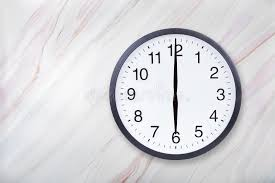
- 7:00 AM – Eat breakfast
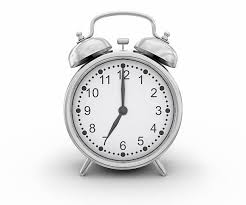
- 8:00 AM – Go to school
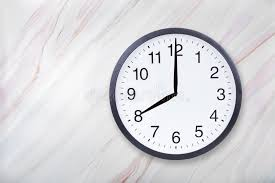
- 12:00 PM – Lunch time
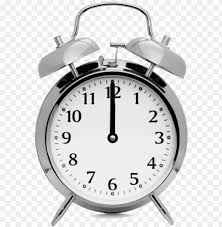
- 3:00 PM – School ends
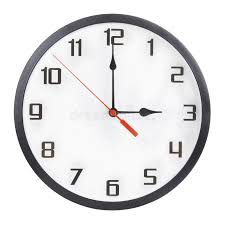
- 6:00 PM – Dinner
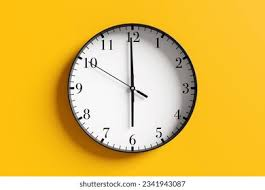
- 8:00 PM – Bedtime
AM and PM:
- AM: Morning time (12:00 midnight to 12:00 noon)
- PM: Afternoon/Evening time (12:00 noon to 12:00 midnight)
Examples in Class
Clock Reading Examples:
Hour Examples:
- Hour hand on 5, minute hand on 12 = 5:00 (5 o’clock)
- Hour hand on 9, minute hand on 12 = 9:00 (9 o’clock)
Half Hour Examples:
- Hour hand between 3 and 4, minute hand on 6 = 3:30 (half past 3)
- Hour hand between 8 and 9, minute hand on 6 = 8:30 (half past 8)
Daily Activity Examples:
“We eat lunch at 12:30 (half past 12)” “School starts at 8:00 (8 o’clock)” “We go home at 3:30 (half past 3)”
Exercises
Exercise 1: Number Work
Write in words:
- 475 = _______________
- 482 = _______________
- 489 = _______________
Skip count: 4. 10s: 10, 20, 30, ___, 50, ___, 70 5. 2s: 2, 4, 6, ___, 10, ___, 14
Exercise 2: Clock Parts
Label the parts of a clock:
- The short hand is called the _______ hand
- The long hand is called the _______ hand
- The fastest moving hand is the _______ hand
- The numbers go from 1 to _______
Exercise 3: Reading O’Clock Times
What time is shown? (Draw simple clock faces or describe)
- Hour hand on 4, minute hand on 12 = :
- Hour hand on 7, minute hand on 12 = :
- Hour hand on 2, minute hand on 12 = :
Exercise 4: Reading Half Past Times
What time is shown?
- Hour hand between 6 and 7, minute hand on 6 = :
- Hour hand between 10 and 11, minute hand on 6 = :
- Hour hand between 1 and 2, minute hand on 6 = :
Exercise 5: Daily Activities and Time
Match the activity to the time:
- Wake up = _____ (6:00 AM, 12:00 PM, 8:00 PM)
- Lunch = _____ (6:00 AM, 12:00 PM, 8:00 PM)
- Bedtime = _____ (6:00 AM, 12:00 PM, 8:00 PM)
Exercise 6: Digital and Analogue
Write the digital time:
- 3 o’clock = :
- Half past 5 = :
- 8 o’clock = :
- Half past 2 = :
Exercise 7: Time Problems
- School starts at 8:00 AM. What time is this in words?
- Lunch is at half past 12. Write this in digital time.
- If it’s 3:30 now, is it half past 3 or 3 o’clock?
- Which hand moves faster – hour hand or minute hand?
Exercise 8: My Daily Schedule
Write what you do at these times:
- 7:00 AM: I _______________
- 12:30 PM: I _______________
- 3:30 PM: I _______________
- 8:00 PM: I _______________
Fun Activities
- Human Clock: Students act as clock hands
- Daily Schedule Chart: Create personal time schedules
- Time Bingo: Match times to activities
- Clock Making: Make paper plate clocks
Teaching Resources/Aids
- Large demonstration clock
- Individual student clocks
- Digital clock display
- Daily schedule charts
- Time activity cards
Assessment
- Can the child identify hour and minute hands?
- Can they read o’clock and half past times?
- Do they understand the importance of time?
- Can they connect times to daily activities?
- Can they count to 490 accurately?
Homework
- Practice reading clocks at home
- Note what time you do different activities
- Practice writing numbers 480-490
- Ask family members about their daily schedules
Real-Life Applications
- School timetables
- TV program schedules
- Family meal times
- Sleep and wake times
- Appointment scheduling
Third Term Mathematics Lesson Notes for Other Topics
Polygons
Explore lesson notes covering all topics.

Time, Distance and Average Speed
Explore lesson notes covering all topics.

Volume and Capacity
Explore lesson notes covering all topics.

Statistics
Explore lesson notes covering all topics.

Revision of Second Term's Topic
Explore lesson notes covering all topics.

Angle, Lines and Bearing
Explore lesson notes covering all topics.

Everyday Statistics
Explore lesson notes covering all topics.

Line of Symmetry
Explore lesson notes covering all topics.

Capacity
Explore lesson notes covering all topics.

Weight
Explore lesson notes covering all topics.

Time
Explore lesson notes covering all topics.

Squares and Rectangles
Explore lesson notes covering all topics.

Perimeter
Explore lesson notes covering all topics.

Length
Explore lesson notes covering all topics.

Revision of Second Term's Lessons / Resumption Test
Explore lesson notes covering all topics.
Lesson Notes for Other Classes
Basic 1 Lesson Note
The complete lesson note to guide your studies.

Basic 3 Lesson Note
The complete lesson note to guide your studies.

Basic 4 Lesson Note
The complete lesson note to guide your studies.
Basic 5 Lesson Note
The complete lesson note to guide your studies.
Basic 6 Lesson Note
The complete lesson note to guide your studies.

JSS1 Lesson Note
The complete lesson note to guide your studies.