
Capacity – Basic 3 Mathematics Lesson Note (Third Term)
Download Lesson NoteLesson note at a glance
- Subject
- Mathematics
- Class
- Basic 3
- Term
- Third Term
- Topic
- Capacity
- Order
- Topic 15 of 17 this term
- Reading time
- 4 min
A. counting skill: numbers 941-960
Counting from 941 to 960: 941, 942, 943, 944, 945, 946, 947, 948, 949, 950, 951, 952, 953, 954, 955, 956, 957, 958, 959, 960
Practice counting:
- From 945 to 955: _______
- From 952 to 960: _______
- Backwards from 960 to 950: _______
Fill in missing numbers:
- 946, 947, _____, 949, _____
- 955, _____, 957, _____, 959
- _____, 942, _____, 944, _____
B. writing skill: writing the numbers
Write in words:
- 941 = Nine hundred and forty-one
- 945 = Nine hundred and forty-five
- 950 = Nine hundred and fifty
- 955 = Nine hundred and fifty-five
- 960 = Nine hundred and sixty
Write in figures:
- Nine hundred and forty-three = _______
- Nine hundred and forty-eight = _______
- Nine hundred and fifty-two = _______
- Nine hundred and fifty-seven = _______
- Nine hundred and fifty-nine = _______
C. identify litres as a unit of measurement
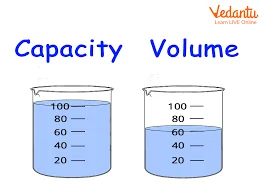
What is capacity? Capacity is how much liquid a container can hold.
What is a litre? A litre (L) is the main unit for measuring liquids.
Examples of containers and their capacity:
- Small water bottle = 500mL (half litre)
- Large water bottle = 1L
- Bucket = about 10L
- Jerry can = 20L
- Car fuel tank = about 50L
Understanding millilitres (mL):
- 1 litre (L) = 1000 millilitres (mL)
- 500mL = 0.5L (half litre)
- 250mL = 0.25L (quarter litre)
Converting between litres and millilitres:
- 2L = _____ mL
- 3L = _____ mL
- 1500mL = _____ L
- 2500mL = _____ L
- 500mL = _____ L
Choose the right unit (L or mL):
- Capacity of a cup: 200___
- Capacity of a swimming pool: 5000___
- Capacity of a medicine spoon: 5___
- Capacity of a cooking pot: 3___
- Capacity of a tank: 1000___
D. measuring liquid with graduated measuring cylinder
What is a measuring cylinder? A measuring cylinder is a tall container with marks showing different volumes.
Reading a measuring cylinder:
- Look at the water level
- Read the number at the water surface
- Always read at eye level
Sample measuring cylinder readings:
| | 1000mL
| | 900mL
| | 800mL
|water | 700mL ← Water level here = 700mL
| | 600mL
| | 500mL
| | 400mL
| | 300mL
| | 200mL
| | 100mL
Practice reading:
- If water reaches 400mL mark = _____ mL
- If water reaches 1000mL mark = _____ L
- If water reaches 750mL mark = _____ mL
- If water reaches 500mL mark = _____ L
Measuring different amounts:
- To measure 2L, fill to _____ mL mark
- To measure 1.5L, fill to _____ mL mark
- To measure 0.8L, fill to _____ mL mark
- To measure 2.5L, fill to _____ mL mark
Adding and subtracting liquid volumes:
Adding:
- 500mL + 300mL = 800mL
- 1L + 500mL = 1500mL = 1.5L
- 2L + 1L = 3L
Subtracting:
- 1000mL – 400mL = 600mL
- 2L – 500mL = 1500mL = 1.5L
- 5L – 2L = 3L
Practice calculations:
- 600mL + 400mL = _____ mL = _____ L
- 2L + 1.5L = _____ L
- 1500mL – 800mL = _____ mL
- 3L – 1.2L = _____ L
- 750mL + 250mL = _____ mL = _____ L
E. quantitative reasoning
Word problems:
- Kemi drinks 250mL of water 4 times a day. How much water does she drink in total?
- A bucket holds 8L of water. Tolu pours out 3L. How much water is left?
- Ada fills 3 bottles with 500mL each. What is the total volume of water?
- A tank has 50L of water. 15L is used for washing and 20L for cooking. How much water remains?
Real-life measuring problems:
- Recipe problem:
- A recipe needs 750mL of milk
- You have a 1L container
- How much milk will be left after using the recipe amount?
- Garden watering:
- 5 plants need 200mL of water each
- How much water is needed in total?
- How many 1L bottles of water are needed?
- Cooking problem:
- A pot can hold 4L of soup
- You make 2.5L of soup
- How much more soup can the pot hold?
Comparing capacities: Which holds more?
- 1200mL or 1L? _____
- 2.5L or 2800mL? _____
- 1500mL or 1.3L? _____
- 3L or 2900mL? _____
Estimation: Estimate the capacity:
- A tea cup: about _____ mL
- A bath tub: about _____ L
- A car’s fuel tank: about _____ L
- A medicine bottle: about _____ mL
Pattern recognition:
- 100mL, 200mL, 300mL, _____, _____
- 1L, 2L, 3L, _____, _____
- 250mL, 500mL, 750mL, _____, _____
CLASS EXERCISES
- Count from 948 to 958:
- Write in words:
- 947 = _______
- 953 = _______
- 960 = _______
- Convert capacities:
- 4L = _____ mL
- 2000mL = _____ L
- 6L = _____ mL
- 3500mL = _____ L
- Choose the right unit (L or mL):
- Capacity of a swimming pool: 2000___
- Capacity of a glass: 250___
- Capacity of a water tank: 500___
- Capacity of a teaspoon: 5___
- Read the measuring cylinder:
- Water at 600mL mark = _____ mL
- Water at 1000mL mark = _____ L
- Water at 1500mL mark = _____ L
- Add capacities:
- 400mL + 300mL = _____ mL
- 1.5L + 2L = _____ L
- 800mL + 700mL = _____ mL = _____ L
- Subtract capacities:
- 1000mL – 350mL = _____ mL
- 4L – 1.5L = _____ L
- 2000mL – 800mL = _____ mL
- Compare capacities:
- Which is more: 1500mL or 1.3L? _____
- Which is less: 2L or 2200mL? _____
- Word problems:
- A jug holds 2L of juice. 750mL is poured out. How much juice is left?
- Emeka drinks 300mL of water 3 times. How much water did he drink in total?
- Problem solving: A recipe calls for 1.5L of water. You have a measuring cylinder that shows measurements up to 1000mL. How would you measure 1.5L of water using this cylinder?
This term's Mathematics topics
Basic 3 Third Term · 17 topics
- Line of Symmetry
- Everyday Statistics
- Revision of Second Term’s Lessons / Resumption Test
- Length
- Perimeter
- Squares and Rectangles
- Time
- Weight
- Capacity
- Line of Symmetry
- Everyday Statistics
Third Term Mathematics Lesson Notes for Other Topics
Numbers 1-250
Read the full lesson note.
Data Collection
Read the full lesson note.
Numbers 241-250
Read the full lesson note.
Numbers 231-240
Read the full lesson note.
Two-Dimensional Shapes
Read the full lesson note.

Numbers 221-230
Read the full lesson note.
Weight
Read the full lesson note.
Numbers 211-220
Read the full lesson note.
Length Measurement
Read the full lesson note.
Numbers 201-210
Read the full lesson note.
Money (Continued)
Read the full lesson note.
Numbers 190-200
Read the full lesson note.
Nigerian Currencies
Read the full lesson note.
Numbers 181-190
Read the full lesson note.
Subtraction
Read the full lesson note.
Lesson Notes for Other Classes

Basic 1 Lesson Note
The complete lesson note to guide your studies.

Basic 2 Lesson Note
The complete lesson note to guide your studies.

Basic 4 Lesson Note
The complete lesson note to guide your studies.

Basic 5 Lesson Note
The complete lesson note to guide your studies.
Basic 6 Lesson Note
The complete lesson note to guide your studies.

JSS1 Lesson Note
The complete lesson note to guide your studies.

