Everyday Statistics – Basic 3 Mathematics Lesson Note (Third Term)
Download Lesson NoteLesson note at a glance
- Subject
- Mathematics
- Class
- Basic 3
- Term
- Third Term
- Topic
- Everyday Statistics
- Order
- Topic 8 of 17 this term
- Reading time
- 4 min
A. counting skill: numbers 981-1000
Counting from 981 to 1000: 981, 982, 983, 984, 985, 986, 987, 988, 989, 990, 991, 992, 993, 994, 995, 996, 997, 998, 999, 1000
Special milestone: 1000 = One thousand
Practice counting:
- From 985 to 995: _______
- From 992 to 1000: _______
- Backwards from 1000 to 990: _______
Fill in missing numbers:
- 986, 987, _____, 989, _____
- 995, _____, 997, _____, 999
- _____, 982, _____, 984, _____
B. writing skill: writing of the numbers
Write in words:
- 981 = Nine hundred and eighty-one
- 985 = Nine hundred and eighty-five
- 990 = Nine hundred and ninety
- 995 = Nine hundred and ninety-five
- 1000 = One thousand
Write in figures:
- Nine hundred and eighty-three = _______
- Nine hundred and eighty-eight = _______
- Nine hundred and ninety-two = _______
- Nine hundred and ninety-seven = _______
- Nine hundred and ninety-nine = _______
C. reading and interpretation of graphs
What is a graph? A graph is a picture that shows information using numbers and symbols.
Why do we use graphs?
- To show information clearly
- To compare numbers easily
- To see patterns and differences
Types of simple graphs:
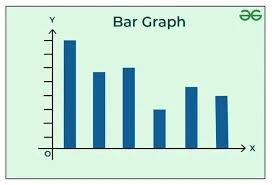
- Bar graphs – use bars of different heights
Pictograms – use pictures to represent numbers

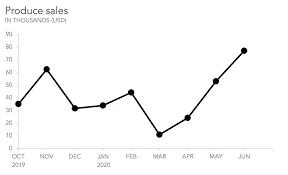
Line graphs – use lines to show changes
SIMPLE BAR GRAPH
Example: Favorite Fruits in Class 3A
Number of pupils
6 | ■
5 | ■
4 | ■ ■
3 | ■ ■
2 | ■ ■ ■
1 | ■ ■ ■
0 +—+—-+—-+—
Apple Orange Banana
Reading the bar graph:
- How many pupils like apples? _____
- How many pupils like oranges? _____
- How many pupils like bananas? _____
- Which fruit is most popular? _____
- Which fruit is least popular? _____
Practice reading: Look at this bar graph showing pets owned by pupils:
Number of pets
8 | ■
6 | ■
4 | ■ ■
2 | ■ ■ ■
0 +–+–+–+—
Cat Dog Bird
- How many cats are owned? _____
- How many dogs are owned? _____
- How many birds are owned? _____
- Which pet is most common? _____
D. pictograms and models
What is a pictogram? A pictogram uses pictures or symbols to show information.
How to read a pictogram:
- Each picture represents a certain number
- Count the pictures to find the total
- Look at the key to understand what each picture means
PICTOGRAM EXAMPLE
Books Read by Each Class
Class 3A: 📖 📖 📖 📖
Class 3B: 📖 📖 📖
Class 3C: 📖 📖 📖 📖 📖
Key: 📖 = 5 books
Reading the pictogram:
- How many books did Class 3A read? 4 × 5 = _____ books
- How many books did Class 3B read? 3 × 5 = _____ books
- How many books did Class 3C read? 5 × 5 = _____ books
- Which class read the most books? _____
- How many books were read in total? _____
ANOTHER PICTOGRAM EXAMPLE
Ice Cream Sold Each Day
Monday: 🍦 🍦
Tuesday: 🍦 🍦 🍦 🍦
Wednesday: 🍦 🍦 🍦
Thursday: 🍦 🍦 🍦 🍦 🍦
Friday: 🍦 🍦 🍦 🍦 🍦 🍦
Key: 🍦 = 3 ice creams
Practice reading:
- How many ice creams were sold on Monday? _____
- How many ice creams were sold on Tuesday? _____
- How many ice creams were sold on Thursday? _____
- Which day had the highest sales? _____
- Which day had the lowest sales? _____
E. creating simple graphs
How to make a pictogram:
- Collect the information
- Choose a symbol
- Decide what each symbol represents
- Draw the symbols for each group
- Write a key
Example data: Flowers in the school garden
- Roses: 10
- Sunflowers: 15
- Daisies: 5
Create a pictogram: If 🌹 = 5 flowers, draw the pictogram:
Roses: _____ (draw symbols) Sunflowers: _____ (draw symbols) Daisies: _____ (draw symbols)
Making a simple bar graph:
- Draw two lines (vertical and horizontal)
- Write numbers on the vertical line
- Write categories on the horizontal line
- Draw bars to show the amounts
F. quantitative reasoning
Data collection and analysis:
- Survey problem: Class 3B asked pupils about their favorite colors:
- Red: 8 pupils
- Blue: 12 pupils
- Green: 6 pupils
- Yellow: 4 pupils
- a) Which color is most popular? _____ b) Which color is least popular? _____ c) How many more pupils like blue than red? _____
- Sports participation: Look at this pictogram of sports played: Football: ⚽ ⚽ ⚽ ⚽ Tennis: ⚽ ⚽ Swimming: ⚽ ⚽ ⚽ Key: ⚽ = 4 pupils a) How many pupils play football? _____ b) How many pupils play tennis? _____ c) What is the total number of pupils? _____
- Daily temperature: A bar graph shows temperatures: Monday: 25°C, Tuesday: 30°C, Wednesday: 28°C a) Which day was hottest? _____ b) Which day was coolest? _____ c) What is the difference between highest and lowest? _____
CLASS EXERCISES
- Count from 988 to 998:
- Write in words:
- 987 = _______
- 993 = _______
- 1000 = _______
- Write in figures:
- Nine hundred and eighty-nine = _______
- Nine hundred and ninety-six = _______
Read the bar graph about favorite subjects:
Number of pupils
10 | ■
8 | ■
6 | ■ ■
4 | ■ ■ ■
2 | ■ ■ ■
0 +–+–+–+—
- Math Eng Science
- How many like Math? _____
- How many like English? _____
- Which subject is most popular? _____
- Read the pictogram about transport to school: Walking: 👟 👟 👟 Bus: 👟 👟 👟 👟 👟 Car: 👟 👟 Key: 👟 = 6 pupils
- How many pupils walk? _____
- How many take the bus? _____
- What is the most common transport? _____
- Create a pictogram: Fruits sold: Apples 20, Oranges 15, Bananas 10 Use 🍎 = 5 fruits Apples: _____ Oranges: _____ Bananas: _____
- Interpret data: A graph shows rainfall in mm: January: 50mm, February: 30mm, March: 40mm
- Which month had most rain? _____
- Which month had least rain? _____
- Total rainfall for 3 months? _____
- Word problem: A shop sells drinks. Monday: 25 bottles, Tuesday: 35 bottles, Wednesday: 20 bottles
- Which day had highest sales? _____
- How many bottles sold in 3 days? _____
- True or False:
- Graphs help us see information clearly: _____
- Pictograms use only numbers: _____
- Bar graphs use bars of different heights: _____
- Problem solving: Design a simple survey about favorite school subjects for 5 friends. Collect data and create a pictogram showing your results.
This term's Mathematics topics
Basic 3 Third Term · 17 topics
- Squares and Rectangles
- Time
- Weight
- Capacity
- Line of Symmetry
- Everyday Statistics
- Revision of Second Term’s Lessons / Resumption Test
- Length
- Perimeter
- Squares and Rectangles
- Time
Third Term Mathematics Lesson Notes for Other Topics
Numbers 1-250
Read the full lesson note.
Data Collection
Read the full lesson note.
Numbers 241-250
Read the full lesson note.
Numbers 231-240
Read the full lesson note.
Two-Dimensional Shapes
Read the full lesson note.

Numbers 221-230
Read the full lesson note.
Weight
Read the full lesson note.
Numbers 211-220
Read the full lesson note.
Length Measurement
Read the full lesson note.
Numbers 201-210
Read the full lesson note.
Money (Continued)
Read the full lesson note.
Numbers 190-200
Read the full lesson note.
Nigerian Currencies
Read the full lesson note.
Numbers 181-190
Read the full lesson note.
Subtraction
Read the full lesson note.
Lesson Notes for Other Classes

Basic 1 Lesson Note
The complete lesson note to guide your studies.
Basic 2 Lesson Note
The complete lesson note to guide your studies.
Basic 4 Lesson Note
The complete lesson note to guide your studies.
Basic 5 Lesson Note
The complete lesson note to guide your studies.
Basic 6 Lesson Note
The complete lesson note to guide your studies.

JSS1 Lesson Note
The complete lesson note to guide your studies.