
Purchase of Business – SS3 Book Keeping Lesson Note (First Term)
Download Lesson NoteLesson note at a glance
- Subject
- Book Keeping
- Class
- SS3
- Term
- First Term
- Topic
- Purchase of Business
- Order
- Topic 3 of 6 this term
- Reading time
- 3 min
SPECIFIC OBJECTIVES: At the end of the lesson, pupils should be able to
- Explain the meaning of purchasing a business
- List and explain the terminologies used in the purchase of a business account
Instructional techniques:
- Identification,
- explanation,
- questions and answers,
- demonstration,
- videos from source
Instructional materials:
- Videos,
- loudspeaker,
- textbook,
- pictures
NOTE
Purchase of business account
Purchase of business is the process of acquisition of old business by a company. The person who sells the business to another company is called the vendor. The money paid by the purchaser is called the purchase price. The purchase of a business must involve an agreement between the parties.
Promoters can acquire a business and sell it to another company at a profit. A viable business is likely to sell more than its present value, whereas a business with a not-too-impressive performance may sell at a lower price.
Here, assets, name and connection of the business will be taken over hence, goodwill must be paid for. For this reason, assets and liabilities will be revalued. The purchaser can assume trade liabilities as part of the consideration. The excess of the purchase consideration over the net value of the asset is called Goodwill. If on the other hand, the purchase consideration is lower than the net assets, the purchaser has gained the advantage of “Capital reserve”. In some cases, he may acquire all the assets without cash and leave the vendor to discharge the liabilities of the business.
The purchase consideration can be paid in cash or shares.

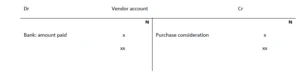

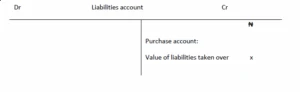

Terminologies used in the purchase of business account
When purchasing a business account, several terminologies are commonly used. Understanding these terminologies is important for making informed decisions when purchasing a business account. It is essential to carefully consider the costs, benefits, and potential risks of any account type and to review the terms and conditions carefully before making a purchase. Some of the most important ones include:
- Account type: This refers to the specific type of account or service that a business is offering for purchase. Examples include software subscriptions, advertising accounts, and payment processing platforms.
- Payment information: This refers to the information that a buyer provides to complete the purchase transaction. This typically includes credit card or bank account details.
- Terms and conditions: This refers to the legal agreement between the buyer and the business, outlining the terms of the purchase and any associated rights, responsibilities, and restrictions.
- Benefits: This refers to the advantages or positive outcomes that the buyer can expect to receive from purchasing the business account. Examples include increased efficiency, expanded reach, and improved profitability.
- Costs: This refers to the financial expenses associated with purchasing the business account, including any upfront fees, ongoing subscription costs, and additional expenses like advertising or training.
- Risks: This refers to the potential negative outcomes or downsides associated with purchasing the business account, such as poor performance, security vulnerabilities, or legal issues.
EVALUATION:
- Explain the meaning of purchase of account
- List and explain four terminologies used in the purchase of a business account
- What is the format/layout of the account?
CLASSWORK: As in evaluation
CONCLUSION: The teacher commends the students positively
This term's Book Keeping topics
SS3 First Term · 6 topics
First Term Book Keeping Lesson Notes for Other Topics
Source Documents
Read the full lesson note.

Debtors And Creditors
Read the full lesson note.

Business Transactions
Read the full lesson note.

Assets And Liabilities
Read the full lesson note.

Stock Valuation
Read the full lesson note.

Introduction To Bookkeeping
Read the full lesson note.

Business Organization
Read the full lesson note.

Business Organization II - Sole Trader, Partnership & Limited Liability Companies
Read the full lesson note.
Departmental and Branch Account
Read the full lesson note.

Hire Purchase
Read the full lesson note.

Product and Service Marketing
Read the full lesson note.
Lesson Notes for Other Classes

Basic 1 Lesson Note
The complete lesson note to guide your studies.

Basic 2 Lesson Note
The complete lesson note to guide your studies.

Basic 3 Lesson Note
The complete lesson note to guide your studies.

Basic 4 Lesson Note
The complete lesson note to guide your studies.

Basic 5 Lesson Note
The complete lesson note to guide your studies.

Basic 6 Lesson Note
The complete lesson note to guide your studies.

