
Emily Bronte ‘Wuthering Heights’ – SS2 Literature-in-English Lesson Note (Second Term)
Download this term · ₦1,000Lesson note at a glance
- Subject
- Literature-in-English
- Class
- SS2
- Term
- Second Term
- Topic
- Emily Bronte ‘Wuthering Heights’
- Order
- Topic 3 of 4 this term
- Reading time
- 4 min
Wuthering Heights is a novel by the English writer Emily Brontë (1818 to 1848), set on the Yorkshire moors in northern England in the late 18th century.
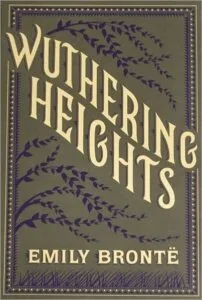
- Contrast: the wild farmhouse Wuthering Heights stands against the habitable mansion Thrushcross Grange.
- Narrator: the story is told by Mr Lockwood.
Behavioural objectives
By the end of the lesson, students should be able to:
- state key facts about the life of Emily Brontë;
- describe the setting of Wuthering Heights;
- contrast Wuthering Heights with Thrushcross Grange;
- say who Mr Lockwood is and why he visits Mr Heathcliff;
- summarise Lockwood’s first visit to Wuthering Heights.
Who was Emily Brontë?
Emily Jane Brontë was an English novelist and poet, best known for her only novel, Wuthering Heights.
- Birth: she was born in 1818 in England.
- Family: she was the daughter of the Curate of Haworth in West Yorkshire.
- Position in the family: she was the fifth of the six Brontë children.
- Education: at seventeen she began school at Roe Head Girls’ School.
- Leaving school: she left Roe Head because of homesickness.
- Death: she fell ill with tuberculosis and died in 1848.
What are the key terms in the novel?
- Curate: a clergyman who assists or serves in a church parish, as Emily’s father did at Haworth.
- Moor: open, wild upland country with few trees, such as the Yorkshire moors.
- Narrator: the person who tells the story; here it is Mr Lockwood.
- Setting: the place and time in which a story happens.
- Gothic: a style that uses wild, gloomy places and a dark mood to create atmosphere.
- Wuthering: a local word meaning stormy and windy, which gives the house its name.
What is the setting of Wuthering Heights?
The novel is set on the Yorkshire moors in northern England in the late 18th century.
- Place: the Yorkshire moors, in northern England.
- Time: the late 18th century. Lockwood’s story opens in 1801.
- Landscape: the novelist uses a gothic landscape to paint pictures of two houses.
- Effect on characters: the sad and depressing Wuthering Heights influences those who live there.
- Escape: the occupants are happy only when they leave the Heights and relax on the moor.
- Mood of the moor: the moor seems lively and colourful.
How is Wuthering Heights different from Thrushcross Grange?
Wuthering Heights is a wild, stormy farmhouse. Thrushcross Grange is a decent, habitable mansion.
- Wuthering Heights: the home of Heathcliff, exposed to wind and storm, with old-fashioned rooms.
- Thrushcross Grange: the mansion that Lockwood rents from Heathcliff.
| Feature | Wuthering Heights | Thrushcross Grange |
|---|---|---|
| Type of building | Wild farmhouse | Habitable mansion |
| Weather and mood | Stormy, sad and depressing | Calm and decent |
| Rooms | Old-fashioned | Comfortable for a tenant |
| Link to Lockwood | The house he visits | The house he rents |
Who is Mr Lockwood?
Mr Lockwood is the narrator of the novel and the new tenant of Thrushcross Grange.
- Dislike of company: he is a man who does not enjoy society.
- Reason for renting: he rents Thrushcross Grange to hide away from society.
- Cause: a love affair with a woman he regarded as a goddess.
- Landlord: his landlord is Mr Heathcliff, who lives at Wuthering Heights.
- Purpose of the visit: he visits to call on his new landlord.
What happens in Lockwood’s first visit to Wuthering Heights?
In 1801 Lockwood visits his landlord, Heathcliff, and meets a cold reception.
Stage 1: Meeting Heathcliff
- Lockwood tells the story of his visit to his new landlord, Mr Heathcliff.
- He finds Heathcliff even more unsociable than himself, and is pleased by this.
- The reception Heathcliff gives him is cold.
Stage 2: The house and its name
- Wuthering Heights is the name of Heathcliff’s residence.
- Lockwood learns that “wuthering” means stormy and windy.
- He sees a carved name near the door bearing “Hareton Earnshaw”.
Stage 3: Inside the house
- Heathcliff, his old servant Joseph and his cook live in the house.
- Lockwood is threatened by barking dogs in the old-fashioned rooms.
- He calls for help, and Heathcliff thinks he has tried to steal something.
- Despite the rudeness and his own embarrassment, Lockwood still feels relaxed with Heathcliff.
- He describes Heathcliff as an intelligent, proud but morose, unlikely farmer.
Stage 4: The invitation
- Heathcliff offers Lockwood some wine.
- He invites Lockwood to come again.
- Lockwood privately sees the invitation as insincere.
- He decides to return the visit because Heathcliff interests him.
Evaluation
- Where and when is Wuthering Heights set?
- Why did Emily Brontë leave Roe Head Girls’ School?
- Describe the difference between Wuthering Heights and Thrushcross Grange.
- Why is Lockwood renting Thrushcross Grange?
- How does Lockwood feel about Heathcliff’s invitation to visit again?
Assignment
Write a short paragraph on how the setting of the novel influences the characters who live at Wuthering Heights.
This term's Literature-in-English topics
SS2 Second Term · 4 topics
- Literary Terms
- Ralph Elison-‘Invisible Man’
- Emily Bronte ‘Wuthering Heights’
- Meticulous Study & Analysis of Chapters 7-13 of Wuthering Heights
Get Literature-in-English as PDF and Word
Every week of SS2 Literature-in-English, Second Term, formatted and ready to print. Ad-free, and the copy lock comes off.
Get this term Card, bank transfer, USSD or OPay
SS2 Literature-in-English Lesson Notes for Other Topics

Literary Terms
Read the full lesson note.

Ralph Elison-'Invisible Man'
Read the full lesson note.
Meticulous Study & Analysis of Chapters 7-13 of Wuthering Heights
Read the full lesson note.

Analysis Of August Wilson's Fences
Read the full lesson note.

Analysis Of August Wilson's Fences II
Read the full lesson note.

Analysis Of Non-African Drama: Look Back In Anger By John Osborne
Read the full lesson note.

Analysis Of Non-African Drama: Look Back In Anger By John Osborne II
Read the full lesson note.

Non-African Poetry: The Good Morrow By John Donne
Read the full lesson note.

Non-African Poetry: The Good Morrow By John Donne II
Read the full lesson note.

Analysis Of Binsey Poplars By G.M Hopkins
Read the full lesson note.
Analysis Of Binsey Poplars By G.M Hopkins II
Read the full lesson note.
Lesson Notes for Other Classes

SS1 Lesson Note
The complete lesson note to guide your studies.

SS3 Lesson Note
The complete lesson note to guide your studies.
