
Human Right Violation – SS2 Citizenship & Heritage Studies Lesson Note (Second Term)
Download this term · ₦1,000Lesson note at a glance
- Subject
- Citizenship & Heritage Studies
- Class
- SS2
- Term
- Second Term
- Topic
- Human Right Violation
- Order
- Topic 3 of 8 this term
- Reading time
- 4 min
A human rights violation happens when anyone, including an official, a police officer or a parent, takes away a person’s fundamental rights or stops them enjoying those rights. Common causes are ignorance, poverty, corruption, bad governance and discrimination. Victims can seek remedies through the courts, the NHRC, NGOs and the media.
Subject: Citizenship and Heritage Studies
Class: SS2
Focus: Why rights are broken, what happens next, and how to fix it.
Behavioural objectives
By the end of the lesson, students should be able to:
- explain what a human rights violation is;
- state the common causes of human rights violations;
- describe the effects of violations on the victim and the country;
- list the remedies available to a victim in Nigeria;
- suggest ways citizens can help prevent violations.
What is a human rights violation?
In our earlier lessons, we learned that every Nigerian has “Fundamental Human Rights” (like the right to life, speech and movement).
A violation happens when someone takes away those rights or stops you from enjoying them. That person may be a powerful politician, a police officer, a bully in school or even a parent. It is basically “breaking the law of human respect.”
What are the common causes of human rights violations?
Human rights are usually broken because of a few “human” problems:
- Ignorance: Many people do not know what their rights are. If you do not know you have a right to remain silent when arrested, a “rogue” officer might bully you into saying things you should not.
- Poverty: When people are hungry or desperate, they are easily cheated. Sometimes, people sell their rights for a bag of rice or a small amount of money during elections.
- Corruption and greed: People in power sometimes use their positions to grab land, arrest enemies or silence journalists, just to stay rich or powerful.
- Dictatorship and bad governance: In some systems, the leaders believe they are “above the law.” They see human rights as a “disturbance” to their power.
- Discrimination: Hating someone because of their tribe, religion or gender often leads to treating them as “less human,” which leads to abuse.
What are the effects of human rights violations?
Violations leave deep scars on the person and on the country:
- Fear and trauma: A person whose rights have been violated (like someone wrongly imprisoned) may never feel safe again. It causes “mental torture.”
- Underdevelopment: If people are afraid to speak up or move freely, they cannot start businesses or share ideas that help Nigeria grow.
- Loss of lives: Severe violations, like extra-judicial killings (killing someone without a court trial), lead to the loss of precious citizens.
- Chaos and riots: When people feel the government does not protect them, they might take the law into their own hands, leading to protests and violence.
What are the remedies for human rights violations?
If your rights are violated, you are not helpless. There are “remedies” (solutions):
- The court system: The Judiciary is the “Last Hope of the Common Man.” You can hire a lawyer and sue the person or the government agency that violated your rights. The court can order them to pay you money (damages) or release you.
- National Human Rights Commission (NHRC): Nigeria has a special government body whose only job is to investigate human rights abuses. You can report cases to them for free.
- NGOs and civil society: Groups like Amnesty International or local “Human Rights Defenders” help people who cannot afford lawyers to fight their cases.
- The media: Sometimes, “shining a light” on a problem helps. When a violation goes viral on social media or in newspapers, the authorities are often forced to act and do the right thing.
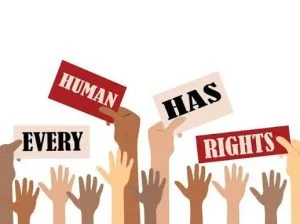
How can human rights violations be prevented?
We should not wait for violations to happen. We can stop them by:
- Education: Learn your rights. You cannot defend what you do not know.
- Speaking up: When you see a classmate being bullied or a neighbour being cheated, do not be silent. “Silence is the best friend of an oppressor.”
- Supporting the rule of law: We must all agree that the law is the boss, no matter how much money someone has.
Summary table for quick revision
| Cause | Effect | Remedy |
|---|---|---|
| Ignorance | People get cheated easily. | Education and awareness. |
| Bad governance | Fear and lack of freedom. | Protesting peacefully or voting. |
| Police brutality | Injury or loss of life. | Reporting to the NHRC or the courts. |
Evaluation
- What is a human rights violation?
- State four causes of human rights violations.
- Explain two effects of violations on the victim and on the country.
- Name three remedies open to a person whose rights have been violated.
- Class discussion: Imagine you see a police officer trying to arrest your friend for “looking suspicious” without any evidence. Based on what we learned today, what is the right and safe way to handle that situation?
Assignment
Choose any two causes of human rights violations from this lesson. For each one, explain its effect and say which remedy or preventive step would help.
This term's Citizenship & Heritage Studies topics
SS2 Second Term · 8 topics
Get Citizenship & Heritage Studies as PDF and Word
Every week of SS2 Citizenship & Heritage Studies, Second Term, formatted and ready to print. Ad-free, and the copy lock comes off.
Get this term Card, bank transfer, USSD or OPay
Second Term Citizenship & Heritage Studies Lesson Notes for Other Topics
Civic Competence for Nation Building
Read the full lesson note.
Strategies for Strengthening Citizenship
Read the full lesson note.
Challenges of Nigerian Citizenship
Read the full lesson note.
Youth and Citizenship
Read the full lesson note.

Sustainable Development Goals (SDGs)
Read the full lesson note.
Human Rights Protection in Nigeria
Read the full lesson note.
Nigeria's Role in International Affairs
Read the full lesson note.

Global Issues in Citizenship
Read the full lesson note.
Nigerian Foreign Policy
Read the full lesson note.
Federalism in Nigeria
Read the full lesson note.
Civil Society and NGOs
Read the full lesson note.

Case Study
Read the full lesson note.

Citizenship in a Digital Age
Read the full lesson note.
Security and Citizenship
Read the full lesson note.

Governance and Citizenship
Read the full lesson note.
Lesson Notes for Other Classes
Basic 1 Lesson Note
The complete lesson note to guide your studies.
Basic 2 Lesson Note
The complete lesson note to guide your studies.

Basic 3 Lesson Note
The complete lesson note to guide your studies.
Basic 4 Lesson Note
The complete lesson note to guide your studies.
Basic 5 Lesson Note
The complete lesson note to guide your studies.
Basic 6 Lesson Note
The complete lesson note to guide your studies.
