
Home Trade: Wholesale Trade – SS1 Commerce Lesson Note (Second Term)
Download Lesson NoteLesson note at a glance
- Subject
- Commerce
- Class
- SS1
- Term
- Second Term
- Topic
- Home Trade: Wholesale Trade
- Order
- Topic 4 of 9 this term
- Reading time
- 5 min
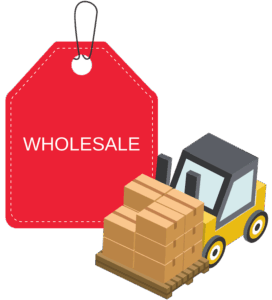
Wholesale trade (wholesaling) is the buying of goods in large quantities from producers or manufacturers and re-selling them in small quantities to retailers. A wholesaler is a trader who purchases goods in large quantities from the manufacturer and sells them in small quantities to retailers.
Behavioural objectives
By the end of the lesson, students should be able to:
- define wholesale trade and state who a wholesaler is;
- list the functions of the wholesaler to the manufacturer and to the retailer;
- name the types of wholesalers or middlemen;
- describe the channels of distribution and the factors that affect the choice of channel;
- give reasons why middlemen are sometimes eliminated and why wholesale prices are lower than retail prices.
What are the functions of the wholesaler?
Functions to the manufacturer
- He gives useful information and advice to the manufacturer, e.g. on the level of demand for goods.
- He provides warehouse and storage facilities for goods, which gives the manufacturer enough space for further production.
- Preparation of commodities for sale: the wholesaler sometimes labels, packages, blends or brands the goods before he sells them.
- Advertising and promotion of goods: the wholesaler creates awareness of goods through advertising and sales promotion.
- He finances the manufacturer by paying for goods in advance.
- He provides the transport facilities needed for the distribution of the goods.
- Bulk buying: the wholesaler buys in large quantities. This encourages the manufacturer to produce more and so gain the advantages of large-scale production.
- He bears part of the risks involved in the production and distribution of goods, e.g. the risk of a fall in price, a change in fashion or deterioration of goods.
- Quality control: the wholesaler may verify the quality of products before distributing them, i.e. grading of commodity products, e.g. cocoa.
Functions to the retailer
- The wholesaler breaks bulk by selling in small quantities to the retailer.
- He finances the retailer by granting him credit.
- He sometimes provides advice and information on new goods and market trends.
- Stabilisation of prices: by storing goods in his warehouse and regulating supply to the market, the wholesaler keeps prices fairly stable for retailers.
- He provides the retailer with a variety of goods.
What are the types of wholesalers or middlemen?
- General wholesalers
- Specialist wholesalers
- Cash and carry wholesalers
- Factors (or mercantile agents)
- Brokers
- Jobbers
- Del credere agents (wholesalers)
- Auctioneers
- Manufacturer’s representatives
- Commission agents
What is a channel of distribution?
The channel of distribution is the path through which goods move from the producer to the consumer.
The channel of distribution for goods could be any of the following:
- Producer → Wholesaler → Retailer → Consumer
- Producer → Wholesaler → Consumer
- Producer → Retailer → Consumer
- Producer → Agent → Retailer → Consumer
What factors affect the choice of a channel of distribution?
- The nature of the commodity, e.g. whether it is perishable or durable.
- Geographical consideration, e.g. the location of customers.
- The existing and potential demand for the commodity, i.e. the extent of demand for the product.
- How regular the demand for the product is.
- The number of retail outlets in an area.
- The producer’s capital, financial position, organisational ability and selling skills.
- The size of customers’ orders.
- The quantity of goods involved.
- The channel used by competitors.
- The cost of the channel being considered.
- The customs of the particular trade, e.g. distribution of newspapers.
Why are middlemen sometimes eliminated from the channel of distribution?
Middlemen (wholesalers and retailers) are sometimes left out of the channel for these reasons:
- The producer is dealing with large orders from customers.
- Perishable goods are involved, so they cannot pass through a long channel of distribution.
- The goods are technical, so after-sales service such as repairs is likely to be needed.
- The producer operates his own retail outlets, e.g. FAMAD and Lennards.
- The consumer has ordered goods to his own specification, e.g. special styles or customised orders.
- The manufacturer operates a mail order business.
- The goods are durable and have a low turnover, e.g. furniture.
- The goods are expensive and the buyer has to pay in advance before the producer makes them, e.g. ships, aeroplanes and plants.
- The producer is introducing new products.
- The producer wants to maintain fixed prices for his products.
- The goods are requested by a consumers’ co-operative association, i.e. where consumers have combined their orders.
Why are wholesale prices lower than retail prices?
- The wholesaler buys in bulk and at reduced prices.
- The wholesaler buys directly from the manufacturer.
- The wholesaler usually pays promptly, or sometimes pays in advance, so he buys at a cheaper rate.
- The wholesaler gets both trade and cash discounts.
- The retailer sells in units.
Why should a large number of middlemen not be encouraged?
- They could increase the prices of goods.
- They cause artificial scarcity through hoarding of goods.
- They cause price differences in different areas.
- They cause inflation.
- They could encourage the distribution of fake or substandard products.
Evaluation
- Define wholesale trade and state who a wholesaler is.
- State four functions of the wholesaler to the manufacturer.
- State three functions of the wholesaler to the retailer.
- Draw two channels of distribution that include a wholesaler.
- Give four reasons why wholesale prices are lower than retail prices.
Assignment
- List five factors to consider before choosing a channel of distribution.
- State five reasons why middlemen are sometimes eliminated from the channel of distribution.
- Give three reasons why a large number of middlemen should not be encouraged in the distribution of goods.
This term's Commerce topics
SS1 Second Term · 9 topics
- Home Trade: Small Retailers
- Home Trade: Large Scale Retailers
- Home Trade: Modern Trends in Retailing
- Home Trade: Wholesale Trade
- Foreign Trade
- Foreign Trade II: Concepts of International Trade
- Foreign Trade III: Documents Used in Foreign Trade
- Foreign Trade: Custom and Excise Authority
- Foreign Trade V: Nigeria Ports (NPA) & Nigeria Airport Authority (NAA)
Second Term Commerce Lesson Notes for Other Topics
Economic Grouping in West Africa (CONTD) West Africa Clearing House (WACH), Mano River Basin Commission.
Read the full lesson note.
Economic Grouping in West Africa - (ECOWAS) & Niger Basin Commission
Read the full lesson note.
Privatisation and Commercialisation
Read the full lesson note.
Business Documents and Means of Payment
Read the full lesson note.
Advertising
Read the full lesson note.
Introduction to Marketing
Read the full lesson note.
Insurance
Read the full lesson note.
Credit
Read the full lesson note.
Trade Associations
Read the full lesson note.
Transportation
Read the full lesson note.
Consumer Protection
Read the full lesson note.

Foreign Trade III: Documents Used in Foreign Trade
Read the full lesson note.

Foreign Trade V - Nigeria Ports (NPA) & Nigeria Airport Authority (NAA)
Read the full lesson note.
Foreign Trade - Custom And Excise Authority
Read the full lesson note.
Foreign Trade II: Concepts of International Trade
Read the full lesson note.
Lesson Notes for Other Classes

Basic 1 Lesson Note
The complete lesson note to guide your studies.

Basic 2 Lesson Note
The complete lesson note to guide your studies.

Basic 3 Lesson Note
The complete lesson note to guide your studies.

Basic 4 Lesson Note
The complete lesson note to guide your studies.

Basic 5 Lesson Note
The complete lesson note to guide your studies.

Basic 6 Lesson Note
The complete lesson note to guide your studies.

