
Drawing and Shading – SS1 Visual Arts Lesson Note (First Term)
Download Lesson NoteLesson note at a glance
- Subject
- Visual Arts
- Class
- SS1
- Term
- First Term
- Topic
- Drawing and Shading
- Order
- Topic 6 of 9 this term
- Reading time
- 3 min
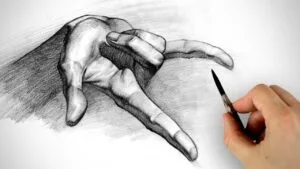
DRAWING
Drawing is the act of creating images or lines on a surface, usually paper, using various tools such as pencils, pens, markers, or charcoal. It is a form of visual expression and communication, that allows artists to convey ideas, emotions, and observations through a range of techniques and styles.
Drawing involves:
- Line: Creating contours, outlines, and shapes using various lines (straight, curved, diagonal, etc.).
- Shape: Defining forms and objects using geometric or organic shapes.
- Value: Creating light and dark areas to convey depth, volume, and texture.
- Texture: Suggesting surface quality through hatching, cross-hatching, stippling, or other techniques.
- Proportion: Ensuring accurate relationships between elements.
- Perspective: Creating a sense of space and distance.
Drawing can be used for:
- Artistic expression
- Communication (technical drawing, illustration)
- Observation (study, sketching)
- Design(planning, prototyping)
- Storytelling (comics, cartoons)
There are many drawing techniques, including:
- Realism
- Abstraction
- Cartooning
- Caricature
- Impressionism
Remember, drawing is a skill that can be developed with practice, patience, and dedication.
Types of drawing:
Here are some common types of drawing:
- Realistic Drawing: Accurate and detailed representation of subjects.
- Cartooning: Exaggerated and simplified drawings for humour or storytelling.
- Caricature: Distorted and comedic drawings emphasizing facial features.
- Illustration: Drawings created for publications, products, or advertisements.
- Sketching: Quick, informal drawings for practice or observation
- Abstract Drawing: Non-representational drawings focusing on colour, shape, and form.
- Technical Drawing: Precise drawings for engineering, architecture, or design.
- Comic Art: Drawings for comics, graphic novels, or manga.
- Concept Art: Drawings for film, video games, or animation development.
- Portrait Drawing: Drawings focusing on the human face and expression.
- Landscape Drawing: Drawings depicting natural scenery and environments.
- Still life Drawing: Drawings of inanimate objects and compositions.
- Figure Drawing: Drawings of the human body and anatomy.
- Gesture Drawing: Quick drawings capturing movement and gesture.
- Imaginative Drawing: Drawings from imagination, fantasy, or creativity.
These categories often blend or overlap, and many artists explore multiple styles and techniques in their work.
SHADING
Shading is a drawing technique used to create the illusion of three-dimensional form and volume on a flat surface. It involves creating a range of values (light and dark areas) to suggest the shape, texture, and depth of an object or subject.
Shading can be achieved through various methods, including:
- Hatching: Closely spaced parallel lines that follow the contours of the subject.
- Cross-hatching: Layers of hatching lines at different angles to create texture and depth.
- Stippling: Small dots that create texture and value.
- Gradation: Smooth transitions from light to dark values.
- Atmospheric perspective: Shading that suggests depth and distance by fading objects into the background.
Shading helps to:
- Create volume and form
- Suggest texture and surface quality
- Indicate light sources and direction
- Enhance depth and dimensionality
- Guide the viewer’s eye through the composition
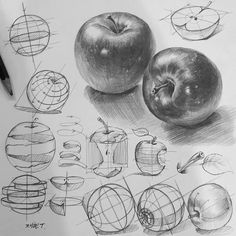
Type of shading
There are different types of shading, including:
- Linear Shading: Using lines to create shading, including hatching, cross-hatching, and stippling.
- Tonal Shading: Using values (light and dark) to create shading, often with gradations.
- Color Shading: Using colours to create shading, often with gradual transitions.
- Hatching: Closely spaced parallel lines that follow the contours of the subject.
- Cross-Hatching: Layers of hatching lines at different angles to create texture and depth.
- Stippling: Small dots that create texture and value.
- Gradation: Smooth transitions from light to dark values.
- Atmospheric Perspective: Shading that suggests depth and distance by fading objects into the background.
- Flat Shading: Using solid colours or values to create flat, two-dimensional shading.
- Gouraud Shading: A smooth, continuous shading technique used in computer graphics.
- Cel Shading: A stylized shading technique using bold lines and flat colours.
- Sfumato: A subtle, soft shading technique creating a hazy or atmospheric effect.
These types of shading can be used alone or in combination to achieve various artistic effects and moods.
This term's Visual Arts topics
SS1 First Term · 9 topics
First Term Visual Arts Lesson Notes for Other Topics

Introduction To Visual Arts
Read the full lesson note.
Visual Sense
Read the full lesson note.

Professions And Job Opportunities
Read the full lesson note.
Drawing Lines
Read the full lesson note.

Drawing Nature And Man-Made Objects
Read the full lesson note.

Drawing Still-Life Objects
Read the full lesson note.

Drawing Human Figures
Read the full lesson note.
Introduction To Art Appreciation
Read the full lesson note.
Lesson Notes for Other Classes

Basic 1 Lesson Note
The complete lesson note to guide your studies.

Basic 2 Lesson Note
The complete lesson note to guide your studies.

Basic 3 Lesson Note
The complete lesson note to guide your studies.

Basic 4 Lesson Note
The complete lesson note to guide your studies.

Basic 5 Lesson Note
The complete lesson note to guide your studies.

Basic 6 Lesson Note
The complete lesson note to guide your studies.

