
The Fruit of the Spirit – SS1 Christian Religious Studies Lesson Note (Second Term)
Download this term · ₦1,000Lesson note at a glance
- Subject
- Christian Religious Studies
- Class
- SS1
- Term
- Second Term
- Topic
- The Fruit of the Spirit
- Order
- Topic 4 of 7 this term
- Reading time
- 5 min
The fruit of the Spirit is the set of good qualities that show in a believer’s life as the Holy Spirit works in them after salvation. It is one fruit with nine qualities (Galatians 5:22-23), and it marks a Christian out from a non-Christian.
Behavioural objectives
- Explain what the fruit of the Spirit is.
- List and describe the nine qualities that make up the fruit of the Spirit.
- State the works of the flesh and say why they are against the will of God.
- Outline the steps to bearing the fruit of the Spirit.
What is the fruit of the Spirit?
The fruit of the Spirit is the Christian character that the Holy Spirit produces in a believer.
- Meaning: the Christian character that the Holy Spirit produces in a believer.
- Source: the life of the Spirit living in the believer after salvation.
- Singular word: Paul used the singular “fruit” because it is one fruit that shows itself in many qualities.
- Purpose: it shows that a person truly belongs to Christ.
- Link to the law: where these qualities are present, no law condemns them (Gal. 5:23). Love sums up the law (Gal. 5:14).
What is the Bible text for the fruit of the Spirit?
- Main passage: Galatians 5:22-25.
- Writer: Apostle Paul, writing to the churches in Galatia.
- Theme of the chapter: life in the Spirit compared with life in the flesh.
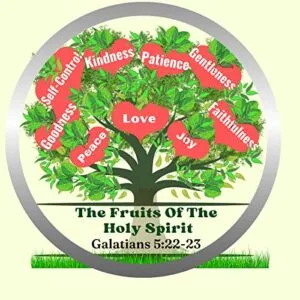
What are the qualities of the fruit of the Spirit?
There are nine qualities of the fruit of the Spirit: love, joy, peace, long-suffering, gentleness, goodness, faith, meekness and temperance (Gal. 5:22-23).
- Love: unselfish care for God and other people, such as helping a needy neighbour.
- Joy: deep gladness that comes from God and does not depend on circumstances.
- Peace: calm of heart with God, and living in harmony with others.
- Long-suffering: patience with people and trials, without quick anger.
- Gentleness: kind and considerate treatment of others.
- Goodness: doing what is right and helpful to others.
- Faith: trust in God and faithfulness in duty and promises.
- Meekness: humble strength, being willing to be taught and not proud.
- Temperance: self-control over anger, appetite and desires.
Which other words do Bible versions use for these qualities?
- Long-suffering: called “patience” in many modern versions.
- Gentleness: called “kindness” in many modern versions.
- Faith: called “faithfulness” in many modern versions.
- Temperance: called “self-control” in many modern versions.
How do the qualities show in daily life?
- At home: obeying parents, sharing food and forgiving a brother or sister.
- In school: honesty in exams, respect for teachers and kindness to classmates.
- In the community: peaceful dealings with neighbours and help for the poor.
- In the church: unity, service and patience with other members.
What are the works of the flesh?
The works of the flesh are the sinful acts of a person who lives by selfish desires, apart from the Spirit of Christ (Gal. 5:19-21).
- Meaning: the sinful acts of a person who lives by selfish desires, apart from the Spirit of Christ.
- Another name: the fruit of the flesh.
- Warning: Paul told the Galatians to walk in the Spirit so that they would not fulfil the lust of the flesh (Gal. 5:16).
- Conflict: the flesh and the Spirit are against each other (Gal. 5:17).
- Result: those who practise such things will not inherit the kingdom of God (Gal. 5:21).
What are examples of the works of the flesh?
Paul listed the works of the flesh in Galatians 5:19-21. The table groups them.
| Group | Examples |
|---|---|
| Sexual sins | Adultery, fornication, uncleanness, lasciviousness |
| False worship | Idolatry, witchcraft |
| Wrong attitudes to people | Hatred, variance (quarrelling), emulations (jealous rivalry), wrath, strife, seditions, heresies, envyings |
| Violence | Murder |
| Lack of self-control | Drunkenness, revellings (wild partying) |
- And similar acts: Paul ends the list with “and such like”, so the list is not complete.
Why are the works of the flesh against the will of God?
- They break God’s commands: they go against the law of love.
- They harm other people: hatred, strife and murder divide families and communities.
- They damage the believer: they spoil a person’s witness and relationship with God.
- They shut people out of God’s kingdom: those who keep practising them will not inherit it (Gal. 5:21).
What is the difference between the fruit of the Spirit and the works of the flesh?
The fruit of the Spirit is the character the Holy Spirit produces. The works of the flesh are the sinful acts of selfish human nature.
| Point | Fruit of the Spirit | Works of the flesh |
|---|---|---|
| Source | The Holy Spirit | Selfish human nature |
| Examples | Love, joy, peace | Hatred, strife, wrath |
| Effect on others | Builds and helps | Harms and divides |
| Result | Pleases God | Shuts out of God’s kingdom |
What is the difference between the fruit of the Spirit and the gifts of the Spirit?
The fruit of the Spirit is Christian character. The gifts of the Spirit are special abilities the Spirit gives for service in the church, such as wisdom, healing, prophecy and speaking in tongues (1 Cor. 12:8-10).
| Point | Fruit | Gifts |
|---|---|---|
| Meaning | Christian character | Special abilities for service |
| Number | One fruit, nine qualities | Different gifts to different people (1 Cor. 12) |
| Expected of | Every believer | Given as the Spirit wills |
How can a believer bear the fruit of the Spirit?
A believer bears the fruit of the Spirit by following these steps in order and then staying close to Christ.
- Repentance of sin: turn away from the works of the flesh.
- Salvation through faith in Jesus Christ: trust Christ as Lord and Saviour.
- Baptism in the name of Jesus: publicly show the new life in Christ.
- Gift of the Holy Spirit: receive the Spirit who produces the fruit.
- Abiding in Jesus Christ: stay joined to Christ through prayer, the Word and obedience (John 15:4-5).
What daily habits help the fruit to grow?
- Walking in the Spirit: let the Spirit guide daily choices (Gal. 5:25).
- Crucifying the flesh: those who belong to Christ put selfish desires to death (Gal. 5:24).
- Prayer and Bible study: keep close to God.
- Fellowship: meet with other believers for support.
Evaluation
- What is the fruit of the Spirit?
- Why is it called “fruit” in the singular?
- List five qualities that make up the fruit of the Spirit.
- Mention five works of the flesh.
- State the steps to bearing the fruit of the Spirit.
Assignment
Explain why Apostle Paul advised the Galatians to walk in the Spirit, and list five works of the flesh.
This term's Christian Religious Studies topics
SS1 Second Term · 7 topics
Get Christian Religious Studies (CRS) as PDF and Word
Every week of SS1 Christian Religious Studies (CRS), Second Term, formatted and ready to print. Ad-free, and the copy lock comes off.
Get this term Card, bank transfer, USSD or OPay
SS1 Christian Religious Studies (CRS) Lesson Notes for Other Topics

Sonship
Read the full lesson note.

Faith And Works
Read the full lesson note.
Salvation
Read the full lesson note.

Spiritual Gifts
Read the full lesson note.
Forgiveness
Read the full lesson note.

Rights And Obligations of Family Members
Read the full lesson note.
Jesus As The Door And Good Shepherd
Read the full lesson note.
Jesus As The Living Bread And Water
Read the full lesson note.
Jesus - The True Vine
Read the full lesson note.

Jesus - The Light Of The World
Read the full lesson note.
Justification By Faith
Read the full lesson note.

New Life In Christ
Read the full lesson note.

God's Love For Man And Man's Love For One Another
Read the full lesson note.
Humility
Read the full lesson note.
Effective Prayer
Read the full lesson note.
Lesson Notes for Other Classes

SS2 Lesson Note
The complete lesson note to guide your studies.

SS3 Lesson Note
The complete lesson note to guide your studies.
