
Angle, Lines and Bearing – Basic 6 Mathematics Lesson Note (Third Term)
Download Lesson NoteLesson note at a glance
- Subject
- Mathematics
- Class
- Basic 6
- Term
- Third Term
- Topic
- Angle, Lines and Bearing
- Order
- Topic 2 of 6 this term
- Reading time
- 5 min
What is an Angle?
An angle is formed when two lines meet at a point. The point where they meet is called the vertex.
Parts of an Angle:
- Vertex: The point where two lines meet
- Arms: The two lines that form the angle
- Symbol: ∠ (angle symbol)
Types of Angles
Acute Angle
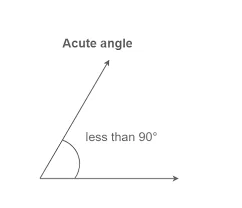
- Size: Less than 90°
- Example: 30°, 45°, 60°
Right Angle
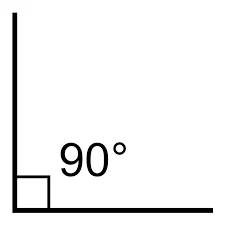
- Size: Exactly 90°
- Symbol: Small square in corner
- Found in: Corners of books, walls, tables
Obtuse Angle
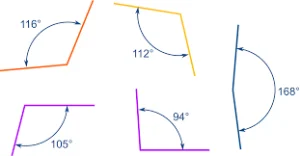
- Size: Between 90° and 180°
- Example: 120°, 150°
Straight Angle
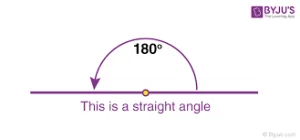
- Size: Exactly 180°
- Looks like: A straight line
Reflex Angle
- Size: Between 180° and 360°
- Example: 270°, 300°
Complete Angle
- Size: Exactly 360°
- Looks like: A full turn/circle
Exercise A – Identifying Angles
Identify the type of each angle:
- 45° = ______ angle
- 90° = ______ angle
- 135° = ______ angle
- 180° = ______ angle
- 270° = ______ angle
- 360° = ______ angle
- 75° = ______ angle
- 210° = ______ angle
Measuring Angles
Using a Protractor
Steps to measure an angle:
- Place the center of protractor on the vertex
- Align one arm with the 0° line
- Read where the other arm crosses the scale
- Choose the correct scale (inner or outer)
Exercise B – Angle Measurement
Use a protractor to measure these angles (or estimate):
- An angle that looks like a clock at 3 o’clock = ______°
- An angle that looks like a clock at 6 o’clock = ______°
- An angle that looks like a clock at 9 o’clock = ______°
- The angle of your classroom door when fully open = ______°
- The angle between the hands of a clock at 3 o’clock = ______°
Types of Lines
Parallel Lines
- Definition: Lines that never meet
- Symbol: ||
- Example: Railway tracks, opposite sides of a rectangle
Perpendicular Lines
- Definition: Lines that meet at 90°
- Symbol: ⊥
- Example: Corners of a square, walls and floor
Intersecting Lines
- Definition: Lines that cross each other
- Example: Letter X, crossroads
Exercise C – Line Types
Identify the type of lines:
- Railway tracks: ______ lines
- The letter X: ______ lines
- Corner of a book: ______ lines
- Opposite sides of a rectangle: ______ lines
- Roads at a junction: ______ lines
Angle Relationships
Angles on a Straight Line
- Rule: Angles on a straight line add up to 180°
- Example: If one angle is 110°, the other is 70°
Angles at a Point
- Rule: Angles around a point add up to 360°
- Example: Four 90° angles around a point
Vertically Opposite Angles
- Rule: When two lines cross, opposite angles are equal
- Example: In an X shape, opposite angles are the same
Exercise D – Angle Relationships
Find the missing angles:
- Angles on a line: 125° and ______°
- Angles at a point: 90°, 120°, 70°, and ______°
- Vertically opposite: If one angle is 65°, the opposite angle is ______°
- Three angles on a line: 45°, 60°, and ______°
- Angles around a point: 110°, 85°, 95°, and ______°
Bearing
What is Bearing?
Bearing is a way to describe direction using angles measured from North in a clockwise direction.
Key Points:
- Always measured from North (N)
- Always measured clockwise
- Written as 3-digit numbers (e.g., 045°, 270°)
The Compass
Main Directions:
- North (N): 000° or 360°
- East (E): 090°
- South (S): 180°
- West (W): 270°
Reading Bearings
Examples:
- North: 000°
- Northeast: 045°
- East: 090°
- Southeast: 135°
- South: 180°
- Southwest: 225°
- West: 270°
- Northwest: 315°
Exercise E – Basic Bearings
Give the bearing for these directions:
- East: ______°
- South: ______°
- West: ______°
- Northeast: ______°
- Southwest: ______°
- Northwest: ______°
- Southeast: ______°
- North: ______°
Back Bearings
What is a Back Bearing?
If you travel from A to B on a bearing, the back bearing is the direction from B to A.
Rule: Back bearing = Original bearing ± 180°
- If original bearing < 180°, add 180°
- If original bearing > 180°, subtract 180°
Examples:
- Bearing from A to B = 050°
- Back bearing from B to A = 050° + 180° = 230°
- Bearing from A to B = 250°
- Back bearing from B to A = 250° – 180° = 070°
Exercise F – Back Bearings
Find the back bearings:
- Original bearing: 060°, Back bearing: ______°
- Original bearing: 200°, Back bearing: ______°
- Original bearing: 135°, Back bearing: ______°
- Original bearing: 300°, Back bearing: ______°
- Original bearing: 045°, Back bearing: ______°
Practical Applications
Exercise G – Real Life Bearings
Solve these bearing problems:
- Navigation: A ship sails from port on bearing 120°. What bearing should it take to return directly to port? Answer: ______°
- School Direction: From your house, the school is on bearing 075°. What bearing is your house from the school? Answer: ______°
- Market Direction: The market is southeast of your home. What is the approximate bearing? Answer: ______°
- Playground: If the playground is directly west of the classroom, what is its bearing from the classroom? Answer: ______°
Exercise H – Compass Navigation
Use compass directions:
- Morning Sun: The sun rises in the east. What bearing is this? Answer: ______°
- Evening Sun: The sun sets in the west. What bearing is this? Answer: ______°
- Shadow Direction: At noon, your shadow points north. You are facing which direction? Answer: ______ (bearing ______°)
Angle and Bearing Problems
Exercise I – Combined Problems
Solve these angle and bearing problems:
- Clock Problem: What angle do clock hands make at 3:00? Answer: ______°
- Triangle Problem: In a triangle, two angles are 60° and 70°. What is the third angle? Answer: ______°
- Navigation Problem: A plane flies north for 100 km, then turns and flies on bearing 090° for 50 km. In which direction is the plane from its starting point? Answer: ______ of starting point
Exercise J – Angle Calculations
Calculate missing angles:
- Pentagon: Each angle in a regular pentagon is 108°. What is the sum of all angles? Answer: ______°
- Hexagon: A regular hexagon has 6 equal angles. If the sum of angles is 720°, what is each angle? Answer: ______°
- Star Shape: A five-pointed star has 5 sharp angles of 36° each. What is the sum of these angles? Answer: ______°
Exercise K – Practical Measurement
Apply angle knowledge:
- Door Opening: A classroom door opens 90°. If it’s half open, what angle is it? Answer: ______°
- Roof Slope: A roof makes a 30° angle with the horizontal. What type of angle is this? Answer: ______ angle
- Staircase: A staircase makes a 45° angle with the ground. What type of angle is this? Answer: ______ angle
Answer Key
Exercise A:
- Acute, 2. Right, 3. Obtuse, 4. Straight, 5. Reflex, 6. Complete, 7. Acute, 8. Reflex
Exercise B:
- 90°, 2. 180°, 3. 270°, 4. 90°, 5. 90°
Exercise C:
- Parallel, 2. Intersecting, 3. Perpendicular, 4. Parallel, 5. Intersecting
Exercise D:
- 55°, 2. 80°, 3. 65°, 4. 75°, 5. 70°
Exercise E:
- 090°, 2. 180°, 3. 270°, 4. 045°, 5. 225°, 6. 315°, 7. 135°, 8. 000°
Exercise F:
- 240°, 2. 020°, 3. 315°, 4. 120°, 5. 225°
Exercise G:
- 300°, 2. 255°, 3. 135°, 4. 270°
Exercise H:
- 090°, 2. 270°, 3. South, 180°
Exercise I:
- 90°, 2. 50°, 3. Northeast
Exercise J:
- 540°, 2. 120°, 3. 180°
Exercise K:
- 45°, 2. Acute, 3. Acute
This term's Mathematics topics
Basic 6 Third Term · 6 topics
Third Term Mathematics Lesson Notes for Other Topics
Numbers 1-250
Read the full lesson note.
Data Collection
Read the full lesson note.
Numbers 241-250
Read the full lesson note.
Numbers 231-240
Read the full lesson note.
Two-Dimensional Shapes
Read the full lesson note.

Numbers 221-230
Read the full lesson note.
Weight
Read the full lesson note.
Numbers 211-220
Read the full lesson note.
Length Measurement
Read the full lesson note.
Numbers 201-210
Read the full lesson note.
Money (Continued)
Read the full lesson note.
Numbers 190-200
Read the full lesson note.
Nigerian Currencies
Read the full lesson note.
Numbers 181-190
Read the full lesson note.
Subtraction
Read the full lesson note.
Lesson Notes for Other Classes

Basic 1 Lesson Note
The complete lesson note to guide your studies.

Basic 2 Lesson Note
The complete lesson note to guide your studies.

Basic 3 Lesson Note
The complete lesson note to guide your studies.

Basic 4 Lesson Note
The complete lesson note to guide your studies.

Basic 5 Lesson Note
The complete lesson note to guide your studies.

JSS1 Lesson Note
The complete lesson note to guide your studies.

