
Nigerian and Foreign-Made Goods – Basic 6 Social Studies Lesson Note (First Term)
Download this term · ₦1,000Lesson note at a glance
- Subject
- Social Studies
- Class
- Basic 6
- Term
- First Term
- Topic
- Nigerian and Foreign-Made Goods
- Order
- Topic 19 of 19 this term
- Reading time
- 7 min
Made-in-Nigeria goods are products made, produced or grown in Nigeria, while foreign-made goods are products made in other countries and brought into Nigeria.
Behavioural objectives
- Define made-in-Nigeria goods and foreign-made goods.
- Give examples of Nigerian and foreign goods in different sectors.
- State the advantages and disadvantages of each type of goods.
- Compare Nigerian goods with foreign goods.
- Explain the Buy Nigerian campaign and say how pupils can support it.
What are made-in-Nigeria goods?
Made-in-Nigeria goods are products manufactured, produced or grown in Nigeria by Nigerian companies or individuals.
- Manufactured: made in a factory or workshop, such as shoes and soap.
- Produced: processed from raw materials, such as palm oil and garri.
- Grown: farm products, such as rice, yam and groundnut.
What are examples of made-in-Nigeria goods?
Made-in-Nigeria goods fall into eight main sectors: textiles, furniture, leather goods, food products, beverages, vehicles, electronics and household items.
1. Textiles (cloth and clothing)
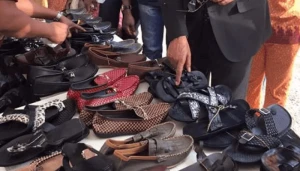
- Aso-oke: traditional hand-woven cloth of the Yoruba.
- Akwete: traditional woven cloth of the Igbo.
- Adire: tie-and-dye cloth from the Yoruba.
- Ankara prints: colourful cloth, some of it printed in Nigerian factories.
- Local tailored clothes: clothes sewn by Nigerian tailors and fashion designers.
2. Furniture
- Wooden chairs and tables: made by local carpenters.
- Locally crafted beds: wooden or metal beds made in Nigerian workshops.
- Traditional stools: carved or woven seats.
- Bamboo furniture: chairs and stands made from bamboo.
- Carved decorations: wooden items used to decorate homes.
3. Leather goods
- Leather shoes: made in Aba and Kano.
- Leather bags: made by Aba and Kano craftsmen.
- Belts: made from leather by local makers.
- Sandals: both traditional and modern styles.
4. Food products

- Palm oil and groundnut oil: cooking oils from oil palm fruits and groundnuts.
- Local rice: rice grown and milled in Nigeria.
- Garri and yam flour: foods processed from cassava and yam.
- Groundnut: a farm crop eaten roasted or used to make oil.
- Dried fish: fish preserved by drying.
- Local spices: pepper and other spices grown and sold in Nigeria.
5. Beverages (drinks)
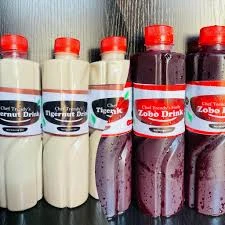
- Zobo: a drink made from dried roselle (zobo) leaves.
- Kunun: a cereal drink common in northern Nigeria.
- Palm wine: a drink tapped from palm trees.
- Local fruit juices: juices made from Nigerian fruits such as orange and pineapple.
6. Automobiles and vehicles
- Innoson Motors: a Nigerian vehicle manufacturer.
- Assembled vehicles: vehicles put together in Nigeria, often from imported parts.
- Motorcycles: some models are assembled in Nigeria.
- Tricycles (Keke NAPEP): three-wheeled vehicles used for short trips, often assembled locally.
7. Electronics
- Assembled radios and TVs: put together locally, as local production is limited.
- Computer accessories: some items are made in Nigeria.
8. Household items
- Brooms: made from local materials such as palm fronds.
- Baskets and mats: woven from cane, raffia or grass.
- Clay pots: shaped and baked by potters.
- Soap: for example Key Soap.
What are the advantages of made-in-Nigeria goods?
The main advantage of Nigerian goods is that they keep jobs and money inside Nigeria.
- Creates jobs: factories and workshops employ Nigerians.
- Economic growth: money stays in Nigeria.
- Often cheaper: there are fewer import costs.
- Supports local industry: helps Nigerian businesses grow.
- Preserves culture: keeps traditional crafts and cloth alive.
- Reduces import dependency: Nigeria relies less on other countries.
- Builds national pride: citizens value what their country makes.
What are the challenges of made-in-Nigeria goods?
The challenges of Nigerian goods are problems that make buyers choose foreign goods instead.
- Poor quality (sometimes): some products do not meet buyers’ expectations.
- Limited variety: buyers have fewer choices.
- Lack of technology: many makers use simple machines.
- Poor packaging: products may not look attractive.
- Negative perception: many people believe “foreign is better”.
- Inadequate marketing: many good products are not well advertised.
What are foreign-made goods?
Foreign-made goods are products manufactured in other countries and imported into Nigeria.
- Import: a good brought into a country from another country.
- Export: a good sent out of a country to be sold in another country.
What are examples of foreign-made goods?
Foreign-made goods are found in the same eight sectors as Nigerian goods.
| Sector | Examples (country) |
|---|---|
| Textiles | Chinese fabrics, Italian suits, Levi’s jeans (USA), British clothing brands, Indian materials |
| Furniture | IKEA (Sweden), Italian leather sofas, Chinese furniture, American office furniture |
| Leather and footwear | Gucci (Italy), Louis Vuitton (France), Nike (USA), Adidas (Germany), Chinese leather products |
| Food products | Foreign rice (Thailand, India, USA), imported wheat, pasta, canned foods, foreign spices |
| Beverages | Coca-Cola (American brand), foreign wines, energy drinks, imported fruit juices |
| Automobiles | Toyota and Honda (Japan), Mercedes Benz and Volkswagen (Germany), Ford (USA), Peugeot (France) |
| Electronics | Samsung and LG (South Korea), Sony (Japan), Apple and HP (USA), Tecno and Infinix (Chinese-owned brands) |
| Household items | Foreign detergents, imported toiletries, electronic appliances, kitchen equipment |
What are the advantages of foreign-made goods?
The main advantage of foreign goods is that many of them offer better quality and more choice.
- Often better quality: they are made with advanced technology.
- More variety: buyers have many options.
- Better packaging: they have attractive presentation.
- Durability: many last longer.
- Innovation: they carry the latest technology.
- Brand trust: well-known brands have an established reputation.
What are the disadvantages of foreign-made goods?
The main disadvantage of foreign goods is that Nigeria loses money and jobs when it buys too many of them.
- Very expensive: import costs and taxes raise the price.
- Can harm local industry: Nigerian makers lose customers and jobs.
- Economic loss: money leaves Nigeria.
- Dependency: Nigeria relies on other countries for goods.
- Not always suitable: some goods do not fit Nigerian conditions.
- Currency pressure: buying imports needs foreign exchange (foreign money).
What is the difference between Nigerian and foreign-made goods?
- Made-in-Nigeria goods: made or grown in Nigeria.
- Foreign-made goods: made in another country and imported.
| Aspect | Made-in-Nigeria | Foreign-made |
|---|---|---|
| Price | Usually cheaper | More expensive |
| Quality | Improving | Often better |
| Jobs | Creates Nigerian jobs | Creates foreign jobs |
| Economy | Helps Nigeria | Helps foreign countries |
| Availability | Readily available | Must be imported |
| Perception | Sometimes undervalued | Often overvalued |
What is the Buy Nigerian campaign?
The Buy Nigerian campaign is an effort to persuade people to choose goods made in Nigeria.
What is its purpose?
- Support local industries: Nigerian makers get more customers.
- Create jobs: more sales mean more workers are needed.
- Build the economy: money circulates within Nigeria.
- Reduce imports: Nigeria buys less from other countries.
What can pupils do?
- Choose Nigerian products when possible.
- Support local artisans such as tailors, potters and carpenters.
- Appreciate the quality of Nigerian goods.
- Tell family and friends about Nigerian products.
- Be proud of goods made in Nigeria.
What are some success stories of Nigerian goods?
- Innoson Motors: a Nigerian vehicle manufacturer.
- Aba shoe industry: known for leather shoes and bags.
- Nigerian textiles: include Aso-oke, Akwete and Adire cloth.
- Local food processors: produce garri, flour, oils and other foods.
- Technology start-ups: young Nigerian companies that create new products and services.
What must Nigeria do to compete with foreign goods?
Nigeria can compete with foreign goods by improving how its products are made, packaged and sold.
- Improve quality: products must meet buyers’ expectations.
- Use better technology: modern machines raise quality and output.
- Use good packaging: attractive packs draw buyers.
- Market well: advertise products widely.
- Give government support: good policies help local makers.
- Provide infrastructure: roads and steady electricity lower costs.
- Give access to capital: makers need loans to expand.
- Provide training and skills: skilled workers make better goods.
Multiple choice practice
- Made-in-Nigeria goods are ________
- from China
- produced in Nigeria
- from America
- from Europe
- Innoson Motors is a ________
- foreign company
- Nigerian car manufacturer
- Chinese company
- American company
- An advantage of Nigerian goods is that they ________
- create foreign jobs
- create Nigerian jobs
- are very expensive
- are always poor in quality
- Toyota cars are from ________
- Nigeria
- Japan
- Ghana
- Kenya
- We should buy Nigerian products to ________
- waste money
- support our economy
- look poor
- copy others
Answers: 1. b, 2. b, 3. b, 4. b, 5. b
Evaluation
- What are made-in-Nigeria goods?
- Give five examples of Nigerian-made products.
- Name three foreign-made automobiles and their countries.
- State three advantages of buying Nigerian products.
- Why are foreign goods expensive?
Assignment
Design a poster for the Buy Nigerian campaign. Include a slogan, three Nigerian products and two reasons for buying them.
This term's Social Studies topics
Basic 6 First Term · 19 topics
- Employment and Unemployment
- Nigerian and Foreign-Made Goods
- External Influence on Nigerian Family Life
- The Influence of Working Parents on Nigerian Family (Continued)
- Intermarriage
- Marital Failure
- Foreign Cultures Affecting Our Values
- Religious Intolerance in Nigeria
- Wages and Income Distribution
- Employment and Unemployment
- Nigerian and Foreign-Made Goods
Get Social Studies as PDF and Word
Every week of Basic 6 Social Studies, First Term, formatted and ready to print. Ad-free, and the copy lock comes off.
Get this term Card, bank transfer, USSD or OPay
Basic 6 Social Studies Lesson Notes for Other Topics

External Influence on Nigeria Life
Read the full lesson note.

The Influence of Working Parents on Nigeria Family Cont'd
Read the full lesson note.

Intermarriage
Read the full lesson note.

Marital Failure
Read the full lesson note.

Foreign Culture Affecting our Values
Read the full lesson note.

Religious Intolerance in Nigeria
Read the full lesson note.

Labour and Trade Unions
Read the full lesson note.

Wages and Income Distribution
Read the full lesson note.

Employment and Unemployment
Read the full lesson note.

Nigerian and Foreign-Made Goods
Read the full lesson note.

External Influence on Nigerian Family Life
Read the full lesson note.

The Influence of Working Parents on Nigerian Family (Continued)
Read the full lesson note.

Intermarriage
Read the full lesson note.

Marital Failure
Read the full lesson note.

Foreign Cultures Affecting our Values
Read the full lesson note.
Lesson Notes for Other Classes

Basic 1 Lesson Note
The complete lesson note to guide your studies.

Basic 2 Lesson Note
The complete lesson note to guide your studies.

Basic 3 Lesson Note
The complete lesson note to guide your studies.

Basic 4 Lesson Note
The complete lesson note to guide your studies.

Basic 5 Lesson Note
The complete lesson note to guide your studies.
