Basic Stitches (Decorative/ Embroidery Stitches) – Basic 5 Home Economics Lesson Note (Second Term)
Download Lesson NoteLesson note at a glance
- Subject
- Home Economics
- Class
- Basic 5
- Term
- Second Term
- Topic
- Basic Stitches (Decorative/ Embroidery Stitches)
- Order
- Topic 7 of 8 this term
- Reading time
- 5 min
Learning objectives
By the end of the lesson, pupils should be able to: i. list types of decorative/embroidery stitches ii. discuss the importance of decorative/embroidery stitches iii. make an album of decorative stitches
Previous knowledge
Pupils know permanent stitches and basic stitching techniques from previous lessons.
Lesson content
A. meaning of decorative/embroidery stitches
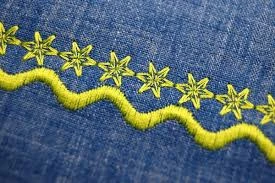
Decorative or embroidery stitches are special stitches used primarily to beautify fabric and create artistic designs. They add color, texture, and pattern to plain fabric, making items more attractive and personalized.
B. types of decorative/embroidery stitches
- Chain Stitch
- Description: Loops of thread connected to form a chain-like pattern
- Appearance: Looks like links in a chain
- Uses: Outlining designs, making decorative lines, flower stems
- Method:
- Bring needle up through fabric
- Insert needle back at same point, leaving loop of thread
- Bring needle up short distance away, through the loop
- Pull thread to form chain link
- Repeat to continue chain
- Satin Stitch
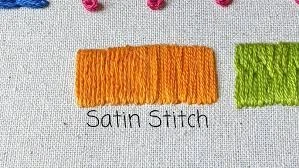
- Description: Closely packed straight stitches that fill in an area
- Appearance: Smooth, shiny surface like satin fabric
- Uses: Filling in flower petals, leaves, letters, solid areas
- Method:
- Draw outline of area to be filled
- Make straight stitches side by side
- Keep stitches close together with no gaps
- Maintain even tension for smooth appearance
- French Knots
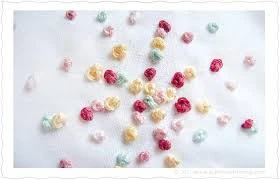
- Description: Small raised knots that create texture
- Appearance: Tiny bumps or dots on fabric surface
- Uses: Flower centers, textured filling, stars, decorative dots
- Method:
- Bring needle up through fabric
- Wrap thread around needle 2-3 times
- Insert needle close to starting point
- Pull thread tight while pushing needle through
- Creates small knot on surface
- Lazy Daisy Stitch
- Description: Individual chain stitches arranged like flower petals
- Appearance: Looks like simple flower petals or leaves
- Uses: Making flowers, leaves, decorative motifs
- Method:
- Bring needle up at center point
- Insert needle back at same point, leaving loop
- Bring needle up at tip of petal, through loop
- Make small stitch to anchor loop
- Repeat for each petal around center
- Feather Stitch
- Description: Zigzag stitch that looks like a feather
- Appearance: Alternating diagonal stitches forming feather pattern
- Uses: Decorative borders, nature designs, traditional embroidery
- Method:
- Bring needle up on left side
- Insert needle on right side with thread under needle
- Bring needle up in center, below first stitch
- Alternate from left to right, keeping thread under needle
- Star Stitch
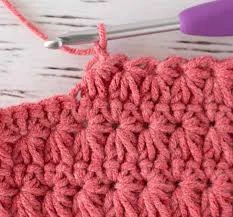
- Description: Radiating stitches from center point forming star shape
- Appearance: Multiple straight lines meeting at center
- Uses: Stars in designs, decorative points, centers of flowers
- Method:
- Mark center point
- Make straight stitches radiating from center
- Usually 6-8 points work well
- Keep points evenly spaced around center
- Seed Stitch
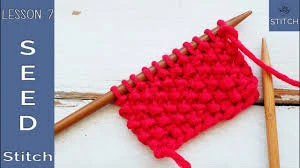
- Description: Small random straight stitches scattered over area
- Appearance: Looks like scattered seeds or dots
- Uses: Filling areas with texture, backgrounds, grass effects
- Method:
- Make small straight stitches randomly
- Vary direction and spacing slightly
- Don’t make regular patterns
- Fill area evenly but not uniformly
- Stem Stitch
- Description: Overlapping stitches that form smooth line
- Appearance: Continuous line like a rope or stem
- Uses: Outlining, stems, curved lines, letters
- Method:
- Make diagonal stitch forward
- Bring needle up halfway back along stitch
- Continue forward, always coming up through previous stitch
- Creates smooth, continuous line
C. importance of decorative/embroidery stitches
- Aesthetic Importance
- Beauty enhancement: Make plain items more attractive and appealing
- Personal expression: Allow creativity and individual style
- Color addition: Bring bright colors and patterns to neutral fabrics
- Artistic value: Create beautiful artwork on fabric
- Cultural Importance
- Traditional preservation: Keep alive cultural embroidery traditions
- Heritage sharing: Pass down traditional patterns and techniques
- Regional identity: Different areas have distinctive embroidery styles
- Historical connection: Link to ancestors’ skills and artistry
- Economic Importance
- Income generation: Skills can be used to earn money
- Cost savings: Decorate plain items instead of buying expensive decorated ones
- Gift giving: Create meaningful handmade gifts
- Business opportunities: Sell embroidered items
- Educational Importance
- Skill development: Improve hand-eye coordination and fine motor skills
- Patience building: Learn to work carefully and persistently
- Problem solving: Figure out how to create desired effects
- Concentration improvement: Focus attention on detailed work
- Therapeutic Importance
- Stress relief: Relaxing, meditative activity
- Achievement satisfaction: Pride in creating beautiful work
- Mind engagement: Keeps mind active and focused
- Social connection: Shared activity with others
D. choosing decorative stitches for different purposes
- For Outlines and Lines
- Curved lines: Stem stitch, chain stitch
- Straight lines: Back stitch, running stitch
- Decorative borders: Feather stitch, blanket stitch
- For Filling Areas
- Solid filling: Satin stitch
- Textured filling: Seed stitch, French knots
- Pattern filling: Combination of different stitches
- For Specific Design Elements
- Flowers: Lazy daisy, satin stitch, French knots
- Leaves: Satin stitch, feather stitch
- Stars: Star stitch, cross stitch
- Nature scenes: Combination of various stitches
E. creating an album of decorative stitches
- Album Planning
- Page layout: One stitch per page with sample and information
- Color scheme: Use different colored threads to show stitches clearly
- Size standards: Keep all samples similar size for consistency
- Information format: Include name, description, uses, and difficulty
- Materials for Decorative Stitch Album
- Fabric: Light-colored fabric to show colored threads well
- Threads: Embroidery floss in various bright colors
- Needles: Embroidery needles with larger eyes
- Hoops: Small embroidery hoops to hold fabric taut
- Album materials: Pages, glue, markers, protective covers
- Sample Album Page for Decorative Stitches
- Quality Standards for Decorative Album
- Colorful presentation: Use attractive color combinations
- Neat execution: All stitches should be well-formed and even
- Complete samples: Show each stitch clearly and completely
- Accurate information: Correct descriptions and uses listed
- Creative layout: Attractive, organized presentation
- Album Organization Options
- By difficulty: Easy to hard stitches
- By use: Outline stitches, filling stitches, decorative stitches
- By appearance: Linear stitches, textured stitches, solid stitches
- Alphabetical: By stitch name
Practical activity
Students will:
- Practice each decorative stitch on small fabric pieces
- Create colorful samples using different thread colors
- Begin assembling their decorative stitch album
- Design a simple pattern using multiple decorative stitches
Teaching AIDS
Embroidery threads in various colors, embroidery needles, small embroidery hoops, fabric pieces, sample decorative embroidery, album materials
Evaluation questions
- What are decorative stitches?
- Name 6 types of decorative stitches
- Which stitch is best for filling in solid areas?
- Why are decorative stitches important in needlework?
- What stitch would you use to make flower petals?
This term's Home Economics topics
Basic 5 Second Term · 8 topics
- Family Values and Family Cycle
- Resources Family and Personal Resources
- Cleaning Agents for Cooking Tools and Equipment
- Cleaning Cooking Tools and Equipment
- Care of Cooking Tools and Equipment
- Basic Sitches (Permanent Stitches)
- Basic Stitches (Decorative/ Embroidery Stitches)
- Sewing Processes (Production of an Article)
Second Term Home Economics Lesson Notes for Other Topics

Kitchen Hygiene
Read the full lesson note.
First Aid Box
Read the full lesson note.
Kitchen: Definition and Types
Read the full lesson note.
Types of Home Cleaning II
Read the full lesson note.
Types of Home Cleaning I
Read the full lesson note.
Home Hygiene
Read the full lesson note.
Clothing Construction Continued. (Production of Seam Album)
Read the full lesson note.
Clothing Construction Continued. (Production of Seam Album)
Read the full lesson note.
Review of First Term Scheme of Work
Read the full lesson note.
Sewing Processes (Production Of An Article)
Read the full lesson note.
Care Of Cooking Tools And Equipment
Read the full lesson note.
Cleaning Cooking Tools And Equipment
Read the full lesson note.

Basic Sitches (Permanent Stitches)
Read the full lesson note.
Cleaning Agents For Cooking Tools And Equipment
Read the full lesson note.
Resources Family And Personal Resources
Read the full lesson note.
Lesson Notes for Other Classes

Basic 1 Lesson Note
The complete lesson note to guide your studies.
Basic 2 Lesson Note
The complete lesson note to guide your studies.
Basic 3 Lesson Note
The complete lesson note to guide your studies.
Basic 4 Lesson Note
The complete lesson note to guide your studies.
Basic 6 Lesson Note
The complete lesson note to guide your studies.

JSS1 Lesson Note
The complete lesson note to guide your studies.