Introduction to Aquaculture – SS2 Livestock Farming Lesson Note (First Term)
Download Lesson NoteLesson note at a glance
- Subject
- Livestock Farming
- Class
- SS2
- Term
- First Term
- Topic
- Introduction to Aquaculture
- Order
- Topic 1 of 8 this term
- Reading time
- 3 min
What is Aquaculture?
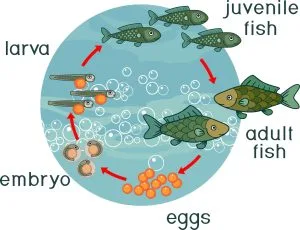
When we talk about farming, most people think of cows, goats, or maize. But did you know we can “plant” and “harvest” water animals too? That is what Aquaculture is all about.
Simply put, aquaculture is the act of breeding, rearing, and harvesting fish, prawns, crabs, and even water plants in a controlled environment. Instead of just going to the river to catch whatever nature provides, we create a home for them (like a pond) and look after them until they are big enough to eat or sell.
Key Terms to Know
- Fry: Very young baby fish.
- Fingerlings: Fish that are about the size of a human finger.
- Table Size: Fish that are big enough to be cooked and eaten.
Why is Fish Farming Important?
Fish farming isn’t just a hobby; it’s a vital part of our economy and health. Here is why we do it:
- Healthy Protein: Fish is one of the healthiest meats. It is low in “bad” fats and great for the heart and brain.
- Job Creation: From the person who builds the pond to the person who sells the feed, aquaculture provides jobs for many people.
- Extra Income: Farmers can sell fish to make money to support their families.
- Food Security: We cannot always rely on the ocean. If we farm our own fish, we are sure of having food even when it’s hard to catch fish in the wild.
- By-products: Fish scales and bones can be used to make animal feed or fertilizers for crops.
The Extensive System (The Natural Way)
This is the “low-budget” style of fish farming. In this system, the farmer provides a large space, like a big earthen pond or a fenced-off part of a lake, and lets nature do most of the work.
- How it works: The fish find their own food (like algae and water insects). The farmer rarely gives them extra feed.
- Density: Very few fish are kept in a large area so they don’t run out of natural food.
- Cost: It is very cheap because you don’t spend much on feed or expensive pumps.
- The Catch: It takes a long time for the fish to grow, and you can’t produce a huge amount at once.
The Semi-Intensive System (The Middle Ground)
This is the most common system used by small-scale farmers. It’s a mix of nature and human help.
- How it works: The fish are kept in man-made ponds. They eat the natural food in the pond, but the farmer also “tops them up” with extra feed (like rice bran or fish pellets).
- Fertilization: The farmer might add manure to the pond to help more natural “green food” (plankton) grow.
- Density: You can keep more fish here than in the extensive system.
- Result: The fish grow faster and bigger because they are eating well.
The Intensive System (The Modern Factory)
Think of this as a “high-tech” fish farm. It is designed to produce as many fish as possible in a very small space.
- How it works: Fish are kept in tanks (concrete or plastic). They rely 100% on the farmer for food.
- The Equipment: Because there are so many fish in one tank, they need machines to pump in fresh water and oxygen constantly.
- Management: It requires a lot of attention. If the power goes out or the water gets dirty, the fish can die quickly.
- Cost: It is very expensive to set up, but you can harvest thousands of fish in a very short time.
Comparison Table
| Feature | Extensive | Semi-Intensive | Intensive |
| Feeding | Natural only | Natural + Pellets | Pellets only |
| Cost | Very Low | Moderate | High |
| Supervision | Very Little | Moderate | Constant |
| Space | Large area | Medium | Small (Tanks) |
Summary Note: > Choosing a system depends on how much money you have and how much fish you want to sell. If you want to feed your family, Extensive is fine. If you want to run a big business, Intensive is the way to go.
This term's Livestock Farming topics
SS2 First Term · 8 topics
First Term Livestock Farming Lesson Notes for Other Topics
Introduction to Animal Biotechnology
Read the full lesson note.
Reproductive Technologies
Read the full lesson note.

Animal Welfare and Ethics
Read the full lesson note.
Farm Project Development
Read the full lesson note.
Sustainable Livestock Farming
Read the full lesson note.
Livestock Business Planning
Read the full lesson note.

Entrepreneurship in Livestock
Read the full lesson note.
Genetic Improvement
Read the full lesson note.

Economics of Aquaculture
Read the full lesson note.

Fish Marketing
Read the full lesson note.

Fish Harvesting
Read the full lesson note.

Fish Health and Diseases
Read the full lesson note.
Feed Nutrition and Feeding
Read the full lesson note.

Fish Breeds and Fingerlings
Read the full lesson note.

Fish Pond Construction
Read the full lesson note.
Lesson Notes for Other Classes

Basic 1 Lesson Note
The complete lesson note to guide your studies.

Basic 2 Lesson Note
The complete lesson note to guide your studies.

Basic 3 Lesson Note
The complete lesson note to guide your studies.

Basic 4 Lesson Note
The complete lesson note to guide your studies.

Basic 5 Lesson Note
The complete lesson note to guide your studies.

Basic 6 Lesson Note
The complete lesson note to guide your studies.