
Colour Application JSS2 Cultural & Creative Arts (CCA) Lesson Note
Download Lesson NoteTopic: Colour Application
Colour Application – Meaning, Types of Craft, and Practical Work
Subject: Creative Arts (Cultural and Creative Arts)
Class: JSS2
Duration: 40 minutes
LESSON OBJECTIVES
By the end of this lesson, pupils should be able to:
- Explain what colour application means in simple terms
- Mention at least four types of craft where colours can be used
- Apply colours correctly on a craft item to make it beautiful
- Appreciate the importance of colour in making things attractive
MATERIALS NEEDED
- Cardboard paper or thick paper
- Coloured pencils, crayons, or paints
- Beads (different colours)
- Strings or threads
- Clay or plasticine
- Old magazines with colourful pictures
- Glue and scissors
- Sample craft items (basket, necklace, decorated pot, woven mat)
PREVIOUS KNOWLEDGE
Pupils already know about primary and secondary colours. They have also learned about colour mixing in their previous lessons.
LESSON CONTENT
INTRODUCTION (5 minutes)
The teacher brings a plain white paper cup and another cup that has been decorated with bright colours. The teacher asks pupils: “Which of these two cups looks more beautiful?” Pupils respond that the coloured one looks better.
The teacher then shows a plain brown basket and another basket with coloured patterns. Again, pupils notice that colours make things more attractive and interesting to look at.
The teacher explains that today’s lesson is about how we use colours to make our crafts beautiful and special.
STEP 1: Meaning of Colour Application (7 minutes)
The teacher writes on the board: COLOUR APPLICATION
The teacher breaks down the meaning in simple words:
- Colour = Red, blue, yellow, green, and all the other shades we can see
- Application = Putting something on, using something, adding something
So, colour application means putting colours on objects to make them look good. It is the way we add colours to things we make with our hands.
The teacher gives everyday examples:
- When your mother ties a colourful wrapper, she is applying colour to her dressing
- When you paint your clay pot red and white, you are applying colour
- When someone weaves a mat with different coloured threads, they are applying colour
Why do we apply colour to crafts? The teacher asks pupils to think about this question. After getting responses, the teacher lists the reasons on the board:
- To make things beautiful and attractive
- To make our work look professional and complete
- To show our feelings and ideas (bright colours for happy things, calm colours for gentle things)
- To make our crafts stand out and get attention
- To show our culture and traditions (many Nigerian crafts use specific colour combinations)
STEP 2: Types of Craft Where Colour Can Be Applied (10 minutes)
The teacher explains that almost every craft can have colour. Then the teacher shows real samples or pictures of different crafts and discusses them one by one.
- Pottery and Ceramics

- Clay pots, plates, and bowls can be painted with different colours
- Traditional Nigerian pots often have patterns in red, black, and white
- Modern ceramic items can have any colour combination

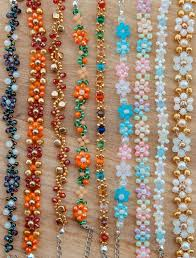
- Bead Making and Jewellery
- Necklaces, bracelets, and anklets use colourful beads
- We can arrange beads in patterns: red-yellow-red-yellow, or blue-blue-green-blue-blue-green
- The colours we choose show our style and personality
- Weaving
- Mats, baskets, and bags made from raffia or thread
- Weavers use different coloured threads to create patterns and designs
- Traditional Yoruba “aso oke” cloth has beautiful colour combinations
- Tie and Dye (Adire)
- This is a traditional Nigerian craft where we fold cloth and dye it in colours
- The folding creates patterns, and colours like blue, purple, yellow, and red make the cloth beautiful
- Each colour pattern tells a different story
- Paper Craft
- Greeting cards, paper flowers, and decorations
- We can use coloured paper or paint white paper with our favourite colours
- Cutting and pasting different coloured papers creates lovely designs
- Fabric Decoration
- Drawing or painting on cloth bags, shirts, or pillowcases
- Using fabric paints or markers to add colour and designs
- Embroidery uses coloured threads to make patterns on cloth
- Leatherwork
- Bags, shoes, and belts made from leather can be dyed different colours
- Artists can carve patterns and fill them with colour
- Brown, black, tan, and red are popular leather colours
- Wood Carving
- Carved wooden masks, figures, and decorations
- After carving, artists paint them with colours
- Many traditional masks use strong colours like red, black, white, and yellow
The teacher asks pupils to mention crafts they have seen in their homes or communities. Pupils share examples like their mother’s beaded necklace, decorated calabashes, coloured baskets at the market, or painted signs in their neighbourhood.
STEP 3: Practical Work on Colour Application (15 minutes)
Now it’s time for hands-on work! The teacher divides the class into groups based on available materials.
Activity 1: Paper Craft Group (Greeting Card Making) Materials: Cardboard, coloured pencils, crayons, glue, coloured paper pieces
Steps:
- Fold a piece of cardboard in half to make a card
- Think about who will receive this card (friend, parent, teacher)
- Draw a simple design on the front – maybe flowers, a house, or a sun
- Apply colours carefully, staying inside the lines
- Add your name inside the card
- Use different colours to make it bright and cheerful
Activity 2: Bead Pattern Group Materials: Coloured beads, string
Steps:
- Choose three different colours of beads
- Create a pattern by arranging colours in order
- String the beads following your pattern
- Make sure the pattern repeats at least three times
- Tie the ends to make a simple bracelet
Activity 3: Clay/Plasticine Group Materials: Clay or plasticine, painting materials
Steps:
- Mold a simple shape (pot, bowl, or animal)
- Let it dry if using clay (or skip this if using plasticine)
- Paint or colour your creation using at least three colours
- Make patterns or designs with your colours
- Let it dry completely
Activity 4: Collage Making Group Materials: Old magazines, paper, glue, scissors
Steps:
- Cut out colourful pictures from magazines
- Arrange them on paper to create a beautiful design
- Paste them down carefully
- Make sure colours look good together
- Add your own drawings with crayons if you want
The teacher moves from group to group, offering help and encouragement. The teacher reminds pupils to:
- Choose colours that look good together
- Work carefully and neatly
- Not use too much glue or paint
- Clean up spills immediately
- Respect their friends’ work
EVALUATION (3 minutes)
The teacher asks questions to check if pupils understood the lesson:
- What does colour application mean?
- Name three types of craft where we can apply colour
- Why is it important to add colour to our crafts?
- Which craft activity did you enjoy most today and why?
- Look at your friend’s work. What colours did they use well?
CONCLUSION
The teacher invites each group to show their finished work to the class. Pupils take turns displaying what they made. The teacher praises everyone’s effort and points out good use of colour in different works.
The teacher explains that colour application is a skill that gets better with practice. The more we work with colours, the better we become at choosing which colours work well together.
The teacher displays all the finished crafts on a table or wall where everyone can admire them. This makes pupils feel proud of their work.
ASSIGNMENT
- Go home and look at three craft items in your house (basket, pot, cloth, jewellery, etc.). Write down what colours were used on each item.
- Draw and colour your own design for one of these crafts:
- A decorated clay pot
- A beaded necklace pattern
- A woven mat design
- Interview someone in your family who does craftwork. Ask them: “Why do you choose the colours you use in your work?” Write down what they tell you.
TEACHER’S NOTES
- If materials are limited, rotate groups so each group tries different activities on different days
- Save the best craft pieces to use as teaching samples for next term
- Some pupils may need help with scissors – supervise closely during cutting activities
- Encourage pupils who are shy about their artistic ability. Remind everyone that practice makes perfect
- Take photos of the finished crafts to create a classroom portfolio
First Term Cultural & Creative Arts (CCA) Lesson Notes for Other Topics

Introduction to Drawing - Objects in Our Environment
Explore lesson notes covering all topics.

Introduction to Singing
Explore lesson notes covering all topics.

Singing About Flowery Plants Using Tonic Solfa
Explore lesson notes covering all topics.

Staging - The Way a Play is Produced and Presented
Explore lesson notes covering all topics.

Types of Flowers
Explore lesson notes covering all topics.

Drawing of Staff/Stave, The Grand Staff, and The Clefs
Explore lesson notes covering all topics.

Use of Lines
Explore lesson notes covering all topics.
Theatrical Elements and Personnel
Explore lesson notes covering all topics.
Forms of Dance
Explore lesson notes covering all topics.
Imaginative and Creative Drawing
Explore lesson notes covering all topics.
Choral Singing
Explore lesson notes covering all topics.
Casting and Rehearsal
Explore lesson notes covering all topics.
Card Making and Decoration
Explore lesson notes covering all topics.
Introduction to Life Drawing
Explore lesson notes covering all topics.

Rhythmic Pattern 2
Explore lesson notes covering all topics.


Lesson Notes for Other Classes

Basic 1 Lesson Note
The complete lesson note to guide your studies.

Basic 2 Lesson Note
The complete lesson note to guide your studies.
Basic 3 Lesson Note
The complete lesson note to guide your studies.

Basic 4 Lesson Note
The complete lesson note to guide your studies.
Basic 5 Lesson Note
The complete lesson note to guide your studies.
Basic 6 Lesson Note
The complete lesson note to guide your studies.