The Human Reproductive System – Basic 6 Basic Technology Lesson Note (First Term)
Download Lesson NoteLesson note at a glance
- Subject
- Basic Technology
- Class
- Basic 6
- Term
- First Term
- Topic
- The Human Reproductive System
- Order
- Topic 19 of 24 this term
- Reading time
- 3 min
Learning Objectives
By the end of the lesson, pupils should be able to:
- Explain the reproductive system
- Identify the structures of male and female reproductive organs
- Examine the functions of male and female reproductive organs
- Discuss the importance of the human reproductive system
Content
What is the Reproductive System? The reproductive system is the system in the body responsible for producing babies (offspring). It enables humans to create new life and continue the human species.
Types of Reproductive Systems
- Male Reproductive System
- Female Reproductive System
Male reproductive system
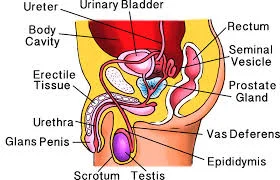
External Male Reproductive Organs
- Penis
- Organ for passing urine and sperm
- Made of soft tissue
- Contains urethra (tube for urine and sperm)
- Scrotum
- Bag of skin hanging behind penis
- Holds and protects the testes
- Keeps testes at right temperature
Internal Male Reproductive Organs
- Testes (Testicles) – Two oval organs in scrotum
- Function: Produce sperm cells and testosterone hormone
- Sperm Ducts (Vas Deferens)
- Tubes carrying sperm from testes
- Function: Transport sperm
- Seminal Vesicles
- Small glands near bladder
- Function: Produce fluid that mixes with sperm
- Prostate Gland
- Located below bladder
- Function: Produces fluid for sperm
- Urethra
- Tube through penis
- Function: Carries urine and semen out of body
Functions of Male Reproductive System
- Produce sperm cells (male sex cells)
- Produce testosterone (male hormone)
- Deliver sperm to female reproductive system
- Develop male characteristics (deep voice, facial hair, muscles)
FEMALE REPRODUCTIVE SYSTEM
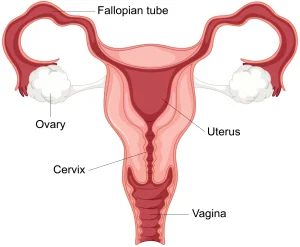
External Female Reproductive Organs
- Vulva
- External opening
- Includes labia (folds of skin)
Internal Female Reproductive Organs
- Ovaries – Two small organs (size of almonds)
- Location: Lower abdomen, one on each side
- Functions:
- Produce egg cells (ova) – female sex cells
- Produce hormones (estrogen and progesterone)
- Release one egg each month (ovulation)
- Fallopian Tubes (Oviducts)
- Two tubes connecting ovaries to uterus
- Functions:
- Carry egg from ovary to uterus
- Where fertilization usually occurs
- Uterus (Womb)
- Hollow, muscular organ (shaped like upside-down pear)
- Location: Lower abdomen
- Functions:
- Where baby grows during pregnancy
- Protects and nourishes developing baby
- Sheds lining during menstruation if no pregnancy
- Cervix
- Lower, narrow part of uterus
- Function: Connects uterus to vagina
- Vagina (Birth Canal)
- Muscular tube connecting uterus to outside
- Functions:
- Birth canal for baby delivery
- Passage for menstrual flow
- Receives sperm during reproduction
Functions of Female Reproductive System
- Produce egg cells (ova)
- Produce female hormones (estrogen, progesterone)
- Provide place for baby to develop (uterus)
- Nourish developing baby during pregnancy
- Give birth to babies
- Develop female characteristics (breasts, wider hips, menstruation)
Importance of the Human Reproductive System
- Continuation of Human Species – Enables humans to have children
- Family Creation – Allows people to have their own families
- Population Growth – Maintains human population
- Genetic Transfer – Passes traits from parents to children
- Hormone Production – Produces important hormones for body development
- Secondary Sexual Characteristics – Develops adult features
Taking Care of Reproductive System
General Care:
- Maintain good personal hygiene
- Wear clean underwear daily
- Eat healthy, balanced diet
- Exercise regularly
- Avoid tight clothing
- Get regular medical check-ups
- Learn about your body
- Practice abstinence until marriage
For Girls:
- Learn about menstruation
- Use sanitary pads properly during period
- Bath regularly, especially during menstruation
- Change pads frequently
For Boys:
- Keep genital area clean and dry
- Avoid injury to genital area during sports
What Pupils Should Know
- Reproductive system is private and personal
- Only parents, doctors, and trusted adults should discuss it with you
- No one should touch your private parts inappropriately
- Report any uncomfortable touching to trusted adults
- Respect your body and others’ bodies
- Learn correct information, not myths
Activities
- Label diagrams of male and female reproductive systems
- Group discussion on importance of reproductive health
- Question and answer session
- Watch age-appropriate educational video
This term's Basic Technology topics
Basic 6 First Term · 24 topics
- Volleyball Game
- Microsoft Paint
- Drug Abuse
- Personal Healthcare
- Scratch Programming: The 3S of Scratch
- The Human Reproductive System
- Basketball Game
- The Scripts of Scratch Programming
- Puberty
- Football Game
- The Scripts of Scratch Programming (Cont’d)
First Term Basic Technology Lesson Notes for Other Topics

Energy IV
Read the full lesson note.
Energy III
Read the full lesson note.
Energy II
Read the full lesson note.

Energy I
Read the full lesson note.

Movement (Throwing)
Read the full lesson note.

Parts of a Computer
Read the full lesson note.
Non-Living Things
Read the full lesson note.

Moving our Body Parts
Read the full lesson note.
Living Things II
Read the full lesson note.
Movement
Read the full lesson note.
Basic Computer
Read the full lesson note.
Living Things
Read the full lesson note.
Revision of First Term : PHE
Read the full lesson note.

CPU (Central Processing Unit)
Read the full lesson note.
Water II
Read the full lesson note.
Lesson Notes for Other Classes

Basic 1 Lesson Note
The complete lesson note to guide your studies.
Basic 2 Lesson Note
The complete lesson note to guide your studies.

Basic 3 Lesson Note
The complete lesson note to guide your studies.

Basic 4 Lesson Note
The complete lesson note to guide your studies.

Basic 5 Lesson Note
The complete lesson note to guide your studies.

JSS1 Lesson Note
The complete lesson note to guide your studies.