First Elements on Periodic Table – Basic 6 Basic Technology Lesson Note (Second Term)
Download Lesson NoteLesson note at a glance
- Subject
- Basic Technology
- Class
- Basic 6
- Term
- Second Term
- Topic
- First Elements on Periodic Table
- Order
- Topic 16 of 25 this term
- Reading time
- 3 min
Learning Objectives
By the end of the lesson, pupils should be able to:
- Explain what an atom is
- Develop definition of elements
- State the first ten elements with their symbols
Content
What is an Atom?
Definition: An atom is the smallest unit of matter that retains the properties of an element. It is the basic building block of all substances.
Structure of an Atom:
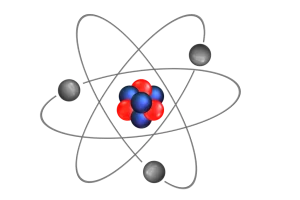
Three Main Subatomic Particles:
- PROTONS
- Positive charge (+1)
- Located in nucleus (center)
- Mass: 1 atomic mass unit (amu)
- Determines element identity
- Number of protons = Atomic number
- NEUTRONS
- No charge (neutral/0)
- Located in nucleus
- Mass: 1 amu
- Adds to atomic mass
- Isotopes have different neutron numbers
- ELECTRONS
- Negative charge (-1)
- Orbit nucleus in shells/energy levels
- Mass: negligible (1/1836 of proton)
- Involved in chemical bonding
- Determine chemical properties
Atomic Structure:
Nucleus
(Protons + Neutrons)
||
Electron Shells
(Electrons orbiting)
Key Concepts:
- Atoms are incredibly small (0.1 nanometers)
- Most of atom’s mass in nucleus
- Most of atom is empty space
- Same element = same number of protons
- Neutral atom: protons = electrons
What is an Element?
Definition: An element is a pure substance made of only one type of atom that cannot be broken down into simpler substances by chemical means.
Characteristics:
- Unique properties
- Identified by atomic number
- Unique name and symbol
- Cannot be separated chemically
- 118 confirmed elements exist
The Periodic Table
What it is:
- Organized chart of all elements
- Arranged by atomic number
- Shows chemical properties
- Created by Dmitri Mendeleev (1869)
Organization:
- Horizontal rows = Periods (7 periods)
- Vertical columns = Groups (18 groups)
- Elements in same group have similar properties
- Increasing atomic number left to right
Categories:
- Metals – Left and center (shiny, conduct electricity, malleable)
- Non-metals – Right side (dull, poor conductors, brittle)
- Metalloids – Between (properties of both)
The First Ten Elements
- HYDROGEN (H)
- Atomic Number: 1
- Symbol: H
- Type: Non-metal
- State: Gas
- Properties:
- Lightest element
- Colourless, odourless
- Highly flammable
- Most abundant in universe
- Uses:
- Rocket fuel
- Making ammonia (fertilizers)
- Fuel cells
- Found in water (H₂O)
- HELIUM (He)
- Atomic Number: 2
- Symbol: He
- Type: Noble gas
- State: Gas
- Properties:
- Second lightest
- Inert (doesn’t react)
- Less dense than air
- Colourless, odourless
- Uses:
- Balloons and airships
- MRI machine cooling
- Deep-sea diving
- Leak detection
- LITHIUM (Li)
- Atomic Number: 3
- Symbol: Li
- Type: Alkali metal
- State: Solid
- Properties:
- Soft, silvery-white
- Lightest metal
- Reacts with water
- Low density (floats on water)
- Uses:
- Rechargeable batteries (phones, laptops, electric cars)
- Mental health medication
- Ceramics and glass
- Lubricants
- BERYLLIUM (Be)
- Atomic Number: 4
- Symbol: Be
- Type: Alkaline earth metal
- State: Solid
- Properties:
- Steel-gray color
- Lightweight but strong
- Toxic
- Good heat conductor
- Uses:
- Aerospace components
- X-ray equipment
- Copper alloys
- Nuclear reactors
- BORON (B)
- Atomic Number: 5
- Symbol: B
- Type: Metalloid
- State: Solid
- Properties:
- Black or brown powder
- Very hard when crystalline
- Semi-conductor
- Multiple forms
- Uses:
- Glass (borosilicate)
- Detergents and bleaches
- Fiberglass
- Semiconductors
- CARBON (C)
- Atomic Number: 6
- Symbol: C
- Type: Non-metal
- State: Solid
- Properties:
- Multiple forms (diamond, graphite, carbon fiber)
- Essential for life
- Forms millions of compounds
- Can form long chains
- Uses:
- Basis of organic chemistry and life
- Fuel (coal, charcoal)
- Pencil “lead” (graphite)
- Diamonds (jewelry, cutting)
- Carbon fiber (sports equipment)
- Steel production
- NITROGEN (N)
- Atomic Number: 7
- Symbol: N
- Type: Non-metal
- State: Gas
- Properties:
- Colourless, odourless
- 78% of Earth’s atmosphere
- Relatively unreactive at room temp
- Essential for proteins and DNA
- Uses:
- Fertilizers
- Food preservation
- Liquid nitrogen (cooling)
- Making ammonia
- Inflating tires
- OXYGEN (O)
9.Fluorine (F)
10.Neon (Ne)
This term's Basic Technology topics
Basic 6 Second Term · 25 topics
- Physical Fitness
- Computer Networks Cont’d
- Colours
- Physical Fitness Cont’d
- Computer Networks Cont’d
- First Elements on Periodic Table
- Gymnastics
- Scratch Programming I
- Introduction to Wood Hand Tools
- Scratch Programming II
- Gymnastics with Apparatus
Second Term Basic Technology Lesson Notes for Other Topics
Games - Basic Skills in Ball Games
Read the full lesson note.

Starting Up a Computer
Read the full lesson note.
Demonstrating Air in Space
Read the full lesson note.
Games (Local Games)
Read the full lesson note.

Parts of a Computer (Peripherals)
Read the full lesson note.
Air
Read the full lesson note.

Starting Up a Computer
Read the full lesson note.
Basic Safety for Computers
Read the full lesson note.
Safety Rules in Football Games
Read the full lesson note.
Light Energy, Uses of Light and Colour
Read the full lesson note.
Computer Room
Read the full lesson note.
Swimming (Aquatic)
Read the full lesson note.
Colour Identification 1 - Colours of Objects
Read the full lesson note.

Computer Room
Read the full lesson note.
Colour Identification II- Road Traffic Light Signs
Read the full lesson note.
Lesson Notes for Other Classes

Basic 1 Lesson Note
The complete lesson note to guide your studies.
Basic 2 Lesson Note
The complete lesson note to guide your studies.

Basic 3 Lesson Note
The complete lesson note to guide your studies.
Basic 4 Lesson Note
The complete lesson note to guide your studies.
Basic 5 Lesson Note
The complete lesson note to guide your studies.

JSS1 Lesson Note
The complete lesson note to guide your studies.