Environmental Changes (Water and Air) – Basic 5 Basic Science Lesson Note (First Term)
Download Lesson NoteLesson note at a glance
- Subject
- Basic Science
- Class
- Basic 5
- Term
- First Term
- Topic
- Environmental Changes (Water and Air)
- Order
- Topic 6 of 8 this term
- Reading time
- 3 min
Learning objectives
By the end of this lesson, pupils should be able to:
- Define environmental changes
- Identify different types of water pollution
- List sources of air pollution
- Explain the effects of water and air pollution on living things
- Suggest ways to prevent water and air pollution
Previous knowledge
Pupils are familiar with:
- The water cycle
- Sources of water
- Importance of air to living things
- Different components of our environment
Teaching AIDS/materials
- Pictures showing polluted and clean water bodies
- Charts showing sources of air pollution
- Samples of polluted water (if available)
- Real objects: plastic bottles, cans, paper waste
- Chalkboard/whiteboard
- Markers/chalk
Lesson development
INTRODUCTION
Step 1: Greet the pupils and ask them to observe two pictures – one showing a clean river and another showing a polluted river.
Questions to ask:
- What differences do you notice between these two pictures?
- Which water would you prefer to drink? Why?
- What do you think caused the difference?
PRESENTATION
What are Environmental Changes?
Environmental changes are alterations that occur in our surroundings. These changes can be natural (like rainfall, drought) or caused by human activities (like pollution).
Water pollution
Definition: Water pollution occurs when harmful substances are added to water bodies, making them dirty and unsafe for use.
Sources of Water Pollution:
- Industrial waste – Factories release chemicals into rivers and streams
- Domestic waste – Household garbage, soap, and detergents
- Agricultural chemicals – Fertilizers and pesticides from farms
- Oil spills – From ships and oil drilling
- Sewage – Waste water from homes and toilets
- Plastic waste – Bottles, bags, and other plastic materials
Effects of Water Pollution:
- Spread of diseases like cholera, typhoid, and diarrhea
- Death of fish and other water animals
- Bad smell and taste of water
- Destruction of water plants
- Shortage of clean drinking water
Air pollution
Definition: Air pollution happens when harmful gases, dust, and other substances mix with the air we breathe.
Sources of Air Pollution:
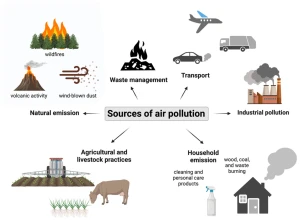
- Vehicle exhaust – Smoke from cars, buses, and motorcycles
- Factory smoke – Gases released from industries
- Burning of waste – Smoke from burning garbage and leaves
- Bush burning – Clearing farmland by burning
- Dust – From construction sites and dry soil
- Cooking smoke – From wood and charcoal stoves
Effects of Air Pollution:
- Breathing problems and lung diseases
- Eye irritation and coughing
- Acid rain that damages plants and buildings
- Global warming and climate change
- Reduced visibility (smog)
- Damage to the ozone layer
Prevention of water and air pollution
Preventing Water Pollution:
- Proper disposal of waste in designated areas
- Avoid throwing garbage into water bodies
- Use of eco-friendly detergents
- Proper sewage treatment
- Avoid using excessive fertilizers and pesticides
- Recycling of materials
Preventing Air Pollution:
- Use public transportation or walk short distances
- Plant more trees and flowers
- Avoid burning waste materials
- Use clean cooking methods (gas instead of wood)
- Regular maintenance of vehicles
- Use renewable energy sources
EVALUATION
Questions:
- What is environmental change?
- Name three sources of water pollution
- List two effects of air pollution on human health
- How can we prevent water pollution in our community?
- Why is it important to plant trees?
CONCLUSION
Environmental changes, especially pollution of water and air, affect all living things. We must work together to keep our environment clean and safe. Every small action we take can make a big difference in protecting our water and air.
ASSIGNMENT
- Draw and color a picture showing a clean environment
- List five things you can do at home to prevent water pollution
- Write three ways your family can help reduce air pollution
Weekend assignment
Visit your neighborhood and identify:
- Two sources of water pollution
- Two sources of air pollution
- Write a short paragraph on what you observed and suggest solutions
This term's Basic Science topics
Basic 5 First Term · 8 topics
First Term Basic Science Lesson Notes for Other Topics

Energy IV
Read the full lesson note.
Sports and Games (Athletics)
Read the full lesson note.
Energy III
Read the full lesson note.
Safety
Read the full lesson note.
Monitor and Mouse
Read the full lesson note.
Energy II
Read the full lesson note.
Movement (Catching)
Read the full lesson note.

Energy I
Read the full lesson note.
Non-Living Things
Read the full lesson note.
Living Things II
Read the full lesson note.
Living Things
Read the full lesson note.
Water II
Read the full lesson note.
Water
Read the full lesson note.
Measurement Of Length
Read the full lesson note.
Measurement Of Mass
Read the full lesson note.
Lesson Notes for Other Classes

Basic 1 Lesson Note
The complete lesson note to guide your studies.
Basic 2 Lesson Note
The complete lesson note to guide your studies.

Basic 3 Lesson Note
The complete lesson note to guide your studies.
Basic 4 Lesson Note
The complete lesson note to guide your studies.
Basic 6 Lesson Note
The complete lesson note to guide your studies.

JSS1 Lesson Note
The complete lesson note to guide your studies.