
Planting Activities Basic 5 Agricultural Science Lesson Note
Download Lesson NoteTopic: Planting Activities

LEARNING OBJECTIVES
By the end of the lesson, pupils should be able to:
- Describe planting activities
- Identify tools used in planting activities
- Carry out planting activities on the school farm and at home
PREVIOUS KNOWLEDGE
Pupils have learned about procedures for crop production and pre-planting activities in the previous lesson.
INTRODUCTION
After preparing the land and seeds, the next step is planting. Planting is putting seeds or seedlings into the soil so they can grow into mature plants that will give us food or other useful products.
LESSON CONTENT
1. DESCRIPTION OF PLANTING ACTIVITIES
What is Planting? Planting is the process of putting seeds, seedlings, or other plant parts into prepared soil for them to grow.
Types of Planting:
- DIRECT SEEDING (Direct Planting)
- Seeds are planted directly in the field
- No transplanting needed
- Examples: maize, beans, groundnut, okra
- TRANSPLANTING

- Seeds are first grown in nursery
- Young plants (seedlings) are moved to main field
- Examples: tomato, pepper, cabbage, rice
- VEGETATIVE PLANTING
- Using plant parts other than seeds
- Examples: yam (tubers), cassava (stem cuttings), plantain (suckers)
2. PLANTING METHODS
- BROADCASTING
- Seeds are scattered all over the field
- Used for small seeds like rice and guinea grass
- Simple but uses more seeds
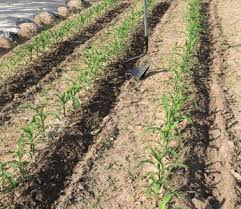
B. DRILLING

- Seeds are planted in straight lines (rows)
- Good for cereals like maize and wheat
- Easy to weed and harvest
C. DIBBLING (Hole Planting)
- Seeds are planted in holes
- Good spacing between plants
- Used for large seeds like beans and maize
D. HILL PLANTING
- Several seeds planted together in small hills
- Good for crops like groundnut and cowpea
3. FACTORS TO CONSIDER WHEN PLANTING
- PLANTING TIME
- Plant at the right season
- Consider rainfall pattern
- Early rains for early planting
- Late rains for late planting
- PLANT SPACING
- Give enough space between plants
- Prevents overcrowding
- Allows proper growth and development
- PLANTING DEPTH
- Plant seeds at correct depth
- Too shallow: seeds may dry up
- Too deep: seeds may not germinate
- SEED RATE
- Use right amount of seeds per area
- Too many seeds waste resources
- Too few seeds reduce yield
4. TOOLS USED IN PLANTING ACTIVITIES
- HAND TOOLS
- Hoe

- Used for making holes
- Covering seeds with soil
- Making furrows
2. Cutlass/Machete
- Clearing weeds before planting
- Cutting planting materials
3. Dibbler/Planting Stick

- Making holes for seeds
- Measuring planting depth
4. Hand Trowel

- Small digging tool
- Good for transplanting
- Making small holes
5. Watering Can
- Watering newly planted seeds
- Gentle watering for seedlings
6. Measuring Tape/Rope
- Measuring plant spacing
- Making straight rows
- MECHANICAL TOOLS
- Seed Drill
- Machine for planting seeds in rows
- Used on large farms
- Plants seeds at correct depth and spacing
- Planter
- Machine for planting specific crops
- Can plant different seed sizes
- Faster than hand planting
5. PLANTING PROCEDURES
FOR DIRECT SEEDING:
- Prepare planting materials
- Select good quality seeds
- Test for germination
- Treat if necessary
- Mark planting rows
- Use rope to make straight lines
- Measure correct spacing
- Make planting holes
- Use dibbler or hoe
- Make holes at correct depth
- Follow spacing requirements
- Plant seeds
- Drop seeds in holes
- Cover with fine soil
- Press soil gently
- Water if necessary
- Give light watering
- Avoid washing away seeds
FOR TRANSPLANTING:
- Prepare nursery seedlings
- Select healthy seedlings
- Water before removing from nursery
- Prepare main field
- Make planting holes
- Add compost if available
- Remove seedlings carefully
- Keep roots intact
- Avoid damaging plants
- Plant immediately
- Place in holes quickly
- Cover roots with soil
- Press soil around roots
- Water immediately
- Give plenty water
- Shade if very sunny
6. PROPER PLANT SPACING
Different crops need different spacing:
- Maize: 75cm between rows, 25cm between plants
- Beans: 30cm between rows, 10cm between plants
- Tomato: 75cm between rows, 50cm between plants
- Yam: 1m between rows, 1m between plants
- Cassava: 1m between rows, 1m between plants
EVALUATION QUESTIONS
- What is planting?
- Name three types of planting
- What is the difference between direct seeding and transplanting?
- List four planting methods
- Give three examples of crops planted by transplanting
- Name five tools used in planting activities
- What factors should be considered when planting?
- Why is proper plant spacing important?
- What is broadcasting method of planting?
- Give the correct spacing for maize planting
ASSIGNMENT
- Plant beans or maize in your home garden using the dibbling method
- Measure and mark proper spacing for the crops
- Record the date of planting and observe daily growth
- Draw and label five tools used for planting
PRACTICAL ACTIVITY
On the school farm:
- Practice direct seeding with okra or spinach
- Transplant tomato or pepper seedlings
- Use different planting methods for different crops
- Measure correct spacing for each crop planted
- Water the planted crops properly
CONCLUSION
Planting is a very important step in crop production. Using the right method, tools, and spacing helps crops grow well and give good harvest. Farmers must plant at the right time and take good care of newly planted crops.
REFERENCES
- Primary Agricultural Science Textbook for Primary 6
- Practical Farming Guide for Schools
- Crop Production Manual for Primary Schools
First Term Agricultural Science Lesson Notes for Other Topics

Preservation of Farm Produce
Explore lesson notes covering all topics.
Factors that may Hinder Preservation
Explore lesson notes covering all topics.
Methods of Preserving the Farm Produce; Sun Drying, Smoking
Explore lesson notes covering all topics.

Preservation of Grains and Cereals Crops
Explore lesson notes covering all topics.

Preservation of Roots and Tubers Crops
Explore lesson notes covering all topics.
Preservation of Fruits: Orange, Banana, Tomatoes, Pawpaw...
Explore lesson notes covering all topics.
Conservation of Oil Crops: Soya Bean, Oil Palm, Groundnut
Explore lesson notes covering all topics.
Preservation of Vegetables
Explore lesson notes covering all topics.

Health And Safety
Explore lesson notes covering all topics.

Procedures For Crop Production
Explore lesson notes covering all topics.
Crop Production
Explore lesson notes covering all topics.
Post-Planting Activities
Explore lesson notes covering all topics.

Post-Harvesting Activities; Sorting, Grading, And Storage
Explore lesson notes covering all topics.
Harvesting Activities
Explore lesson notes covering all topics.

Preservation Of Harvested Crops; Silo, Crib, Yam Barn, Bagging
Explore lesson notes covering all topics.
Lesson Notes for Other Classes

Basic 1 Lesson Note
The complete lesson note to guide your studies.

Basic 2 Lesson Note
The complete lesson note to guide your studies.
Basic 3 Lesson Note
The complete lesson note to guide your studies.

Basic 4 Lesson Note
The complete lesson note to guide your studies.
Basic 6 Lesson Note
The complete lesson note to guide your studies.

JSS1 Lesson Note
The complete lesson note to guide your studies.