Knitting and Crocheting – Basic 4 Home Economics Lesson Note (First Term)
Download this term · ₦1,000Lesson note at a glance
- Subject
- Home Economics
- Class
- Basic 4
- Term
- First Term
- Topic
- Knitting and Crocheting
- Order
- Topic 9 of 9 this term
- Reading time
- 5 min
What are Knitting and Crocheting?
Knitting and crocheting are crafts that use yarn and special tools to create fabric by making loops and connecting them together.
Knitting
What is Knitting?
Knitting is making fabric by creating interlocking loops of yarn using two or more knitting needles.
Knitting Tools:
Knitting Needles:
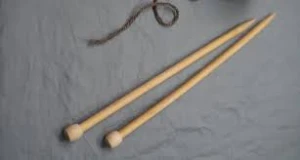
- Long, smooth sticks with points at one or both ends
- Made from: Plastic, wood, metal, or bamboo
- Different sizes: Thin needles for fine yarn, thick needles for chunky yarn
- Types: Straight needles, circular needles, double-pointed needles
Yarn:
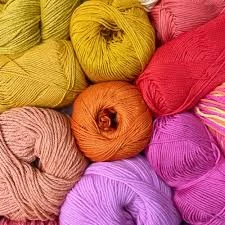
- Continuous strand of twisted fibers
- Materials: Wool, cotton, acrylic, or blends
- Weights: Fine (thin) to bulky (thick)
- Colors: Available in rainbow of colors
Other Tools:
- Stitch markers: Mark special places in knitting
- Row counter: Keeps track of rows completed
- Tapestry needle: For sewing pieces together
- Scissors: For cutting yarn
Basic Knitting Stitches:
Knit Stitch:
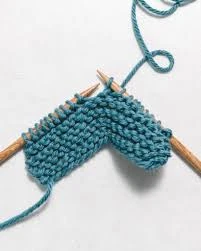
- Most basic stitch in knitting
- Creates smooth, flat surface called stockinette
- Foundation for most knitting patterns
- Easy to learn and remember
Purl Stitch:
- Opposite of knit stitch
- Creates bumpy texture
- Combined with knit creates many patterns
- Takes practice to master
How Knitting Works:
- Cast on: Put loops on needle to start
- Knit rows: Work stitches back and forth
- Create fabric: Loops connect to form cloth
- Cast off: Remove loops to finish project
Simple Knitting Projects:
- Dishcloths: Square pieces for cleaning
- Scarves: Long strips to wear around neck
- Pot holders: Thick squares to protect from heat
- Simple blankets: Large rectangles for warmth
Crocheting

Crocheting is making fabric by pulling loops of yarn through other loops using a single hooked tool called a crochet hook.
Crocheting Tools:
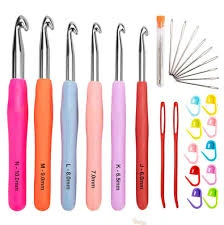
Crochet Hook:
- Single tool with hook at one end
- Made from: Aluminum, plastic, wood, or steel
- Different sizes: Small hooks for fine thread, large hooks for thick yarn
- Handle: Comfortable grip for easy working
Yarn:
- Same as knitting yarn but often used differently
- Thread: Very fine yarn for delicate work
- Worsted weight: Medium thickness, good for beginners
- Chunky yarn: Thick yarn for quick projects
Other Tools:
- Stitch markers: Mark important stitches
- Tapestry needle: For finishing and joining
- Scissors: For cutting yarn
- Measuring tape: For checking size
Basic Crochet Stitches:
Chain Stitch:
- Foundation of all crochet work
- Creates starting row for other stitches
- Looks like braided chain
- First stitch beginners learn
Single Crochet:
- Basic building stitch
- Creates dense, sturdy fabric
- Good for beginners
- Foundation for many patterns
Double Crochet:
- Taller than single crochet
- Works up faster
- Creates more open fabric
- Popular for many projects
How Crocheting Works:
- Make foundation chain: Starting row of chain stitches
- Work in rows or rounds: Build fabric stitch by stitch
- Follow pattern: Instructions for specific design
- Finish off: Secure last stitch and weave in ends
Simple Crochet Projects:
- Bookmarks: Long, narrow strips
- Coasters: Small circles or squares
- Dishcloths: Square cleaning cloths
- Simple hats: Round caps to wear
Differences Between Knitting and Crocheting
Tools:
- Knitting: Uses two or more needles
- Crocheting: Uses one hook
Stitches:
- Knitting: Many live stitches on needles at once
- Crocheting: Usually one active stitch at a time
Fabric:
- Knitting: Creates stretchy, flexible fabric
- Crocheting: Creates firmer, more structured fabric
Speed:
- Knitting: Generally slower but creates finer fabric
- Crocheting: Often faster, especially for beginners
Fixing Mistakes:
- Knitting: Harder to fix dropped stitches
- Crocheting: Easier to pull out and redo stitches
Benefits of Knitting and Crocheting
- Practical Skills:
- Create useful items: Clothes, blankets, household items
- Save money: Make instead of buying
- Custom fit: Make items exactly your size
- Repairs: Fix holes in knitted items
- Creative Expression:
- Choose colors: Express personal style
- Design patterns: Create your own designs
- Gift making: Handmade presents are special
- Artistic outlet: Create beautiful, functional art
- Mental Benefits:
- Relaxation: Repetitive motions are calming
- Focus: Improves concentration and attention
- Patience: Develops perseverance with long projects
- Problem solving: Figure out pattern instructions
- Physical Benefits:
- Fine motor skills: Improves hand coordination
- Hand strength: Builds finger and hand muscles
- Bilateral coordination: Uses both hands together
- Gentle exercise: Keeps hands and fingers active
- Social Benefits:
- Community: Join knitting or crochet groups
- Sharing: Teach others and learn from them
- Family bonding: Learn from grandparents or parents
- Cultural connection: Continue traditional crafts
Getting Started
For Beginners:
- Choose simple projects to build confidence
- Use medium-weight yarn that’s easy to see
- Light colors show stitches better than dark
- Adult help for learning basic techniques
First Project Suggestions:
- Knitting: Simple dishcloth or scarf
- Crocheting: Chain bracelet or bookmark
- Practice squares: Learn stitches without pressure
- Small items: Finish quickly for satisfaction
Learning Resources:
- Books: Step-by-step instruction books
- Online videos: Visual learning aids
- Classes: Local craft stores often offer lessons
- Family: Ask relatives who know these crafts
Safety and Care
Tool Safety:
- Needles and hooks have pointed ends – handle carefully
- Store safely when not in use
- Count tools to make sure none are lost
- Adult supervision when learning
Project Care:
- Keep work clean while making
- Store carefully to prevent tangling
- Follow care instructions for finished items
- Block finished pieces for professional appearance
EXERCISES
Exercise 1: Fill in the Blanks
- Knitting uses two or more ________ to create fabric
- Crocheting uses one ________ with a hook at the end
- Both crafts use ________ to make loops and create fabric
- The most basic knitting stitch is the ________ stitch
Exercise 2: True or False
- Knitting and crocheting both use yarn ____
- Crocheting uses two needles ____
- Knitting creates stretchy fabric ____
- Both crafts can make useful items ____
Exercise 3: Match Tool with Craft
Draw lines to connect each tool with the correct craft:
- Knitting needles → Crocheting
- Crochet hook → Knitting
- Two needles at once → Crocheting
- One hook at a time → Knitting
Exercise 4: Craft Identification
Write “K” for Knitting or “C” for Crocheting:
- Uses one hooked tool ____
- Creates stretchy fabric ____
- Uses two or more needles ____
- Usually faster for beginners ____
- Many live stitches at once ____
Exercise 5: Choose the Right Answer
Circle the correct answer:
- Knitting needles are made from: Only metal / Various materials
- Chain stitch is used in: Knitting / Crocheting
- Yarn comes in: One thickness / Different weights
- Both crafts help develop: Only creativity / Many skills
Exercise 6: Basic Stitches
Match the stitch with its craft:
- Knit stitch → Crocheting
- Purl stitch → Knitting
- Chain stitch → Knitting
- Single crochet → Crocheting
This term's Home Economics topics
Basic 4 First Term · 9 topics
Get Home Economics as PDF and Word
Every week of Basic 4 Home Economics, First Term, formatted and ready to print. Ad-free, and the copy lock comes off.
Get this term Card, bank transfer, USSD or OPay
First Term Home Economics Lesson Notes for Other Topics
Reasons for Cleaning the House, Classroom and the Environment
Read the full lesson note.
How to Make Detergents
Read the full lesson note.

Tools and Agents for Cleaning the Home
Read the full lesson note.
Types and Uses of Stitches
Read the full lesson note.
Effect of Wrong Meal Planning and Eating Habit
Read the full lesson note.
Introduction to Clothing Construction Process(Seam)
Read the full lesson note.
Stitches: (Temporary and Permanent)
Read the full lesson note.

Three Major Meals of the Day
Read the full lesson note.

Meaning of Meal Planning and Importance for Healthy Eating
Read the full lesson note.

Uses And Care Of Simple Sewing, Knitting And Crocheting Tools And Equipment
Read the full lesson note.
Identification Of Simple Cooking Tools And Equipment
Read the full lesson note.
Basic Stitches
Read the full lesson note.

Roles Of Each Family Members And Functions Of The Family
Read the full lesson note.
Simple Sewing Tools And Equipment
Read the full lesson note.

Guidelines For Use Of Cooking Tools And Equipment
Read the full lesson note.
Lesson Notes for Other Classes
Basic 1 Lesson Note
The complete lesson note to guide your studies.

Basic 2 Lesson Note
The complete lesson note to guide your studies.

Basic 3 Lesson Note
The complete lesson note to guide your studies.

Basic 5 Lesson Note
The complete lesson note to guide your studies.

Basic 6 Lesson Note
The complete lesson note to guide your studies.
JSS1 Lesson Note
The complete lesson note to guide your studies.