
Changes in Nature, Moving Our Body Parts and Storage Device – Basic 4 Basic Science Lesson Note (First Term)
Download Lesson NoteLesson note at a glance
- Subject
- Basic Science
- Class
- Basic 4
- Term
- First Term
- Topic
- Changes in Nature, Moving Our Body Parts and Storage Device
- Order
- Topic 1 of 8 this term
- Reading time
- 6 min
Topic: changes in nature
PERFORMANCE OBJECTIVES
At the end of the lesson, pupils should be able to:
- Know the meaning of change.
- Mention the changes they observe in their surrounding
- Tell the differences between temporary and permanent changes
- Examples of temporary and permanent changes.
TEACHING AND LEARNING MATERIALS
- Pot
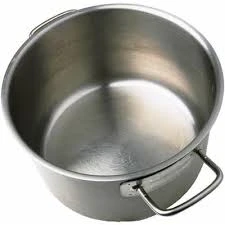
- Stove/cooking Gas

- Block
- Bucket
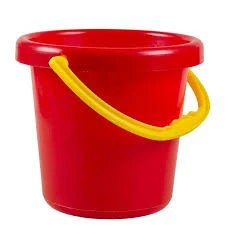
- Water
- Candle

- Green and yellow leaves

- knife

- Whiteboard/Chalkboard
- Explanatory posters/pictures
- Explanatory videos
TEACHING AND LEARNING METHODS
- Explanation
- Discussion
- Questions and answer
REFERENCE MATERIALS
- NERDC Basic Education Curriculum for primary schools.
- Universal Basic Education Curriculum for primary schools.
- Lagos State Scheme of Work.
- Online Materials.
ENTRY BEHAVIOUR/ PREVIOUS KNOWLEDGE the students have been taught
LESSON CONTENT
CHANGES IN NATURE
What is change? Change is when something loses one’s or its original nature or it is an event that occurs when something passes from one state or phase to another.
When things are no longer in their normal form, it means a change has occurred. Living things and non-living things do experience changes.
Living things are things that have life like animals (cat, dog), Human beings (Male and female) while non-living things are things without life like stone, table, chairs chalkboard.
Examples of changes
- Iron becoming rusty
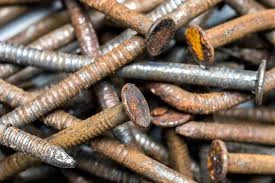
2.Green leaves turning yellow
3. Melting of candle wax

4.Ice block changing to water
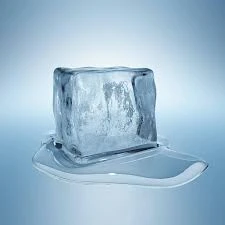
- Girl changes to woman
- Boy changes to man
Changes in Nature Occurs in two forms. These are: Temporary changes and Permanent changes
Types of changes
Temporary changes (Reversible Changes) are changes that happened for a short time and they are reversible.
Temporary changes occur due to the change in position or condition in the Environment
Examples of temporary changes
- Water changes to ice blocks during low temperatures.
- Ice block changes to water when the temperature is raised.
- Water becomes hot when heated.
- Water becomes cold removed from fire after some time.
- Chameleon change its colours to its environment.
Permanent changes (irreversible Changes)
Once permanent change occurred the body or thing affected cannot be reverse to the way, it was before. That is, it is irreversible.
Permanent change also occurs in both living and non-living things.
Examples of Permanent changes
- A child changes to an adult.
- cassava turn to Garri
- A dead person cannot live again.
- Trees cut into planks to make furniture.
- Wood burnt into ashes.
- Cement mixed with sand and water to make block.
INSTRUCTIONAL PROCEDURE
- The Teacher introduce the lesson (CHANGES IN NATURE).
- The Teacher explains the lesson.s
LEARNERS ACTIVITIES
Learners participate in the class discussion
LESSON EVALUATION
Teacher ask the learners to:
- Define change.
- Mention three changes they observe in their surrounding
- Tell the differences between temporary and permanent changes
- Give three Examples of temporary and permanent changes.
CONCLUSION: the teacher summarize the lesson.
Topic – movements
LEARNING AREA
- Introductory Activities
- Practical Demonstration of Basic Movements
PERFORMANCE OBJECTIVES
By the end of the lesson, most of the pupils should have attained the following objectives –
- demonstrate correct movement patterns of walking, running and jumping.
- perform basic manipulative movements.
INSTRUCTIONAL MATERIALS
The teacher will teach the lesson with the aid of:
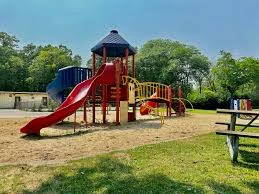
- Playground
2. Balls, etc.

METHOD OF TEACHING
Choose a suitable and appropriate methods for the lessons.
Note – Irrespective of choosing methods of teaching, always introduce an activities that will arouse pupil’s interest or lead them to the lessons.
REFERENCE MATERIALS
- Scheme of Work
- 9 – Years Basic Education Curriculum
- Course Book
- All Relevant Material
- Online Information
CONTENT OF THE LESSON
LESSON 1 – INTRODUCTION
OUT FIELD ACTIVITIES
- Walking
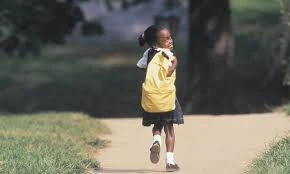
2. Jogging

3. Running

4. Jumping

Jumping is the activities of lifting one’s body from the ground.
PRESENTATION
To deliver the lesson, the teacher adopts the following steps:
- To introduce the lesson, the teacher revises the previous lesson. Based on this, he/she asks the pupils some questions;
- Demonstrates the technique in movement;
Pupil’s Activities – Practice the techniques of running, walking and jumping.
- Demonstrates the movements, supervises the children and offers assistance.
Pupil’s Activities – Practice movements.
- Demonstrates the basic manipulative movements, supervise the children and offers assistance.
Pupil’s Activities – Practice manipulative patterns.
CONCLUSION
To conclude the lesson for the week, the teacher revises the entire lesson and links it to the following week’s lesson.
NEXT LESSON
Basic Movements – Moving Our Body Parts – Hopping, Stepping and Leaping Primary 1 (Basic 1) – Basic Science and Technology
LESSON EVALUATION
Asks pupils to demonstrate basic movement skills correctly.
WORKBOOK
WEEKLY ASSESSMENT (TEST)
- _______ means moving from one place to another.
- Movement
- Waiting
- _______ is the activities moving at a moderate pace.
- Waiting
- Walking
- _______ is the activities moving fast on foot.
- Walking
- Running
- _______ is the activities of lifting one’s body from the ground.
- Flying
- Jumping
Topic: storage device
ENABLE OBJECTIVES
At the end of this Module, Pupils should be able to:
- List hardware storage devices.
- Mention uses of storage devices.
TEACHING AND LEARNING MATERIALS
- Computer

- Hard disk

- Compact disk (CD)

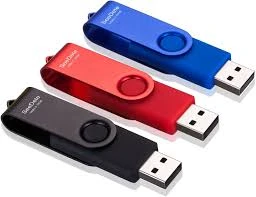
- Flash drive
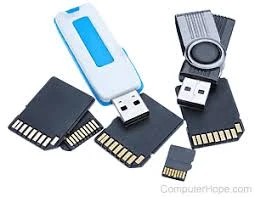
- Memory card
- projector

- Explanatory posters/pictures
- Explanatory Video
TEACHING AND LEARNING METHOD
- Explanation
- Discussion
- Questions and Answers
REFERENCE MATERIALS
- Universal Basic Education Curriculum.
- NERDC Basic Education Curriculum for primary schools.
- Lagos State Scheme of work
- Unified Schemes of Work Primary Schools for Computer Studies (MIDDLE BASIC)
- Internet Materials.
ENTRY BEHAVIOUR/ PREVIOUS LESSON: the students are familiar with system unit.
CONTENT
Meaning of Storage Device
Storage devices are computer hardware components that are used for storing data in electronic form. It is used to keep processed data. It can store text, images, video, audio, symbol, etc.
Storage devices are classified into two groups, these are:
- Internal storage devices.
- External storage devices.
Internal storage devices.
Internal storage devices are seen inside the computer. It is also called the primary storage device. Example of internal storage device is hard – disk.
External storage devices
External Storage Devices are seen outside the computer. They are connected with usb cable through the system unit.
Examples of external storage devices are flash drive, memory card, compact disk, external hard disk.
USES OF STORAGE DEVICES
- Storage devices are used to keep data for temporarily or permanently.
- Used in sharing file.
- Storage devices are used to back up saved files.
- They are used in transporting file from one storage device to another.
PRESENTATION
- The Teacher revises the previous lesson (SYSTEM UNIT (INTERNAL FEATURES)).
- The teacher introduces the topic: STORAGE DEVICES
- She/he explains storage devices.
- She/he explains list the examples of storage devices.
- She/he explains the uses of storage devices.
- Teacher leads pupils to mention the uses of storage devices.
STUDENT ACTIVITIES: the student identifies two storage devices on the table.
EVALUATIVE ACTIVITIES
- Define storage devices.
- List three examples of storage devices.
- Mention three uses of storage devices.
- Another name for internal storage devices is ____________.
CONCLUSION: the teacher sum up the lesson.
This term's Basic Science topics
Basic 4 First Term · 8 topics
- Changes in Nature, Moving Our Body Parts and Storage Device
- Changes in Plants and Animals (I), Moving Our Body Parts II, and Output Device.
- Changes in Plant and Animals (II), Athletics, Launching of Microsoft
- Changes in Plants and Animals (Ill), Athletics and Microsoft Power Point.
- Our Weather (I): Track Event, and Microsoft Power Point.
- Our Weather (II): Games and Sport and Menu Bar
- Our Weather (II), Table Tennis, and Launching Microsoft Powerpoint
- Water, First Aids and its Uses and Introduction to Computer Coding
First Term Basic Science Lesson Notes for Other Topics

Energy IV
Read the full lesson note.
Sports and Games (Athletics)
Read the full lesson note.
Energy III
Read the full lesson note.
Safety
Read the full lesson note.
Monitor and Mouse
Read the full lesson note.
Energy II
Read the full lesson note.
Movement (Catching)
Read the full lesson note.

Energy I
Read the full lesson note.
Non-Living Things
Read the full lesson note.
Living Things II
Read the full lesson note.
Living Things
Read the full lesson note.
Water II
Read the full lesson note.
Water
Read the full lesson note.
Measurement Of Length
Read the full lesson note.

Measurement Of Mass
Read the full lesson note.
Lesson Notes for Other Classes

Basic 1 Lesson Note
The complete lesson note to guide your studies.
Basic 2 Lesson Note
The complete lesson note to guide your studies.

Basic 3 Lesson Note
The complete lesson note to guide your studies.

Basic 5 Lesson Note
The complete lesson note to guide your studies.

Basic 6 Lesson Note
The complete lesson note to guide your studies.

JSS1 Lesson Note
The complete lesson note to guide your studies.

