Reproduction in Plants – Basic 5 Basic Science Lesson Note (Second Term)
Download Lesson NoteLesson note at a glance
- Subject
- Basic Science
- Class
- Basic 5
- Term
- Second Term
- Topic
- Reproduction in Plants
- Order
- Topic 1 of 7 this term
- Reading time
- 4 min
Performance objectives
At the end of this discussion in this unit, children should be able to:
- Explain type and agent of pollination
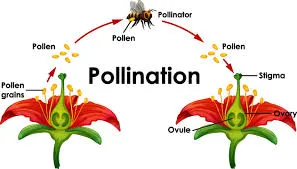
- Identify parts of a flower that are concerned with pollination and fertilization
- Distinguish between pollination and fertilization
- Describe ways of development from flowers to fruit
Teaching and learning materials
- Toys of domestic animals
- Whiteboard/Chalkboard
- Explanatory videos/pictures showing domestic animals
- Explanatory videos on domestic animals
Teaching and learning methods
- Explanation • Discussion • Question and answer
Reference materials
- NERDC Basic Education Curriculum for primary schools • Universal Basic Education Curriculum for primary schools • Lagos State Scheme of Work for Basic Science and Technology • Lagos State Scheme of Work for Lagos State Primary Schools (MIDDLE BASIC) • Online Materials • Basic Science and Technology for Primary Schools
Entry behaviour/previous knowledge
The students have been taught the human body skeletal system.
Word file
characteristics, development, reproductive.
Lesson content
REPRODUCTION
Reproduction is the ability of living things to reproduce young ones of their own kind. Reproduction is one of the characteristics of living things. Without living thing reproducing if young one, then there would be no living things on earth anymore.
Why do which plant reproduce their young ones.
- Sexual reproduction: flowering plants make use of seeds. In most plants, the seedlings are produced from their seeds, which in matured form flower when the male and female part of flower meet to form union, seeds are obtained from flower.
- Asexual or Vegetative Reproduction: the use of vegetative parts of plants (leaves, stems, buds and roots); these plants part can also reproduce young ones without seeds; plants like cassava; can reproduce the offspring of earth removing by planting the. Union
Parts of a flower

A flower is like a reproductive structure containing fruits in flowering plants. So, the male and the female reproductive parts of a plant are in the flower.
The two (2) major parts of flower are:
- The Stamen or the Male part: it consists of the anther and filament.
- The Pistil or the Female part: it consists of the ovary, stigma and style.
Functions of each part of a flower
| Part of a Flower | Function |
| Anthers | It produces pollen grains |
| Stigma | Receives pollen grains during pollination |
| Sepals | Protects the floral parts in the bud |
| Petals | Attracts insect because of their possession of sweet scent and bright colours |
| Style | It is the pollen tubes that carries the male gamete into the female gamete (ovary) |
| Ovary | It houses the egg or the ovule |
| Filament | Supports the anther |
POLLINATION
Pollination is the transfer of pollen grains (Yellow dust from the anther into the stigma (sticky surface of the flower) of the same or difference flower.
The agent of pollination is agent that which contains the male and role in sperm while the stigma is the sticky surface. So when the anther opens when the flower drops on the stigma of the female part. So process in known as pollination.
Types of pollination
We have two types of pollination. These are:
- Self pollination: pollen grains from the flower are transferred from the anther into stigma of the same flowering plant.
- Cross pollination: pollen grains from one flower is carried to the stigma of another flower of the same kind.
Agent of pollination
The agent of pollination are man, wind, insect, birds, snail, etc.
Pollination by insect
Insects such as bees, flies, bees are the most common agent of pollination because they visit flowers regularly to suck the sweet liquid called NECTAR. After sucking the nectar the pollen grains stick to their body and when they touch the stigma of the same plant or other plant of same kind, the pollen grains are transferred to the stigma this process is known as pollination.
Fertilization and fruit development in plant
Fertilization in plant occurs after pollination, the male sex cell or sperm (male gamete) in the pollen grain joins with the female sex cell or egg in the ovary to form seed (embryo) of, which develop to form the fruit.
Differences between pollination and fertilization:
| Pollination | Fertilization |
| It is the transfer of male part into the female part | It is the union of the male gamete and female gamete |
| It occurs outside the plant | It occurs inside the plant |
| Agents are needed for pollination to occur | Fertilization occur without any agent |
Instructional procedure
- The Teacher revisits the previous lesson (the human body skeletal system) • The Teacher introduces the lesson through questions and answer “REPRODUCTION IN PLANTS” • The Teacher asks the students to mention flower parts • The Teacher writes the note on the boards
Learning activities
Students participate in the discussion.
Lesson evaluation
Teacher ask the learners to:
- State and identify the part of a flower
- State the functions of parts of a flower
- What is pollination?
- What is fertilization in plants?
- Explain the two agents of pollination
- Identify parts of a flower that are concerned with pollination and fertilization
- Distinguish between pollination and fertilization
- Describe development from flowers to fruit
CONCLUSION
The teacher summarizes the lesson.
This term's Basic Science topics
Basic 5 Second Term · 7 topics
Second Term Basic Science Lesson Notes for Other Topics
Demonstrating Air in Space
Read the full lesson note.
Air
Read the full lesson note.
Light Energy, Uses of Light and Colour
Read the full lesson note.
Colour Identification 1 - Colours of Objects
Read the full lesson note.
Colour Identification II- Road Traffic Light Signs
Read the full lesson note.
Colour Identification III - Road Markings
Read the full lesson note.
Soil
Read the full lesson note.
Soil II: Importance & Things Found in Soil
Read the full lesson note.
Water - Purifying Water
Read the full lesson note.
Water - Packaged Water
Read the full lesson note.
Soil I - Importance to Plants
Read the full lesson note.
Input Devices
Read the full lesson note.
Air in Motion I - Wind
Read the full lesson note.
Air in Motion II - Harmful Effects of Wind
Read the full lesson note.
Water
Read the full lesson note.
Lesson Notes for Other Classes

Basic 1 Lesson Note
The complete lesson note to guide your studies.
Basic 2 Lesson Note
The complete lesson note to guide your studies.
Basic 3 Lesson Note
The complete lesson note to guide your studies.
Basic 4 Lesson Note
The complete lesson note to guide your studies.
Basic 6 Lesson Note
The complete lesson note to guide your studies.

JSS1 Lesson Note
The complete lesson note to guide your studies.