
Weeds Basic 5 Agricultural Science Lesson Note
Download Lesson NoteTopic: Weeds

LEARNING OBJECTIVES
By the end of the lesson, pupils should be able to:
- Define weeds
- Identify common weeds in the farm
- Create a weed album
PREVIOUS KNOWLEDGE
Pupils have basic knowledge of plants and can differentiate between useful and harmful plants in their environment.
INTRODUCTION
When we walk around farms, gardens, or even in our school compound, we see many different types of plants. Some of these plants are wanted by farmers, while others are not wanted. Today we will learn about the unwanted plants called weeds.
LESSON CONTENT
1. DEFINITION OF WEEDS
What are Weeds? Weeds are plants that grow where they are not wanted. They are plants that compete with crops for space, nutrients, water, and sunlight without giving any benefit to the farmer.
Simple Definition: A weed is any plant growing in the wrong place at the wrong time.
Key Characteristics of Weeds:
- They grow without being planted by farmers
- They grow very fast and spread quickly
- They compete with crops for resources
- They are usually unwanted by farmers
- They can reduce crop yield
- They are often difficult to control
Examples of Common Weeds:
- Spear grass (Imperata cylindrica)
- Goat weed (Ageratum conyzoides)

- Pig weed (Amaranthus spinosus)
- Elephant grass (Pennisetum purpureum) – when growing where not wanted
- Tridax (Tridax procumbens)
- Mimosa (Mimosa pudica) – Touch-me-not
2. IDENTIFICATION OF COMMON WEEDS IN THE FARM
- GRASS WEEDS

A. Spear Grass (Imperata cylindrica)
- Local name: Thatch grass
- Appearance: Tall grass with sharp, pointed leaves
- Height: Can grow up to 1.5 meters tall
- Leaves: Long, narrow, and sharp-edged
- Flowers: White, fluffy seed heads
- Where found: Open fields, roadsides, abandoned farmlands
- Problems: Very difficult to remove, spreads underground
- Carpet Grass (Axonopus compressus)
- Appearance: Low-growing grass that forms dense mats
- Leaves: Broad and flat
- Growth: Spreads by runners along the ground
- Where found: Lawns, gardens, crop fields
- Problems: Competes with crops for space and nutrients
B. BROAD-LEAF WEEDS

- Goat Weed (Ageratum conyzoides)
- Local name: Goat weed
- Appearance: Small shrub with hairy stems and leaves
- Height: 30-80 cm tall
- Leaves: Heart-shaped with serrated edges
- Flowers: Small, blue or white flowers in clusters
- Where found: Waste places, farmlands, roadsides
- Problems: Grows very fast, produces many seeds
- Pig Weed (Amaranthus spinosus)

- Local name: Spiny amaranth
- Appearance: Upright plant with spiny stems
- Height: 50-100 cm tall
- Leaves: Oval-shaped with pointed tips
- Special feature: Has sharp spines on stems
- Where found: Cultivated fields, waste places
- Problems: Spines can injure people and animals
- Tridax (Tridax procumbens)
- Local name: Coat buttons
- Appearance: Creeping or upright herb
- Leaves: Deeply lobed with hairy surface
- Flowers: Small, white daisy-like flowers with yellow centers
- Where found: Roadsides, waste places, crop fields
- Problems: Spreads rapidly, produces many seeds
C. SEDGE WEEDS
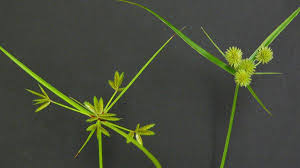
- Nut Grass (Cyperus rotundus)
- Local name: Purple nut sedge
- Appearance: Grass-like plant with triangular stems
- Height: 15-40 cm tall
- Leaves: Dark green, narrow
- Underground parts: Has tubers (small nuts) underground
- Where found: Wet places, irrigated fields
- Problems: Very difficult to control, tubers sprout new plants
3. CREATING A WEED ALBUM
What is a Weed Album? A weed album is a collection of weed specimens, pictures, or drawings arranged in a book or folder for study and identification purposes.
Materials Needed:
- Exercise book or scrapbook
- Glue or paste
- Pencils and colored pencils
- Camera (if available)
- Plastic bags for collecting
- Pressing materials (old newspapers, heavy books)
- Labels
Steps to Create a Weed Album:
Step 1: Planning
- Decide on the format (drawings, pressed plants, or photos)
- Prepare your album book
- Make a list of weeds to include
- Plan collection trips
Step 2: Collection
- Visit different areas (school compound, nearby farms, roadsides)
- Collect small samples of different weeds
- Take photos if camera is available
- Put each specimen in separate plastic bags
- Label bags with location and date found
Step 3: Pressing (for plant specimens)
- Place fresh specimens between newspaper sheets
- Put heavy books on top
- Leave for 1-2 weeks until completely dry
- Handle dried specimens carefully
Step 4: Album Preparation
- Arrange pages in your album book
- Plan layout for each weed
- Leave space for information about each weed
Step 5: Mounting
- Glue pressed specimens carefully onto pages
- Or paste photos if using camera
- Or draw detailed pictures of weeds
Step 6: Labeling For each weed, include:
- Common name (local name)
- Scientific name (if known)
- Where found
- Date collected
- Description of the plant
- Problems caused by this weed
Album Page Format Example:
Weed No. 1: SPEAR GRASS
Scientific Name: Imperata cylindrica
Local Name: Thatch grass
Date Collected: [Date]
Location Found: School compound
Description:
– Tall grass with sharp leaves
– White fluffy seed heads
– Grows up to 1.5 meters
– Spreads underground
Problems Caused:
– Competes with crops
– Difficult to remove
– Can cut people with sharp leaves
– Spreads very fast
[Space for specimen/drawing/photo]
4. WEED IDENTIFICATION TIPS
How to Identify Weeds:
Look at the Leaves:
- Shape (round, oval, narrow, heart-shaped)
- Edges (smooth, serrated, lobed)
- Surface (smooth, hairy, rough)
- Arrangement on stem
Observe the Stem:
- Thickness (thin, thick)
- Shape (round, square, triangular)
- Surface (smooth, hairy, spiny)
- Color (green, red, purple)
Check the Flowers:
- Size (large, small)
- Color (white, yellow, blue, red)
- Shape (daisy-like, clustered, single)
- When they appear
Notice Growth Habit:
- Upright or spreading
- How tall it grows
- Where it likes to grow
- How fast it spreads
5. WHERE WEEDS ARE COMMONLY FOUND
In Crop Fields:
- Between crop rows
- Around field edges
- In poorly maintained areas
- Where soil is disturbed
Around Buildings:
- School compounds
- House surroundings
- Along walkways
- In gardens
Along Roads:
- Roadsides
- Ditches
- Abandoned areas
- Construction sites
In Wet Areas:
- Near water sources
- Irrigation channels
- Poorly drained fields
- Swampy areas
EVALUATION QUESTIONS
- What is a weed?
- Give three characteristics of weeds
- Name five common weeds found in farms
- What is the local name for Imperata cylindrica?
- Describe the appearance of goat weed
- What makes pig weed dangerous to handle?
- What is a weed album?
- List four materials needed to create a weed album
- What information should be included for each weed in an album?
- Where are weeds commonly found?
- Why do weeds grow where they are not wanted?
- What makes spear grass difficult to control?
ASSIGNMENT
- Collect three different weeds from your home area
- Draw each weed and label its parts
- Ask your parents or neighbors about local names of these weeds
- Start creating your own weed album with these three weeds
- Observe and record where each weed was found
PRACTICAL ACTIVITY
Field Trip – Weed Identification:
- Take students around the school compound
- Identify different weeds growing in various locations
- Collect samples of common weeds (with permission)
- Start class weed album project
- Have students draw or photograph weeds found
- Discuss characteristics of each weed observed
Classroom Activity:
- Begin creating individual weed albums
- Share collected specimens among students
- Practice identifying weeds using simple characteristics
- Create a class chart of common weeds
CONCLUSION
Weeds are unwanted plants that compete with crops and can cause problems for farmers. Learning to identify common weeds is important for successful farming. Creating a weed album helps us remember and recognize different weeds, which is the first step in managing them effectively.
REFERENCES
- Primary Agricultural Science Textbook for Primary 5
- Weed Identification Guide for Nigerian Farms
- Basic Plant Identification Manual
- Local agricultural extension materials
Second Term Agricultural Science Lesson Notes for Other Topics

Damages Caused By Pests
Explore lesson notes covering all topics.

Control Of Insect Pests
Explore lesson notes covering all topics.

Classification Of Insect Pests; Piercing And Sucking Insect Pest
Explore lesson notes covering all topics.

Pest And Disease Of Crops
Explore lesson notes covering all topics.

Benefits Of Weeds: Animal Feed, Of Drugs, Food To Man
Explore lesson notes covering all topics.

Control Of Weeds
Explore lesson notes covering all topics.

Effects of Weeds on Farmers
Explore lesson notes covering all topics.

Maintenance of Flowers
Explore lesson notes covering all topics.

Materials/Tools for Horticulture Practice
Explore lesson notes covering all topics.

Soil - Suitable Soil for Planting Different Crops
Explore lesson notes covering all topics.
Soil - Meaning and Importance
Explore lesson notes covering all topics.

Classification of Soil in Agriculture
Explore lesson notes covering all topics.
Soil - Causes of Reduction in Soil Fertility
Explore lesson notes covering all topics.

Horticulture in Agriculture
Explore lesson notes covering all topics.

Characteristics Of Selected Farm Animals
Explore lesson notes covering all topics.

Lesson Notes for Other Classes

Basic 2 Lesson Note
The complete lesson note to guide your studies.

Basic 3 Lesson Note
The complete lesson note to guide your studies.

Basic 4 Lesson Note
The complete lesson note to guide your studies.

JSS1 Lesson Note
The complete lesson note to guide your studies.

JSS2 Lesson Note
The complete lesson note to guide your studies.

JSS3 Lesson Note
The complete lesson note to guide your studies.