Safety Education – Basic 2 Physical & Health Education Lesson Note (Third Term)
Download Lesson NoteLesson note at a glance
- Subject
- Physical & Health Education
- Class
- Basic 2
- Term
- Third Term
- Topic
- Safety Education
- Order
- Topic 5 of 8 this term
- Reading time
- 7 min
Learning Objectives
At the end of the lesson, pupils should be able to: i. Explain the meaning of safety education ii. List the safety education conditions for first aid treatment
Introduction
Safety education teaches us how to prevent accidents and injuries, and what to do when emergencies happen. Learning about safety helps protect ourselves, our families, and our friends from harm. First aid is an important part of safety education.
Content
What is Safety Education?

Definition: Safety education is learning about how to stay safe, prevent accidents, recognize dangerous situations, and respond properly to emergencies. It teaches us to protect ourselves and help others stay safe.
Goals of Safety Education:
- Prevention: Stop accidents before they happen
- Awareness: Recognize dangerous situations
- Preparation: Know what to do in emergencies
- Response: Act correctly when accidents occur
- Protection: Keep ourselves and others safe from harm
Why Safety Education is Important:
- Saves lives: Proper safety knowledge prevents deaths
- Prevents injuries: Reduces cuts, burns, falls, and other accidents
- Builds confidence: Knowing what to do makes us feel more secure
- Helps others: We can assist family and friends in emergencies
- Creates habits: Good safety practices become automatic
- Reduces fear: Understanding safety reduces anxiety about dangers
Areas of Safety Education
Home Safety:
- Fire safety and emergency evacuation
- Kitchen safety and burn prevention
- Electrical safety and shock prevention
- Poisoning prevention and household chemicals
- Fall prevention and safe storage
School Safety:
- Playground safety and equipment use
- Classroom safety and proper behavior
- Laboratory safety and chemical handling
- Emergency drills and evacuation procedures
- Bullying prevention and reporting
Road Safety:
- Pedestrian safety
Road Safety:
- Pedestrian safety and crossing streets
- Traffic rules and signal understanding
- Vehicle safety and seatbelt use
- Bicycle safety and helmet wearing
- Public transportation safety
Personal Safety:
- Stranger danger and inappropriate touching
- Internet safety and online behavior
- Emergency contact information
- Self-protection techniques
- Reporting unsafe situations
Environmental Safety:
- Weather safety and natural disasters
- Water safety and swimming precautions
- Animal safety and bite prevention
- Sun safety and heat protection
- Outdoor activity safety
What is First Aid?
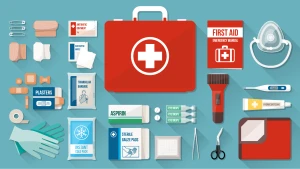
Definition: First aid is the immediate care given to someone who is injured or suddenly becomes ill before professional medical help arrives. First aid can save lives, prevent injuries from getting worse, and help people recover faster.
Goals of First Aid:
- Save life: Prevent death in emergency situations
- Prevent worsening: Stop injuries from becoming more serious
- Promote recovery: Help healing process begin
- Provide comfort: Reduce pain and anxiety
- Protect unconscious: Keep unconscious people safe
Basic Principles of First Aid:
- Stay calm: Don’t panic in emergency situations
- Assess safety: Make sure the area is safe before helping
- Get help: Call for adult help or emergency services
- Don’t move: Don’t move seriously injured people
- Comfort: Reassure and comfort the injured person
Conditions That Require First Aid Treatment
- Cuts and Bleeding
When first aid is needed:
- Any cut that won’t stop bleeding after 5 minutes
- Deep cuts where you can see fat or muscle
- Cuts longer than 1/2 inch
- Cuts with objects still stuck in them
- Cuts that gape open
Basic first aid steps:
- Wash hands if possible
- Apply direct pressure with clean cloth
- Elevate injured area above heart if possible
- Cover with sterile bandage
- Get medical help if bleeding doesn’t stop
- Burns
Types of burns needing first aid:
- First degree: Red, painful skin (like sunburn)
- Second degree: Blistered, swollen, very painful
- Third degree: White or charred skin, may not be painful
Basic first aid for burns:
- Remove from heat source immediately
- Cool burn with cool (not ice) water for 10-20 minutes
- Cover with sterile, non-stick bandage
- Don’t put ice, butter, or other home remedies on burns
- Get medical help for second and third degree burns
- Choking
Signs of choking:
- Cannot speak, cough, or breathe
- Hands clutching throat
- Blue color around lips and face
- Panic in eyes
First aid for choking:
- For others: Get adult help immediately
- Encourage coughing if person can still cough
- Don’t try to remove object with fingers
- Call for emergency help
- Learn proper back slaps and abdominal thrusts (with training)
- Falls and Possible Broken Bones
When to suspect broken bones:
- Person cannot move injured part
- Injured area looks deformed or bent wrong way
- Severe pain when trying to move
- Bone is visible through skin
- Area is very swollen and bruised
First aid for possible fractures:
- Don’t move the injured person
- Support injured area with pillows or soft materials
- Apply ice pack wrapped in cloth (never directly on skin)
- Get adult help and medical attention immediately
- Keep person warm and comfortable
- Head Injuries
Signs of serious head injury:
- Loss of consciousness (person “blacks out”)
- Confusion or memory loss
- Severe headache
- Nausea and vomiting
- Drowsiness or difficulty staying awake
First aid for head injuries:
- Keep person lying down and still
- Don’t let person sleep if they seem confused
- Apply ice pack to swollen areas
- Watch for changes in consciousness
- Get medical help immediately
- Poisoning
Signs of poisoning:
- Nausea, vomiting, or diarrhea
- Difficulty breathing
- Confusion or strange behavior
- Burns around mouth (from chemical poisoning)
- Empty containers of medicines or chemicals nearby
First aid for poisoning:
- Call poison control center immediately
- Don’t make person vomit unless told to by experts
- Save container or label of suspected poison
- Get professional medical help quickly
- Keep person calm and comfortable
- Allergic Reactions
Signs of serious allergic reactions:
- Difficulty breathing or wheezing
- Swelling of face, lips, or tongue
- Widespread rash or hives
- Rapid pulse
- Dizziness or fainting
First aid for allergic reactions:
- Remove or avoid the allergen if known
- Help person sit up to breathe easier
- Loosen tight clothing
- Get emergency medical help immediately
- If person has emergency medicine (like inhaler), help them use it
- Fainting
Signs someone might faint:
- Dizziness or lightheadedness
- Pale or sweaty skin
- Nausea
- Weakness
First aid for fainting:
- Help person lie down with legs elevated
- Loosen tight clothing
- Provide fresh air
- Don’t give food or water until fully conscious
- Get medical help if person doesn’t recover quickly
Safety Education Conditions for First Aid
Personal Safety for First Aiders:
- Scene safety: Always check that area is safe before helping
- Personal protection: Wear gloves if available, avoid contact with blood
- Know your limits: Don’t attempt procedures you haven’t been trained for
- Get help: Always get adult or professional help
- Stay calm: Keep yourself calm to help others effectively
When NOT to Give First Aid:
- If scene is dangerous (fire, electrical wires, traffic)
- If you don’t know what to do
- If person is conscious and refuses help
- If professional help is already present
- If helping would put you in danger
Preparing for Emergencies:
- Know emergency numbers: Learn how to call for help
- Know important information: Your address, phone number, parents’ names
- Learn basic first aid: Take age-appropriate first aid classes
- Emergency supplies: Know where first aid kits are located
- Practice: Regular drills and practice scenarios
First Aid Kit Contents:
- Adhesive bandages (various sizes)
- Sterile gauze pads
- Medical tape
- Scissors
- Antiseptic wipes
- Instant cold packs
- Disposable gloves
- Emergency contact numbers
Activities
- Discuss different emergency scenarios and appropriate responses
- Practice calling for help and giving important information
- Identify contents of a first aid kit and their uses
- Role-play safe ways to help in different emergency situations
- Create emergency contact cards to take home
- Practice basic safety assessment of surroundings
Multiple Choice Exercise
- Safety education teaches us to: a) Take more risks b) Prevent accidents c) Ignore dangers
- First aid is given: a) Only by doctors b) Before professional help arrives c) After going to hospital
- When someone is choking, they usually: a) Can talk normally b) Cannot speak or breathe c) Are very loud
- For a burn, the first thing to do is: a) Put ice on it b) Put butter on it c) Cool with water
- Before giving first aid, we should always: a) Run away b) Check if the area is safe c) Give food to the person
Answers: 1(b), 2(b), 3(b), 4(c), 5(b)
This term's Physical & Health Education topics
Basic 2 Third Term · 8 topics
Third Term Physical & Health Education Lesson Notes for Other Topics
Health and Hygiene
Read the full lesson note.
Teeth Brushing
Read the full lesson note.
Care of the Nails and Hair
Read the full lesson note.
Cleanliness
Read the full lesson note.

First Aid
Read the full lesson note.
First Aid (Continued)
Read the full lesson note.
Content of First Aid
Read the full lesson note.
Benefits of First Aid
Read the full lesson note.

First Aid
Read the full lesson note.
Health And Hygiene - Pollution
Read the full lesson note.
Swimming
Read the full lesson note.
Swimming II
Read the full lesson note.

First Aid II
Read the full lesson note.
First Aid
Read the full lesson note.
Issues and Challenges in Sports and PHE
Read the full lesson note.
Lesson Notes for Other Classes

Basic 1 Lesson Note
The complete lesson note to guide your studies.

Basic 3 Lesson Note
The complete lesson note to guide your studies.

Basic 4 Lesson Note
The complete lesson note to guide your studies.
Basic 5 Lesson Note
The complete lesson note to guide your studies.

Basic 6 Lesson Note
The complete lesson note to guide your studies.
JSS1 Lesson Note
The complete lesson note to guide your studies.