Importance of Civic Education to Development 2 – Basic 2 Civic Education Lesson Note (First Term)
Download Lesson NoteLesson note at a glance
- Subject
- Civic Education
- Class
- Basic 2
- Term
- First Term
- Topic
- Importance of Civic Education to Development 2
- Order
- Topic 5 of 7 this term
- Reading time
- 3 min
Learning Objectives:
By the end of this lesson, pupils should be able to:
- Highlight the importance of civic education to national development
- Explain the role of civic education in political, social, and economic processes
- Identify the importance of having political leaders in society
Lesson Content:
How Civic Education Helps in Different Areas:
- POLITICAL PROCESS (How Leaders are Chosen):
What Politics Means for Children:
- Politics is about choosing leaders and making decisions for everyone
- It’s like choosing class monitors or team captains
- Everyone should have a chance to participate
Role of Civic Education in Politics:
- Teaches us to choose good leaders
- Shows us how to vote properly when we grow up
- Helps us understand why we need leaders
- Teaches us to respect elected leaders
Simple Voting Practice:
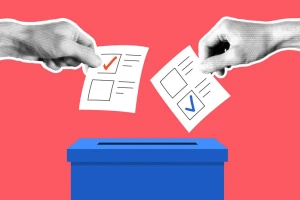
- In class, we vote for class monitors
- We choose by raising hands or secret ballot
- Everyone gets one vote
- We accept the results peacefully
- SOCIAL PROCESS (How People Live Together):
What Social Process Means:
- How people relate and interact in the community
- How we treat each other in society
- How we solve problems together
Role of Civic Education in Social Life:
- Teaches us to respect people of different religions
- Shows us how to live with people from different tribes
- Helps us appreciate different cultures
- Teaches us to help the elderly, disabled, and poor
- Shows us how to resolve conflicts peacefully
Social Activities:
- Community festivals and celebrations
- Helping during emergencies
- Visiting sick neighbors
- Cleaning our environment together
- ECONOMIC PROCESS (How We Make and Use Money):
What Economic Process Means for Children:
- How people work to earn money
- How we buy and sell things
- How we save and spend money wisely
Role of Civic Education in Economics:
- Teaches us not to steal or cheat
- Shows us the importance of hard work
- Teaches us to save money
- Shows us how to share resources fairly
- Teaches us to respect other people’s property
Simple Economic Lessons:
- Saving part of our pocket money
- Not wasting food or school materials
- Taking care of our books and uniforms
- Understanding that parents work to provide for us
Why We Need Political Leaders:
- To Make Important Decisions:
- Decide how to use government money
- Make laws to protect everyone
- Solve big problems affecting many people
- To Provide Services:
- Build schools and hospitals
- Provide electricity and water
- Build roads and bridges
- Ensure security and safety
- To Represent the People:
- Speak for citizens in government
- Listen to people’s problems
- Fight for people’s rights
- To Maintain Order:
- Ensure everyone follows the law
- Settle disputes fairly
- Protect the weak from the strong
Class Activity:
Organize a mock election in the class. Let pupils nominate candidates for different positions and conduct a simple voting exercise.
Week 6 multiple choice exercise:
Choose the correct answer:
- Politics is about: a) Fighting with others b) Choosing leaders and making decisions c) Refusing to participate in activities
- In the social process, civic education teaches us to: a) Disrespect people from other religions b) Respect people of different religions and tribes c) Fight with our neighbors
- Economic process involves: a) Only stealing from others b) How we make and use money c) Wasting everything we have
- Political leaders help to: a) Create problems for everyone b) Make important decisions for society c) Take money from people
- We need leaders to: a) Fight for us b) Provide services like schools and hospitals c) Make us suffer
- Civic education teaches us to: a) Waste our resources b) Save money and work hard c) Steal from others
- In voting, everyone gets: a) Ten votes b) One vote c) No vote
- Social activities include: a) Fighting with neighbors b) Helping during emergencies c) Being selfish
Answers: 1(b), 2(b), 3(b), 4(b), 5(b), 6(b), 7(b), 8(b)
This term's Civic Education topics
Basic 2 First Term · 7 topics
- Importance of Civic Education
- Why Study Civic Education
- Components of Civic Education
- Importance of Civic Education to Development
- Importance of Civic Education to Development 2
- Honesty
- Courtesy, Politeness, and Etiquette
First Term Civic Education Lesson Notes for Other Topics
Ways Through Which Civic Education Can Be Important at Home
Read the full lesson note.
Meaning of Civic Education
Read the full lesson note.
Ways Through Which Civic Education can be Important at School
Read the full lesson note.
Ways Through Which Civic Education can be Important - The Media
Read the full lesson note.

Ways Through Which Civic Education Can be Important to the Society
Read the full lesson note.

Good Virtues
Read the full lesson note.
Values that Show Good Morals in Our Society
Read the full lesson note.
Public Health Enlightenment
Read the full lesson note.
Values that Show Bad Morals in Our Society
Read the full lesson note.
National Honors Award
Read the full lesson note.
National Heroes and Heroines
Read the full lesson note.
Reasons for National Honors Award
Read the full lesson note.
Concept of Valuing Nigeria Goods
Read the full lesson note.

Reasons for Valuing Nigeria Goods and Examples
Read the full lesson note.
Benefits of Patronizing Nigerian Goods
Read the full lesson note.
Lesson Notes for Other Classes

Basic 1 Lesson Note
The complete lesson note to guide your studies.
Basic 3 Lesson Note
The complete lesson note to guide your studies.
Basic 4 Lesson Note
The complete lesson note to guide your studies.
Basic 5 Lesson Note
The complete lesson note to guide your studies.
Basic 6 Lesson Note
The complete lesson note to guide your studies.

JSS1 Lesson Note
The complete lesson note to guide your studies.