
Time Basic 4 Mathematics Lesson Note
Download Lesson NoteTopic: Time
LEARNING AREA
- Introduction
- Telling Time in Hours, Half-hours and Quarter-hours
- Telling Time in Minutes and Seconds
- Use the A.m and P.m Notation for the Time of the Day
- Convert the Unit of Time
- Read the Calendar
- Solve Word Problems
- Lesson Evaluation
PERFORMANCE OBJECTIVES
By the end of the lesson, most pupils should have attained the following objectives –
- telling time in hours, half-hours and quarter-hours.
- telling time in minutes and seconds.
- use the a.m and p.m notation for the time of the day.
- convert the unit of time.
- read the calendar.
- solve word problems.
ENTRY BEHAVIOUR
The pupils can identify wristwatch, table and wall clock as tools for measuring time.
INSTRUCTIONAL MATERIALS
The teacher will teach the lesson with the aid of:
- Real clocks
- Cardboard clocks
- Dummy clock
- Calendars
- Table of days of the week
METHOD OF TEACHING
Choose a suitable and appropriate methods for the lessons.
Note – Irrespective of choosing methods of teaching, always introduce an activities that will arouse pupil’s interest or lead them to the lessons.
REFERENCE MATERIALS
- Scheme of Work
- 9 – Years Basic Education Curriculum
- Course Book
- All Relevant Material
- Online Information
CONTENT OF THE LESSON
LESSON 1 – INTRODUCTION
ACTIVITY 1 – TIME
A clock is used to tell time in hour and minute(s).
The face of the clock shows 12 hour clock times with two or three hands.
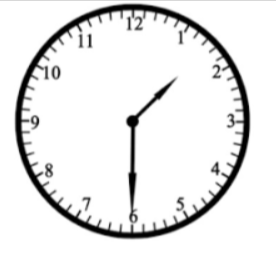
The long and thick hand on the clock face is called the minute hand.
The short and thick hand on the clock face is called the hour hand.
While the long and thin hand on the clock face is called the second hand.
ACTIVITY 2 – IDENTIFICATION OF CLOCK HANDS
ACTIVITY 3 – USES OF CLOCK AND TIME
Clock is used to tell time while:
Time makes us plan our daily activities well.
Time is used as a reminder.
Time is used to set priority.
Time is money.
ACTIVITY 4 – CLASS EXERCISE
Tell the time for the following:
Assembly
Short break
Long break
Closing time
ACTIVITY 5 – HOUR TIME

The short hand is on 3 while the long hand is 12.
Therefore, the time is 3 o’clock.
ACTIVITY 2 – CLASS EXERCISE 1

Whenever the long hand is on 12 and the short hand is on any number, the time is that number.
For example – 1 o’clock, 2 o’clock, etc. as shown in the above clocks.
LESSON 2 – HALF-HOURS AND QUARTER-HOURS
ACTIVITY 1 – TELLING TIME IN HOUR AND MINUTES
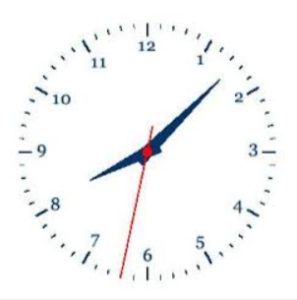
On a clock, the short hand points to the hour which is usually clearly marked on the clock face in large numbers between 1 – 12.
The long hand points to the minutes.
Each small line on the clock is one minute.
WORKING EXAMPLES
What is the time shown on each clock face in half and hour.

7:45 10:30 8:25 10:10
CLASS EXERCISE
Write down the time shown on each clock face in half and hour.

ACTIVITY 2 – TELLING TIME IN HALF AND HOUR
Watch the hour and minute hand.
The hour hand is not way between 6 and 7 o’clock while the minute hand points to 6.
The time is called half past 6, meaning 1.30 or 30 minutes past 6.
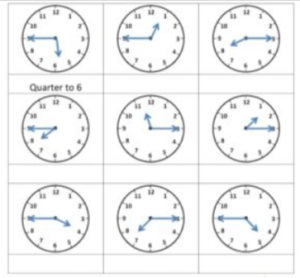
CLASS EXERCISE
Write down the time shown on each clock face in half and hour.
ACTIVITY 3 – TELLING TIME IN QUARTER TO AND QUARTER AFTER
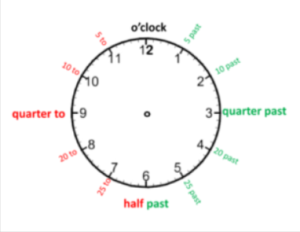
Quarter hour is a period of 15 minutes before or after any hour.
It is a point on 3 or 9.
For example,
At 3 is to quarter past.
At 9 is to quarter to.
CLASS EXERCISE
Write down time you understand each clock. Tell the time on each:
HOME WORK
DRAWING CLOCK IN HALF HOUR
Draw clock faces for these times:
- 12:15
- 7:45
- Half past 8
- Twelve o’clock
- 9:30
- Quarter to 2
- Quarter past 5
- Seven o’clock
- Quarter past 1
LESSON 3 – A.M AND P.M NOTATION AND UNIT OF TIME
ACTIVITY 1 – INTRODUCTION TO A.M AND P.M.
Meridiem (midday), ante (before) and post (after) are Latin terms in a.m. and p.m.
- Meridiem means midday
- Ante means before
- While, post means after
A.m. stands for ante meridiem, meaning before midday.
While, P.m. stands post meridiem, meaning after midday.
A.m. is the period between 12 midnight to 12 midday or noon.
P.m. is the period between 12 midday or noon to 12 midnight.
ACTIVITY 2 – USE A.M. AND P.M. NOTATION
A.m stands for Morning and P.m. stands for Afternoon.
For example,
- 28 minutes past 9 in the morning is written as 9:28 a.m.
- Quarter to 5 in the afternoon is written as 5:15 p.m.
CLASS EXERCISE
- The time when the school assembly begins at _______.
- The time when the school closes at _______.
- The time when you have your dinner at _______.
- The time when you go to bed at _______.
- The time when daddy comes back from work at _______.
- The time when we have break at _______.
- Quarter to 5 in the morning is _______.
- 19 minutes to 10 in the evening is _______.
- Half past 4 in the morning is _______.
- 45 minutes to 1 in the afternoon is _______.
Reference New Method Mathematics Book 5
ACTIVITY 3 – UNIT OF TIME AND SONG
The unit of time is second.
Other units of time are minute, hour, day, week, month, year and century.
- 60 seconds = _____ minute
- 60 minutes = _____ hour
- 24 hours = _____ day
- 30 days = _____ month
- 12 months = _____ year
- 365 days = _____ year
ACTIVITY 4 – CONVERSION OF UNIT OF TIME
60 seconds = 1 minute
WORKING EXAMPLE AND EXERCISE
- 60 seconds = _____ minute
- 120 seconds = _____ minutes
- 3 minutes = _____ seconds
- 2½ minutes = _____ seconds
- 4 minutes = _____ seconds
- 5 minutes = _____ seconds
- 120 seconds = _____ minutes
- 150 minutes = _____ minutes
LESSON 4 – CALENDAR AND DATES
ACTIVITY 1 – READING CALENDAR
2025 Calendar

A calendar is a system of organizing time in days, weeks, months and years.
There are 7 days in a week:
Sunday, Monday, Tuesday, Wednesday, Thursday, Friday and Saturday
There are all days has September,
April, June and November.
All the rest have 31,
Except February alone,
Which has 28 days clear
And 29 in each leap year
There are 60 weeks and 12 months in a year.
January, February, March, April, May, June, July, August, September, October, November and December.
ACTIVITY 2 – DATES
There are different ways to write a date.
For example,
May 7th, 2022 can be written as:
- 7th of May 2022
- 7th May 2022
- 7/5/2022 or as in the order
- 7 – 05 – 2022 or 07 – 05 – 2022
- 7/05/2022 or 07/05/2022
CLASS EXERCISE
- The months that have 30 days are ________________________________.
- The months that have 31 days are ________________________________.
- The month that have few than 30 days is ____________________________.
- The independence day is celebrated in the month of ___________________.
- Labour day and democracy day are celebrated in the month of ____________.
- Your date of birth is _____________________________________________.
- The months that starts with letter
- J are ________________________________________________________.
- M are ______________________________________________________.
- A is _________________________________________________________.
- A 1, 5, 9 and 12 are _____________________, _______________________.
- Christmas and boxing day are celebrated in the month of ________________.
- Soldiers day and independence day are celebrated in the month of _______ and _______.
- August gain independence day _______.
LESSON 5 – REVISION AND WEEKLY ASSESSMENT (TEST)
PRESENTATION
To deliver the lesson, the teacher adopts the following steps:
- To introduce the lesson, the teacher revises the previous lesson. Based on this, he/she asks the pupils some questions.
- Teacher organizes pupils in groups or pairs depending on the size of the class.
- Teacher displays sample of wall and wristwatch.
- Teacher lists the groups or pairs calendar and clock from class.
- Teacher asks pupils to identify between wall clock, table clock and wristwatch.
Pupil’s Activities – Make important present wall clock and wristwatch and their uses.
- Teacher uses the clock and wristwatch and pupil’s responses to introduce the lesson and guides pupils to measure time.
Pupil’s Activities – Pay attention to the lesson introduction.
- Teacher guides pupils to identify and differentiate between the clock hands.
- Teacher tells pupils the function of the hands.
Pupil’s Activities – Identify the functions of the minute and hour hands.
- Teacher discuss on the guides pupils as groups or pairs to tell time in minutes and hour half and quarter hour.
Pupil’s Activities – Follow the teacher’s instructions and tell time half and quarter hour.
- Teacher guides pupils to state and indicate different time in minutes and hour, half and quarter hour.
Pupil’s Activities – State and indicate different half hour.
- Teacher discuss the use of a.m. and p.m. and let the pupils to use their correctly with different time.
Pupil’s Activities – Identify and use a.m. and p.m. appropriately.
- Teacher guides pupils to convert the unit to time.
Pupil’s Activities – Convert the unit to time.
- Teacher uses calendar to guide pupils to reading calendar and state the dates correctly.
Pupil’s Activities – Correctly identify the calendar.
- Teacher summarizes the lessons on the board with appropriate lesson evaluation.
Pupil’s Activities – Participate actively in the summary of the lesson by responding correctly to the questions and write as instructed.
CONCLUSION
To conclude the lesson for the week, the teacher revises the entire lesson and links it to the following week’s lesson.
LESSON EVALUATION
Ask pupils to:
- say the time on a given cardboard clock or time on the clock drawn on the cardboard.
- write the time of a given diagram or cardboard on the board exercise book.
- name the days of the week.
- name the day before and after a given day.
- differentiate between a.m. and p.m.
WEEKLY ASSESSMENT
ATTEMPT ALL THE QUESTIONS
- __________ is used for measuring time.
- Time
- Clock
- Week
- Clock has many hands __________.
- One
- Three
- Two
- __________ is thin and long hand.
- Hour
- Minute
- Second
- __________ is the short and thick hand.
- Hour
- Minute
- Second
- __________ is the long and thick hand.
- Hour
- Minute
- Second
- Half hour is __________.
- 30 minutes
- 30 hours
- 30 second
- Short hand on 7 and long hand on 6 means __________.
- Half before 7
- Half pass 7
- Half to 7
- Long hand on 9 and short hand on 3 means __________.
- Half before 3
- Half to 3
- Half pass 3
- How many days in a week?
- Twenty
- Seven
- Seventeen
- Write the day of the following day
- What day of the week is today? __________
- What day of the week is yesterday? __________
- What day of the week is tomorrow? __________
- The months that have 30 days are __________
- The months that have 31 days are __________
- The month that have less than 30 days is __________
- The independence Day is celebrated in the month of __________
- Labour day and democracy day are celebrated in the month of __________
- Your date of birth is __________
- The months that starts with letter:
- A are __________
- M are __________
- J are __________ and __________
- A 1, 5, 9 and 12 are __________, __________, __________ and __________
- Christmas and boxing day are celebrated in the month of __________ and __________
- Workers day and Children’s day is celebrated in the month of __________ and __________
- Nigeria got independence in __________
Third Term Mathematics Lesson Notes for Other Topics
Squares And Rectangles
Explore lesson notes covering all topics.

Time
Explore lesson notes covering all topics.

Weight
Explore lesson notes covering all topics.

Capacity
Explore lesson notes covering all topics.

Line Of Symmetry
Explore lesson notes covering all topics.

Everyday Statistics
Explore lesson notes covering all topics.

Length: Measurement in Centimetre & Metres
Explore lesson notes covering all topics.

Perimeter of Rectangle, Square & Triangles
Explore lesson notes covering all topics.
Data Collection
Explore lesson notes covering all topics.
Three-Dimensional Shapes
Explore lesson notes covering all topics.

Money
Explore lesson notes covering all topics.
Capacity
Explore lesson notes covering all topics.
Weight
Explore lesson notes covering all topics.
Length Measurement
Explore lesson notes covering all topics.

Area
Explore lesson notes covering all topics.

Lesson Notes for Other Classes

Basic 2 Lesson Note
The complete lesson note to guide your studies.
Basic 3 Lesson Note
The complete lesson note to guide your studies.
Basic 5 Lesson Note
The complete lesson note to guide your studies.

JSS1 Lesson Note
The complete lesson note to guide your studies.
JSS2 Lesson Note
The complete lesson note to guide your studies.

JSS3 Lesson Note
The complete lesson note to guide your studies.