
Capacity Basic 2 Mathematics Lesson Note
Download Lesson NoteTopic: Capacity
Learning Objectives
By the end of this week, pupils should be able to:
- Count and identify numbers from 560-570 and order numbers 1-570
- Skip count in 2s, 3s, and 10s
- Write numbers 560-570 in numerals and words
- Discuss the meaning of capacity
- Identify and name objects used for measuring capacity
- Arrange containers in order of their capacity sizes
- Fill empty containers with countable objects
- Solve real-life problems on capacity
Lesson Content
Day 1: Number Work (560-570)
New Number Range:
- Count from 560-570: 560, 561, 562… 570
- Order numbers from 1-570
- Write clearly: 565 = five hundred and sixty-five
- Skip counting practice in 2s, 3s, and 10s
Day 2: Understanding Capacity
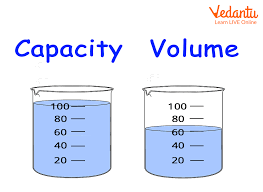
What is Capacity? Capacity is how much a container can hold. It tells us the amount of liquid, solid, or other substances that can fit inside a container.
Examples of Capacity:
- How much water a cup can hold
- How many marbles fit in a jar
- How much rice a pot can contain
- How many books fit in a bag
Why is Capacity Important?
- Helps us choose the right container size
- Important for cooking (measuring ingredients)
- Helps in storage and organization
- Important for buying containers and planning
Day 3: Objects Used for Measuring Capacity
Measuring Tools for Capacity:
- Cup: For measuring liquids like water, milk
- Spoon: For small amounts of liquids or solids
- Bucket: For larger amounts of water
- Jerry can: For storing and carrying liquids
- Bottle: Various sizes for different amounts
- Bowl: For holding food or liquids
- Jug: For pouring and measuring liquids
Container Examples:
- Small containers: Spoons, small cups, medicine bottles
- Medium containers: Regular cups, bowls, small buckets
- Large containers: Big buckets, jerry cans, cooking pots
Day 4: Arranging Containers by Capacity
Ordering by Capacity:
- Smallest to largest: Start with containers that hold the least
- Largest to smallest: Start with containers that hold the most
Example Ordering (smallest to largest):
- Spoon (smallest capacity)
- Small cup
- Large cup
- Bowl
- Bucket (largest capacity)
Comparing Capacities:
- Holds more: Container with larger capacity
- Holds less: Container with smaller capacity
- Holds the same: Containers with equal capacity
Day 5: Practical Capacity Activities
Filling Containers:
- Count how many small cups of water fill a bucket
- Count how many spoons of rice fill a cup
- Count how many marbles fit in different containers
Real-Life Applications:
- Cooking: measuring ingredients
- Storage: organizing household items
- Shopping: choosing container sizes
- Water storage: planning for family needs
Problem-Solving: Apply capacity knowledge to daily situations
Examples in Class
Capacity Comparison Examples:
Using Classroom Containers:
- “This bucket holds more water than this cup”
- “The big jar holds more marbles than the small jar”
- “Two identical cups hold the same amount”
Kitchen Examples:
- “A cooking pot holds more soup than a bowl”
- “A tablespoon holds less than a cup”
- “A jerry can holds more water than a bottle”
Real-Life Examples:
At Home:
- “Mom’s big cooking pot holds more rice than the small pot”
- “The water storage tank holds more than all our buckets combined”
- “A medicine spoon holds very little compared to a drinking cup”
In the Market:
- “The large container of oil costs more because it holds more”
- “Small sachet water holds less than a bottle of water”
Exercises
Exercise 1: Number Work
Write in words:
- 562 = _______________
- 567 = _______________
- 570 = _______________
Order from smallest to largest: 4. 568, 563, 570, 565, 561
Exercise 2: Understanding Capacity
- What is capacity? _______________
- Name 3 containers with small capacity: _____, _____, _____
- Name 3 containers with large capacity: _____, _____, _____
Exercise 3: Measuring Objects
Match the container to its best use:
- Spoon = _____ (a. Storing water for bathing, b. Taking medicine, c. Carrying fuel)
- Jerry can = _____ (a. Drinking tea, b. Storing large amounts of liquid, c. Taking soup)
- Cup = _____ (a. Storing rice for family, b. Drinking water, c. Bathing)
- Bucket = _____ (a. Taking medicine, b. Drinking juice, c. Fetching water)
Exercise 4: Capacity Comparisons
Fill in “holds more,” “holds less,” or “holds the same”:
- A bucket _______ than a cup
- A spoon _______ than a bowl
- Two identical bottles _______ amount
- A jerry can _______ than a small bottle
Exercise 5: Ordering Containers
Arrange these containers from smallest to largest capacity:
- Bucket, spoon, cup, bowl _____, _____, _____, _____
- Jerry can, medicine bottle, drinking glass, cooking pot _____, _____, _____, _____
Exercise 6: Counting and Capacity
- If 5 cups of water fill 1 bucket, how many cups will fill 2 buckets? _____
- A small jar holds 20 marbles. How many marbles will 3 similar jars hold? _____
- One spoon holds 5ml of medicine. How much will 4 spoons hold? _____
Exercise 7: Real-Life Capacity Problems
- Mom needs to store water for the family. Should she use cups or buckets? Why?
- Dad wants to measure cooking oil. Which is better: a spoon or a cup? Why?
- Mary wants to carry water from the well. Which container should she choose: a bottle or a jerry can? Why?
- For taking liquid medicine, which is most suitable: a bucket, a cup, or a spoon? Why?
Exercise 8: True or False
- A bigger container always holds more than a smaller one (True/False)
- All cups have the same capacity (True/False)
- A jerry can holds more than a spoon (True/False)
- Capacity helps us choose the right container size (True/False)
Exercise 9: Capacity Detective
Circle the container that holds MORE:
- (Teaspoon / Bucket)
- (Small cup / Large cup)
- (Medicine bottle / Jerry can)
- (Bowl / Spoon)
- (Cooking pot / Plate)
Fun Activities
- Container Sorting: Arrange actual containers by capacity
- Water Transfer: Use different containers to transfer water and count
- Marble Counting: Fill different jars with marbles and compare
- Capacity Guessing Game: Guess which container holds more before testing
Teaching Resources/Aids
- Various containers: cups, spoons, buckets, bottles, jerry cans
- Counting materials: marbles, beans, rice, water
- Measuring containers of different sizes
- Pictures of different containers with labels
- Chart showing capacity order from smallest to largest
Practical Activities
- Capacity Stations: Set up different measuring stations around the classroom
- Water Play: Safe water activities comparing different containers
- Rice/Bean Measuring: Use dry materials to explore capacity
- Container Museum: Display and discuss various containers and their uses
Safety Notes
- Always be careful with liquids to avoid spills
- Don’t overfill containers
- Clean hands after handling different materials
- Ask for help with heavy containers
- Be gentle with breakable containers
Problem-Solving Strategies
Teaching Tips:
- Use actual containers for hands-on learning
- Start with familiar containers from students’ homes
- Connect to daily activities like cooking and storing
- Encourage estimation before measuring
- Make activities interactive and engaging
Assessment Questions
- “Which container would you use to fetch water from a well?”
- “How can you tell which container has more capacity?”
- “Name three things you could measure with a cup.”
- “Why is it important to understand capacity?”
- “If one cup fills a bottle, how many cups will fill two bottles?”
Third Term Mathematics Lesson Notes for Other Topics
Polygons
Explore lesson notes covering all topics.

Time, Distance and Average Speed
Explore lesson notes covering all topics.

Volume and Capacity
Explore lesson notes covering all topics.

Statistics
Explore lesson notes covering all topics.

Revision of Second Term's Topic
Explore lesson notes covering all topics.

Angle, Lines and Bearing
Explore lesson notes covering all topics.

Everyday Statistics
Explore lesson notes covering all topics.

Line of Symmetry
Explore lesson notes covering all topics.

Capacity
Explore lesson notes covering all topics.

Weight
Explore lesson notes covering all topics.

Time
Explore lesson notes covering all topics.

Squares and Rectangles
Explore lesson notes covering all topics.

Perimeter
Explore lesson notes covering all topics.

Length
Explore lesson notes covering all topics.

Revision of Second Term's Lessons / Resumption Test
Explore lesson notes covering all topics.
Lesson Notes for Other Classes
Basic 1 Lesson Note
The complete lesson note to guide your studies.

Basic 3 Lesson Note
The complete lesson note to guide your studies.

Basic 4 Lesson Note
The complete lesson note to guide your studies.
Basic 5 Lesson Note
The complete lesson note to guide your studies.
Basic 6 Lesson Note
The complete lesson note to guide your studies.

JSS1 Lesson Note
The complete lesson note to guide your studies.