Weight – Basic 3 Mathematics Lesson Note (Third Term)
Download Lesson NoteLesson note at a glance
- Subject
- Mathematics
- Class
- Basic 3
- Term
- Third Term
- Topic
- Weight
- Order
- Topic 5 of 17 this term
- Reading time
- 4 min
A. counting skill: numbers 921-940
Counting from 921 to 940: 921, 922, 923, 924, 925, 926, 927, 928, 929, 930, 931, 932, 933, 934, 935, 936, 937, 938, 939, 940
Practice counting:
- From 925 to 935: _______
- From 932 to 940: _______
- Backwards from 940 to 930: _______
Fill in missing numbers:
- 926, 927, _____, 929, _____
- 935, _____, 937, _____, 939
- _____, 922, _____, 924, _____
B. writing skill: writing of the numbers
Write in words:
- 921 = Nine hundred and twenty-one
- 925 = Nine hundred and twenty-five
- 930 = Nine hundred and thirty
- 935 = Nine hundred and thirty-five
- 940 = Nine hundred and forty
Write in figures:
- Nine hundred and twenty-three = _______
- Nine hundred and twenty-eight = _______
- Nine hundred and thirty-two = _______
- Nine hundred and thirty-seven = _______
- Nine hundred and thirty-nine = _______
C. units of weight measurement
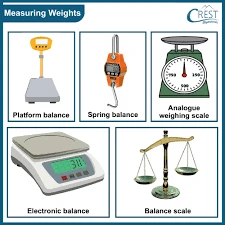
What is weight? Weight tells us how heavy something is.
Units of weight:
- Gram (g) – for light objects
- Kilogram (kg) – for heavy objects
Relationship: 1 kilogram (kg) = 1000 grams (g)
Examples of light objects (measured in grams):
- A pencil = about 10g
- A coin = about 5g
- A slice of bread = about 25g
- An apple = about 150g
- A book = about 300g
Examples of heavy objects (measured in kilograms):
- A bag of rice = 5kg
- A pupil = about 25kg
- A teacher = about 60kg
- A car = about 1000kg
Converting between grams and kilograms:
- 1kg = 1000g
- 2kg = 2000g
- 3kg = 3000g
- 500g = 0.5kg (half kilogram)
Practice conversions:
- 4kg = _____ g
- 6kg = _____ g
- 2000g = _____ kg
- 5000g = _____ kg
- 1500g = _____ kg
Choose the right unit (g or kg):
- Weight of a feather: 2___
- Weight of a bag of flour: 10___
- Weight of a baby: 4___
- Weight of a paper clip: 1___
- Weight of a bicycle: 15___
D. calculating weight of objects
Adding weights:
- 2kg + 3kg = 5kg
- 500g + 300g = 800g
- 1kg + 2000g = 1kg + 2kg = 3kg
Subtracting weights:
- 5kg – 2kg = 3kg
- 800g – 250g = 550g
- 3kg – 1500g = 3000g – 1500g = 1500g = 1.5kg
Practice adding weights:
- 3kg + 4kg = _____ kg
- 200g + 150g = _____ g
- 2kg + 1kg = _____ kg
- 400g + 300g = _____ g
- 1kg + 500g = _____ g
Practice subtracting weights:
- 8kg – 3kg = _____ kg
- 500g – 200g = _____ g
- 10kg – 4kg = _____ kg
- 800g – 350g = _____ g
- 2kg – 500g = _____ g
Comparing weights: Which is heavier?
- 2kg or 1500g? _____
- 800g or 1kg? _____
- 3000g or 2kg? _____
- 500g or 1kg? _____
E. calculating weight of some objects
Weighing common objects:
Kitchen items:
- 1 cup of rice = 200g
- 1 cup of flour = 150g
- 1 egg = 60g
- 1 tomato = 100g
School items:
- 1 exercise book = 50g
- 1 textbook = 250g
- 1 pencil case = 100g
- School bag (empty) = 500g
Calculate total weights:
Example 1: Weight of lunch
- 2 slices of bread = 2 × 25g = 50g
- 1 apple = 150g
- Total = 50g + 150g = 200g
Example 2: Weight in school bag
- 3 textbooks = 3 × 250g = 750g
- 2 exercise books = 2 × 50g = 100g
- 1 pencil case = 100g
- Total = 750g + 100g + 100g = 950g
Practice calculations:
- Weight of 4 apples (each 150g): _____ g
- Weight of 2 bags of rice (each 5kg): _____ kg
- Total weight: 3 eggs + 2 tomatoes = (3 × 60g) + (2 × 100g) = _____ g
- A box weighs 200g. It contains 5 books of 250g each. Total weight = 200g + (5 × 250g) = _____ g
F. quantitative reasoning
Word problems:
- Kemi weighs 30kg. Her baby brother weighs 8kg. What is their total weight?
- A bag of sugar weighs 2kg. Tolu uses 500g for cooking. How much sugar is left?
- Ada buys 3 packets of biscuits. Each packet weighs 200g. What is the total weight?
- A crate of oranges weighs 15kg. The empty crate weighs 2kg. What is the weight of just the oranges?
Estimation problems:
- About how much would 10 pencils weigh? _____
- About how much would 5 apples weigh? _____
- Which is closer to 1kg: 10 books or 100 coins? _____
Comparison problems:
- Who is heavier: a pupil weighing 25kg or a teacher weighing 60kg?
- What weighs more: 5 textbooks or 1 bag of rice?
- Which package is lighter: 800g or 1.2kg?
Real-life applications:
- A trader sells fruits. She has:
- 20 apples (150g each)
- 10 oranges (200g each) What is the total weight of fruits?
- Bola’s luggage must not exceed 20kg. She packs:
- Clothes: 8kg
- Books: 5kg
- Shoes: 3kg
- Gifts: 6kg Is her luggage too heavy?
Pattern recognition:
- 1kg, 2kg, 3kg, _____, _____
- 100g, 200g, 300g, _____, _____
- 500g, 1kg, 1500g, _____, _____
CLASS EXERCISES
- Count from 928 to 938:
- Write in words:
- 927 = _______
- 933 = _______
- 940 = _______
- Convert weights:
- 7kg = _____ g
- 3000g = _____ kg
- 8kg = _____ g
- 4500g = _____ kg
- Choose the right unit (g or kg):
- Weight of a car: 800___
- Weight of a banana: 120___
- Weight of a person: 50___
- Weight of a coin: 5___
- Add weights:
- 4kg + 3kg = _____ kg
- 300g + 200g = _____ g
- 2kg + 1500g = _____ g
- Subtract weights:
- 9kg – 4kg = _____ kg
- 700g – 250g = _____ g
- 3kg – 800g = _____ g
- Compare weights:
- Which is heavier: 1500g or 2kg? _____
- Which is lighter: 900g or 1kg? _____
- Calculate total weights:
- 6 books, each weighing 300g: _____ g
- 3 bags of flour, each 2kg: _____ kg
- Word problems:
- Emeka weighs 28kg. His sister weighs 15kg. What is their combined weight?
- A trader buys 5kg of tomatoes and uses 2kg. How much is left?
- Problem solving: A school bag weighs 800g when empty. A pupil puts in 4 textbooks (250g each) and 3 exercise books (50g each). What is the total weight of the bag with books?
This term's Mathematics topics
Basic 3 Third Term · 17 topics
- Length: Measurement in Centimetre & Metres
- Perimeter of Rectangle, Square & Triangles
- Squares and Rectangles
- Time
- Weight
- Capacity
- Line of Symmetry
- Everyday Statistics
- Revision of Second Term’s Lessons / Resumption Test
- Length
- Perimeter
Third Term Mathematics Lesson Notes for Other Topics
Numbers 1-250
Read the full lesson note.
Data Collection
Read the full lesson note.
Numbers 241-250
Read the full lesson note.
Numbers 231-240
Read the full lesson note.
Two-Dimensional Shapes
Read the full lesson note.

Numbers 221-230
Read the full lesson note.
Weight
Read the full lesson note.
Numbers 211-220
Read the full lesson note.
Length Measurement
Read the full lesson note.
Numbers 201-210
Read the full lesson note.
Money (Continued)
Read the full lesson note.
Numbers 190-200
Read the full lesson note.
Nigerian Currencies
Read the full lesson note.
Numbers 181-190
Read the full lesson note.
Subtraction
Read the full lesson note.
Lesson Notes for Other Classes

Basic 1 Lesson Note
The complete lesson note to guide your studies.
Basic 2 Lesson Note
The complete lesson note to guide your studies.
Basic 4 Lesson Note
The complete lesson note to guide your studies.
Basic 5 Lesson Note
The complete lesson note to guide your studies.
Basic 6 Lesson Note
The complete lesson note to guide your studies.

JSS1 Lesson Note
The complete lesson note to guide your studies.