
Three-Dimensional Shapes Basic 5 Mathematics Lesson Note
Download Lesson NoteTopic: Three-Dimensional Shapes

Behavioural Objectives
By the end of the lesson, pupils should be able to:
- Identify different types of three-dimensional shapes
- State the properties (faces, edges, and vertices) of common 3-D shapes
- Mention real-life examples of 3-D shapes
- Draw models of 3-D shapes
- Compare 3-D shapes based on number of faces, edges and vertices
Keywords
- Shape
- Faces
- Edges
- Vertices
- Cube
- Cuboid
- Cylinder
- Cone
- Sphere
- Pyramid
Set Induction (Starter)
“We need to always be able to show that a CONE, CUBE OR CYLINDER have FACES, EDGES and VERTICES… but what are real objects that are like these?” Show pupils various 3-D shapes and real objects.
Entry Behaviour
Pupils already know 2-D flat shapes (2) like square, triangle, and circle.
Learning Resources and Materials
- Real objects that represent 3-D shapes (dice, balls, cans, boxes)
- Flashcards
- Charts showing different 3-D shapes
- Models and charts
Building Background / Connection to Prior Knowledge
The teachers connects pupils of the shapes and explains that 3-D shapes have length, breadth, and height. They are not just flat but have volume.
Embedded Core Skills
- Observation
- Identification
- Drawing
- Analysis
Learning Materials
- Dice/cubes objects like cubes, cylinders, cones, balls
- Flashcards and charts
- Worksheets with properties of each 3-D shape
Reference Books
- New School Mathematics for Primary Schools Book 5
- Essential Basic Education Mathematics Book 6
- Lagos State Unified Scheme of Work
Instructional Materials
- Cubes (dice, Rubik)

- Boxes for cuboids
- Cylinders (cans)
- Ice cream cones
- Footballs (spheres/paper models)
Content Development
Definition of 3-D Shapes
Three-dimensional shapes are objects that have length, breadth (width), and height (including volume), and height. They are not just flat but can hold or have a volume.
Examples of 3-D Shapes and Their Properties
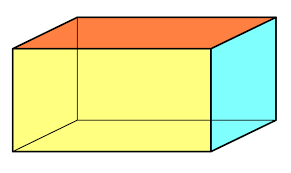
| Shape | Faces | Edges | Vertices | Example |
| Cube | 6 | 12 | 8 | Dice, Rubik’s cube |
| Cuboid | 6 | 12 | 8 | Book, shoe box |
| Cylinder | 3 | 2 | 0 | Can, battery |
| Cone | 2 | 1 | 1 | Ice cream cone |
| Sphere | 1 | 0 | 0 | Football, orange |
Presentation Steps
Step 1: Revision
Quickly review 2-D shapes that pupils are already familiar with as done in 2-D (circle, square, and triangle).
Step 2: Introduction of 3-D Shapes
Explain shapes as 3-D by using real objects. Show pupils cans, boxes, cones, balls, dice, eggs, footballs (tins, balls, cans).
Step 3: Pupils’ Participation
Show pupils different shapes and ask them to name each shape. Teacher shows and labels each shape on pupils’ participation.
Step 4: Explanation of Properties
Explain pupils faces, edges, and vertices in shapes diagrams. Pupils count and state properties.
Step 5: Drawing Practice
Pupils learn basic techniques for drawing 3-D shapes, either alone and organised.
Teacher’s Activities
- Explains the meaning and features of 3-D shapes
- Uses real objects to demonstrate each shape
- Also guides activities and draws drawing practice
Learners’ Activities
- Participate by identifying 3-D shapes
- Count and describe faces, edges and vertices
- Participate in drawing exercise
- Draw models of 3-D shapes
Class Activity Discussion (10 FAQs and Answers)
- What does 3-D mean?
- 3-D means three-dimensional
- Is a ball a 3-D shape?
- Yes, it is a sphere
- How many faces does a cube have?
- A cube has 6 faces
- What is a face?
- A face is a flat surface
- Name before three shapes:
- Cube, sphere, cylinder
- What is the difference between a cube and a cuboid?
- A cube has all equal sides while a cuboid has different lengths
- What is a vertex?
- A vertex is a corner where edges meet
- How many edges does a cube have?
- A cube has 12 edges
- Can you give examples of a pyramid?
- Egyptian pyramids, tent tops
- Does a sphere have any edges?
- No, a sphere has no edges
Third Term Mathematics Lesson Notes for Other Topics
Squares And Rectangles
Explore lesson notes covering all topics.

Time
Explore lesson notes covering all topics.

Weight
Explore lesson notes covering all topics.

Capacity
Explore lesson notes covering all topics.

Line Of Symmetry
Explore lesson notes covering all topics.

Everyday Statistics
Explore lesson notes covering all topics.

Length: Measurement in Centimetre & Metres
Explore lesson notes covering all topics.

Perimeter of Rectangle, Square & Triangles
Explore lesson notes covering all topics.
Data Collection
Explore lesson notes covering all topics.
Three-Dimensional Shapes
Explore lesson notes covering all topics.

Money
Explore lesson notes covering all topics.
Capacity
Explore lesson notes covering all topics.
Weight
Explore lesson notes covering all topics.
Length Measurement
Explore lesson notes covering all topics.

Area
Explore lesson notes covering all topics.

Lesson Notes for Other Classes

Basic 2 Lesson Note
The complete lesson note to guide your studies.
Basic 3 Lesson Note
The complete lesson note to guide your studies.

Basic 4 Lesson Note
The complete lesson note to guide your studies.

JSS1 Lesson Note
The complete lesson note to guide your studies.
JSS2 Lesson Note
The complete lesson note to guide your studies.

JSS3 Lesson Note
The complete lesson note to guide your studies.