
Length Basic 4 Mathematics Lesson Note
Download Lesson NoteTopic: Length
LEARNING AREA
- Introduction
- Estimate and Measure the Length of Objects
- Concept of Length and Its Standard Units
- Relationship Between Metric Units
- Addition and Subtraction in Cm, M and Km
- Total Distance
- Lesson Evaluation and Weekly Assessment (Test)
LEARNING OBJECTIVES
By the end of the lesson, most pupils should have attained the following objectives –
- estimating and measuring the lengths of objects.
- converting metres to centimetres.
- converting centimetres to metres.
- measuring distances in kilometres.
- converting metres to kilometres.
- Converting kilometres to metres.
- adding and subtracting length.
ENTRY BEHAVIOUR The pupils understand the concept of measuring in fashion design and carpentry
INSTRUCTIONAL MATERIALS The teacher will teach the lesson with the aid of a tape rule, measuring tape and chart showing relationship between centimetres, metres and kilometres.
METHOD OF TEACHING Choose a suitable and appropriate methods for the lessons.
Note – Irrespective of choosing methods of teaching, always introduce an activities that will arouse pupil’s interest or lead them to the lessons.
REFERENCE MATERIALS
- Scheme of Work
- 9 – Years Basic Education Curriculum
- Course Book
- All Relevant Material
- Online Information
CONTENT OF THE LESSON
LESSON 1 – INTRODUCTION
ACTIVITY 1 – MEASUREMENT
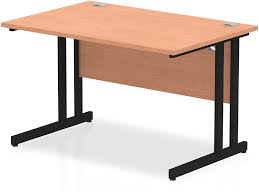
Measure and record the lengths of the desk, plain sheet, textbook surface.
Desk
- Length 1 –
- Length 2 –
Plain sheet
- Length 1 –
- Length 2 –
Textbook

- Length 1 –
- Length 2 –
ACTIVITY 2 – CONCEPT OF LENGTH
Length is the measurement of distance from one point to other side of an object.
Length is measured in centimetres and millimetres, metres and kilometres.
A kilometre (km), meter (m), and centimetre (cm) are the standard units of length.
Centimetres and millimetres are used for measuring short distances while metres and kilometres are used for measuring long distances.
SYNONYMS FOR LENGTH
Breadth (width) and height are commonly used as length.
RELATIONSHIP LENGTH, BREADTH AND HEIGHT


Length refers to how long the object is.
Breadth (width) refers to how short the object is.
Height refers to how tall the object is.
Length and breadth are used for 2 dimensional shapes while length, breadth and height are used for 3 dimensional shapes.
ACTIVITY 3 – ESTIMATING AND MEASURING DISTANCES IN CENTIMETRES
Materials – Rulers , tape rules, indefinite cartons and a bigger one such as for refrigerator or generator.
Teacher organizes pupils in groups or pairs depending on the size of the class to,
- make a rough estimate of each material.
- measure the length in centimetres using standard tools for measurement.
- record and compare both measurements.
- estimate and measure the length, breadth and height of the classroom.
Note – Teacher lets pupils measure the length and breadth of the classroom but take charge of the height. Pupils safety first.
ASSIGNMENT
Find out the length, breadth or height of the following,
- Door
- Window
LESSON 2 – CENTIMETRES, METRES AND KILOMETRES
ACTIVITY 1 – CONCEPTS OF CENTIMETRES, METRES AND KILOMETRES
- Centimetre (cm) is a metric unit of length that equals one hundredth of a meter. That’s, 100 cm = 1 m.
- Meter (m) is a metric unit of length that equals one hundred of a centimetre. That’s, 1 m = 100 cm.
- Kilometre (km) is a metric unit of length that’s equal to one thousand of a metres. That’s, 1 km = 1000 m.
ACTIVITY 2 – CONVERTING CM TO M (100 CM = 1 M)
Working Example 1
Convert 100 cm to meters.
1st, divide the number of centimeters by 100.
100 ÷ 100 = 1
2nd, change the unit to meter.
100 cm = 1 m
Working Example 2
Convert 253 cm to metre.
1st, divide the number of centimeters by 100.
253 ÷ 100 = 2.53
2nd, change the unit to meter.
253 cm = 2.53 m or 2 m 53 cm
Working Example 3
Convert 56 cm to metres.
1st, change the unit to metres.
56 ÷ 100 = 0.56
2nd, change the unit to metres.
56 cm = 0.56m
Working Example 4
Convert 8 cm to metres.
1st, divide the number of centimeters by 100.
8 ÷ 100 = 0.08
2nd, change the unit to metres.
8 cm = 0.08 m
WORKING EXERCISES
Convert the following to metres.
- 56 cm
- 8 cm
- 95 cm
Solution: 1. 56 ÷ 100 = 0.56 m
- 8 ÷ 100 = 0.08 m 3. 95 ÷ 100 = 0.95 m 4. one 35 cm
- 95 ÷ 100 = 0.95 m 4. one 35 ÷ 100 = 0.35 m
Working Example 5
Convert 125 cm to metres.
1st, multiply the number by 100.
1.2 x 100
2nd, change the unit to centimetres.
1.2 m = 120 cm
Working Example 2
Convert 13.35 to centimetres.
1st, multiply the number by 100.
13.35 x 100 = 1335
2nd, change the unit to centimetres.
13.35 m = 1335 cm
Working Example 3
Convert 0.8m to centimetres.
1st, multiply the number by 100.
0.8 x 100 = 80
2nd, change the unit to centimetres.
0.8 m = 80 cm
WORKING EXERCISES
Convert the following to centimetres.
- 1.1 m
- 5.25 m
- 11.35 m
SOLUTIONS
- 1.1 m = 1.1 x 100 = 110 cm
- 5.25 m = 5.25 x 100 = 525 cm
Solution 3. 11.35 m = 11.35 x 100 = 1135 cm
ACTIVITY 3 – CONVERTING M TO KM (1000 M = 1 KM)
Working Example 1
Convert 1000 m to kilometres.
1st, divide the number of metres by 1000.
1000 ÷ 1000 = 1
2nd, change the unit to kilometres.
1000 m = 1 km
Working Example 2
Convert 2000 m to kilometres.
1st, divide the number of metres by 1000.
2000 ÷ 1000 = 2.00
2nd, change the unit to kilometres.
2000 m = 2.00 km
Working Example 3
Convert 56 m to kilometres.
1st, divide the number of metres by 1000.
56 ÷ 1000 = 0.056
2nd, change the unit to kilometres.
56 m = 0.056 km
Working Example 4
Convert 80 m to kilometres.
1st, divide the number of metres by 1000.
80 ÷ 1000 = 0.08
2nd, change the unit to kilometres.
80 m = 0.08 km
WORKING EXERCISES
Convert the following to centimetres.
- 1000 m
- 56 m
- 1890 m
SOLUTIONS
- 1000 ÷ 1000 = 1.000 km
- 56 ÷ 1000 = 0.056 km
- 1890 ÷ 1000 = 1.89 km
ACTIVITY 4 – CONVERTING KM TO M (1 KM = 1000 M)
Working Example 1
Convert 1 km to metres.
1st, multiply the number by 1000.
1 x 1000 = 1000
2nd, change the unit to metres.
1 km = 1000 m
Working Example 2
Convert 2.5 km to metres.
1st, multiply the number by 1000.
2.5 x 1000 = 2500
2nd, change the unit to metres.
2.5 km = 2500 m
Working Example 3
Convert 0.5 km to metres.
1st, multiply the number by 1000.
0.5 x 1000 = 500
2nd, change the unit to metres.
0.5 km = 500 m
WORKING EXERCISES
Convert the following to metres.
- 2.5 km
- 1 km
- 10.5 km
SOLUTIONS
- 2.5 x 1000 = 2500 m
- 1 x 1000 = 1000 m
- 10.5 x 1000 = 10500 m
LESSON 4 – ADDITION AND SUBTRACTION INVOLVING CM, M AND KM
ACTIVITY 1 – ADDITION INVOLVING CM, M AND KM
Working Example 1
- Measure the following lines.
______________ cm
______________ cm
- Add the two lines together.
- Convert the result to its metres.
SOLUTION
- Let’s assumed the lines is 58 cm and 73 cm respectively.
- Add 58 cm and 73 cm
58 cm
+
73 cm= 131 cm
- Convert 131 cm to metres.
131 cm = 131 ÷ 100 = 1.31 = 1 m 31 cm
Working Example 2
Add 5 m 56 cm and 8 m 99 cm
5 m 56 cm
+
8 m 39 cm= 14 m 95 cm
Working Example 3
Add 3 km 614 m and 3 km 475 m together.
3 km 614 m
+
3 km 475 m= 6 km 1,089 m
WORKING EXERCISES
Add the following:
- 9 125 m and 6 786 m
- 8 804 m, 3 408 km and 2 397 m
- 969 m and 463 m
- 2 148 km + 700 m
- 6 m 71 cm and 5 m 92 cm
ACTIVITY 2 – SUBTRACTION INVOLVING CM, M AND KM
Working Example 1
Subtract 2 m 56 cm and 8 m 89 cm
9 m 56 cm
–
6 m 39 cm= 3.17 cm
Therefore, 9 m 56 cm – 6 m 89 cm = 3 m and 0.17 m
Working Example 2
8 804 m – 3 408 km – 2 397 m
8 804 m (3 408 km = 3 408 m) = 3 408 m
-2 397 m
5 555 m
Therefore, 8 804 m + 3 408 km – 2 397 m = 5 555 m or 5 km 555 m or 5.555 km
Working Example 3
969 m – 463 m
969 m
-463 m= 506 m
Therefore, 969 m – 463 m = 506 m or 0.506 km
Working Example 4
2 148 km – 700 m
2 148 km (700 m = 0.700 km) = 0.700 km
=1.448 km
Therefore, 2 148 km – 700 m = 2.448 km or 1 km 448 m
LESSON 5 – WORD PROBLEMS
Word problems are mathematical problems presented a simple language rather than in mathematical notation.
Working Example 1
A man travels from Lagos to Badala is 13.7 km, Badala to Agon is 26.1 km and Agom to Abuja 30.9 km.
- What is the total distance travelled?
- Find the average distance travelled.
Solution
Total distance is:
13.7 km
- 26.1 km
- 30.9 km
70.7 km
Average distance is:
70.7 _____ = 23.6 km 3
Working Example 2
A man walks 150 kilometres in 5 hours. How long does he walk in;
- 3 hours
- 8 hours
- 12 hours
Solution
In one hour, he walks in:
150 ___ = 30 km 5
- In 3 hours, 3 x 30 = 90 km
- In 8 hours, 8 x 30 = 240 km
- In 12 hours, 12 x 30 = 360 km
Working Example 3
A boy can walk a distance of 100 km in 20 hours. Find the average distance
100 ___ = 5 km 20
WORKING EXERCISES
- A man travels from Lagos to Ibom is 24.7 km, Ibom to Agag is 70.1 km and from to Kaduna 48.5 km.
- What is the total distance travelled?
- Find the average distance travelled.
- A boy can walk a distance of 200 km in 13 hours. Find the average distance.
- A man walks 350 kilometres in 5 hours. How long does he walk in.
- 3 hours
- 8 hours
- 12 hours
PRESENTATION
To deliver the lesson, the teacher adopts the following steps:
- To introduce the lesson, the teacher revises the previous lesson. Based on this, he/she asks the pupils some questions;
- Teacher organizes the pupils in groups or pair depending on the size of the class.
- Teacher displays measuring tape and rule.
- Teacher asks the groups or pairs to discuss the uses of the measuring tools with appropriate examples.
Pupil’s Activities – State the uses of ruler and measuring tape.
- Teacher asks pupils to state the profession where the tools are commonly used.
Pupil’s Activities – Mention the fashion designer, carpentry, welder, surveyor, builder, etc.
- Teacher uses the pupil’s responses to introduce the lesson and guides pupils to measure each side of their maths textbook with ruler.
Pupil’s Activities – Pay attention to the lesson introduction and measure the lengths of the maths textbook.
- Teacher uses the results of their measurement to discuss the concept of length and its standard units.
Pupil’s Activities – Explain the meaning of length and the relationship between its standard units.
- Teacher guides pupils to measure the length, breadth and height of carton of different sizes.
- Teacher leads pupils to measure the length and breadth of the classroom.
Pupil’s Activities – Participate actively in measuring activities.
- Teacher discuss the relationship between standard units of length.
- Teacher guides pupils to convert cm to m, m to cm, m to km and km to m.
Pupil’s Activities – Follow the teacher’s instructions to convert cm to m, m to cm, m to km and km to m.
- Teacher guides pupils to add and substrate length in cm, m and km.
Pupil’s Activities – Follow the teacher’s guides to add and substrate length in cm, m and km.
- Teacher leads pupils to calculate total distance.
Pupil’s Activities – Find the total distance.
- Teacher summarizes each of the lesson on the board with appropriate evaluation.
Pupil’s Activities – Participate actively in the summary of the lesson by responding correctly in the questions and write as instructed.
CONCLUSION
To conclude the lesson for the week, the teacher revises the entire lesson and links it to the following week’s lesson.
NEXT LESSON
Weight – Addition, Subtraction, Multiplication and Division of Weight in Grams and Kilograms Primary 4 (Basic 4) Term 3 Week 3 Mathematics
LESSON EVALUATION
Teacher asks pupils to;
- estimate and measure the lengths of objects.
- convert metres to centimetres.
- convert centimetres to metres.
- measure distances in kilometres.
- converting metres to kilometres.
- convert kilometres to metres.
- adding and subtracting length.
- find the distance.
Third Term Mathematics Lesson Notes for Other Topics
Squares And Rectangles
Explore lesson notes covering all topics.

Time
Explore lesson notes covering all topics.

Weight
Explore lesson notes covering all topics.

Capacity
Explore lesson notes covering all topics.

Line Of Symmetry
Explore lesson notes covering all topics.

Everyday Statistics
Explore lesson notes covering all topics.

Length: Measurement in Centimetre & Metres
Explore lesson notes covering all topics.

Perimeter of Rectangle, Square & Triangles
Explore lesson notes covering all topics.
Data Collection
Explore lesson notes covering all topics.
Three-Dimensional Shapes
Explore lesson notes covering all topics.

Money
Explore lesson notes covering all topics.
Capacity
Explore lesson notes covering all topics.
Weight
Explore lesson notes covering all topics.
Length Measurement
Explore lesson notes covering all topics.

Area
Explore lesson notes covering all topics.

Lesson Notes for Other Classes

Basic 2 Lesson Note
The complete lesson note to guide your studies.
Basic 3 Lesson Note
The complete lesson note to guide your studies.
Basic 5 Lesson Note
The complete lesson note to guide your studies.

JSS1 Lesson Note
The complete lesson note to guide your studies.
JSS2 Lesson Note
The complete lesson note to guide your studies.

JSS3 Lesson Note
The complete lesson note to guide your studies.