
Angles Basic 5 Mathematics Lesson Note
Download Lesson NoteTopic: Angles

Types of Angles:
- Acute Angle: An angle that measures less than 90 degrees.
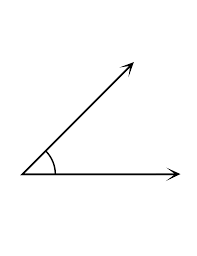
2. Right Angle: An angle that measures exactly 90 degrees.

3. Obtuse Angle: An angle that measures more than 90 degrees but less than 180 degrees.

4. Straight Angle: An angle that measures exactly 180 degrees.
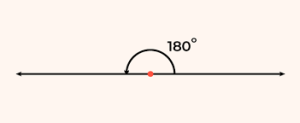
5. Reflex Angle: An angle that measures more than 180 degrees but less than 360 degrees.

6. Complete Angle: An angle that measures exactly 360 degrees.

7. Complementary Angles: Two angles whose measures add up to 90 degrees.
8. Supplementary Angles: Two angles whose measures add up to 180 degrees.
9. Adjacent Angles: Angles that share a common vertex and a common side, but do not overlap.
10. Vertical Angles: Pair of opposite angles formed by the intersection of two lines. They are congruent.
Measurement of Angles:
Angles can be measured in degrees, minutes, and seconds.
- 1 degree (°) = 60 minutes (‘)
- 1 minute (‘) = 60 seconds (“)
Notation:
Angles are often denoted by Greek letters (such as α, β, γ) or by three letters, where the vertex is the middle letter (such as ∠ABC).
Protractor:
A protractor is a tool used to measure and draw angles. It usually consists of a semicircular or circular disc marked with degree graduations.
Understanding angles and their properties is fundamental in various fields, including geometry, trigonometry, and physics. If you have any specific questions or need further clarification, feel free to ask.
Worked Samples
Example 1: Definition of Angles An angle formed by two intersecting lines AB and CD measures 45 degrees. Identify the type of angle.
Solution: The angle formed by lines AB and CD is a right angle, as it measures 90 degrees.
Example 2: Classifying Angles Classify the following angles as acute, obtuse, or right angles: a) ∠PQR = 30 degrees b) ∠XYZ = 110 degrees c) ∠LMN = 90 degrees
Solution: a) 30 degrees is an acute angle. b) ∠XYZ is an obtuse angle. c) ∠LMN is a right angle.
Example 3: Measuring Angles Measure the angle formed by the hands of a clock when the time is 6:30.
Solution: The minute hand points at the 6, while the hour hand is halfway between 6 and 7. Each hour mark represents 30 degrees. So, the angle formed is 30 degrees x 6 = 180 degrees.
Example 4: Complementary and Supplementary Angles If two angles are complementary and one of them measures 45 degrees, find the measure of the other angle.
Solution: Complementary angles add up to 90 degrees. So, the other angle measures 90 degrees – 45 degrees = 45 degrees.
Example 5: Adjacent Angles Identify the adjacent angles in the figure below:
Solution: ∠ABC and ∠CBA are adjacent angles.
Example 6: Vertical Angles In the figure below, identify the pairs of vertical angles:
Solution: ∠ABC and ∠BAC are vertical angles. ∠CBA and ∠BAC are also vertical angles.
Example 7: Finding the Measure of Unknown Angles If ∠X and ∠Y are complementary angles, and ∠X measures 40 degrees, find the measure of ∠Y.
Solution: Since complementary angles add up to 90 degrees, ∠Y = 90 degrees – 40 degrees = 50 degrees.
Example 8: Using a Protractor Measure the angle formed by the lines AB and CD using a protractor, where ∠ABC = ∠ABC.
Solution: Place the center of the protractor on point B, align the base line of the protractor with line AB, and read the measurement where line CD intersects the protractor.
Example 9: Applying Trigonometry Concepts In a right triangle, if one acute angle measures 30 degrees, find the measure of the other acute angle.
Solution: Since the sum of the angles in a triangle is 180 degrees, the other acute angle measures 180 degrees – 90 degrees – 30 degrees = 60 degrees.
Example 10: Real-Life Application A ladder leans against a wall, forming an angle of 60 degrees with the ground. If the bottom of the ladder is 12 feet away from the wall, find the length of the ladder.
Solution: Using trigonometric ratios, the length of the ladder (hypotenuse) can be found using the cosine of the angle: cos(60°) = adjacent/hypotenuse = 12/hypotenuse. Since cos(60°) = 0.5, the length of the ladder is 12cos(60°)/cos(60°) = 12. Calculate the value to find the length of the ladder.
These examples show various real-life uses of angles, from basic definitions to real-life applications. Let me know if you need further explanation on any of these!
Practice Questions
- The sum of the interior angles of a triangle is _____ degrees. a) 90 b) 180 c) 270 d) 360
- Two angles whose measures add up to 180 degrees are called _____ angles. a) complementary b) supplementary c) vertical d) adjacent
- An angle that measures exactly 90 degrees is called a _____ angle. a) acute b) obtuse c) right d) straight
- The angle formed by the hands of a clock at 3:00 is _____ degrees. a) 90 b) 120 c) 180 d) 360
- A pair of angles formed by two intersecting lines are called _____ angles. a) complementary b) supplementary c) vertical d) adjacent
- The measure of an angle can be determined using a _____ or by calculation. a) ruler b) protractor c) compass d) calculator
- Two angles that share a common vertex and a common side but have no common interior points are called _____ angles. a) complementary b) supplementary c) vertical d) adjacent
- The angle of elevation of the top of a building from a point 30 meters away from the base of the ladder is 10 meters from the wall, the length of the ladder is _____ meters. a) 10 b) 20 c) 13.6 d) 20.4
- If two angles are supplementary and one of them measures 60 degrees, the measure of the other is _____ degrees. a) 30 b) 60 c) 120 d) 240
- The sum of the measures of exterior angles of any polygon is always _____ degrees. a) 90 b) 180 c) 270 d) 360
Third Term Mathematics Lesson Notes for Other Topics
Squares And Rectangles
Explore lesson notes covering all topics.

Time
Explore lesson notes covering all topics.

Weight
Explore lesson notes covering all topics.

Capacity
Explore lesson notes covering all topics.

Line Of Symmetry
Explore lesson notes covering all topics.

Everyday Statistics
Explore lesson notes covering all topics.

Length: Measurement in Centimetre & Metres
Explore lesson notes covering all topics.

Perimeter of Rectangle, Square & Triangles
Explore lesson notes covering all topics.
Data Collection
Explore lesson notes covering all topics.
Three-Dimensional Shapes
Explore lesson notes covering all topics.

Money
Explore lesson notes covering all topics.
Capacity
Explore lesson notes covering all topics.
Weight
Explore lesson notes covering all topics.
Length Measurement
Explore lesson notes covering all topics.

Area
Explore lesson notes covering all topics.

Lesson Notes for Other Classes

Basic 2 Lesson Note
The complete lesson note to guide your studies.
Basic 3 Lesson Note
The complete lesson note to guide your studies.

Basic 4 Lesson Note
The complete lesson note to guide your studies.

JSS1 Lesson Note
The complete lesson note to guide your studies.

JSS2 Lesson Note
The complete lesson note to guide your studies.

JSS3 Lesson Note
The complete lesson note to guide your studies.