
Origin Of The Trans-Saharan Trade And Its Nature JSS3 Nigerian History Lesson Note
Download Lesson NoteTopic: Origin Of The Trans-Saharan Trade And Its Nature
Meaning:
Trans-Saharan trade refers to the vast network of commercial exchanges that spanned the Sahara Desert, connecting West African kingdoms with North Africa and, by extension, the Mediterranean world and beyond. This elaborate trade system existed from pre-historical times but reached its zenith between the 8th and early 17th centuries. It represented one of history’s most remarkable long-distance trade networks, operating across one of Earth’s most formidable geographic barriers.
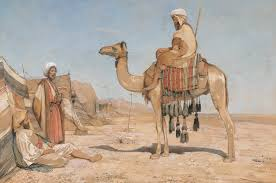
The trade network served as a vital economic lifeline that facilitated the exchange of goods, ideas, culture, and unfortunately, human beings between sub-Saharan Africa and the Mediterranean world. It wasn’t merely a commercial enterprise but a complex socio-economic system that shaped the development of numerous African civilizations and states, influencing their political structures, cultural practices, and religious beliefs.
Origins and Historical Development
Early Beginnings
The origins of trans-Saharan trade can be traced back to prehistoric times when the Sahara was significantly more hospitable than it is today. Archaeological evidence suggests that as early as 5000 BCE, when the Sahara was gradually transitioning from savanna to desert, nomadic peoples established the earliest trade connections across what would eventually become the world’s largest hot desert.
By around 1000 BCE, the Garamantes civilization had established settlements in the Fezzan region of present-day Libya. They developed a sophisticated understanding of desert travel and began to facilitate early trans-Saharan exchanges. Using horse-drawn chariots, they connected sub-Saharan Africa with the Mediterranean coast, trading in salt, slaves, and exotic goods from the south.
The Camel Revolution
The introduction of the camel to North Africa marked a transformative moment in the history of trans-Saharan trade. Camels were first brought to Egypt around the 7th century BCE, but their use for trans-Saharan crossings became widespread by the 1st century CE. The camel’s remarkable adaptations to desert conditions revolutionized desert transportation:
- They could travel up to two to three weeks without water
- They carried significantly heavier loads than previous pack animals
- They moved more efficiently across desert sand
- They had natural navigation abilities in the featureless desert landscape
This “camel revolution” dramatically expanded the scope and scale of trans-Saharan commerce, making regular and reliable crossings possible. Camel caravans could transport larger quantities of goods, travel faster, and navigate more direct routes across the Sahara.
Rise of Trade Kingdoms
As trans-Saharan trade expanded, powerful kingdoms arose along the southern edges of the Sahara in the Sahel region. These included:
- Ghana Empire (c. 300-1200 CE): Often called the “Land of Gold,” Ghana controlled the southern terminals of important trans-Saharan trade routes. Its wealth was based on its position between gold-producing regions to its south and the trans-Saharan routes to its north.
- Mali Empire (c. 1230-1600 CE): Following Ghana’s decline, the Mali Empire rose to prominence under figures like Mansa Musa, whose famous pilgrimage to Mecca in 1324-25 displayed the incredible wealth generated by the gold trade. Mali controlled key trade cities like Timbuktu and Djenné.
- Songhai Empire (c. 1464-1591): Succeeding Mali, Songhai became the largest state in African history at that time, controlling even more extensive portions of the trans-Saharan trade network.
- Kanem-Bornu Empire (c. 700-1900 CE): This remarkably long-lived state controlled eastern trans-Saharan routes, connecting Lake Chad with Libya and Egypt.
In North Africa, the Berber kingdoms and later Arab-Berber states served as the northern terminals of these trade routes, connecting sub-Saharan Africa with Mediterranean markets.
The Nature of Trans-Saharan Trade
Trade Routes
The trans-Saharan trade network consisted of several major routes:
- Western Route: From Morocco through western Sahara to the bend of the Niger River, connecting to ancient Ghana and later Mali and Songhai.
- Central Route: From modern Tunisia and Algeria through the Hoggar Mountains to the Lake Chad region, connecting to Kanem-Bornu.
- Eastern Route: From Egypt through Darfur to the Upper Nile regions.
These main arteries were supplemented by numerous smaller routes and interconnections, creating a vast web of commercial pathways across the desert.
Major Trading Centers
Along these routes, important commercial centers emerged, serving as hubs for the collection, exchange, and distribution of goods:
- North African Terminals: Cities like Marrakesh, Fez, Tunis, Tripoli, and Cairo served as the northern gateways of the trade.
- Desert Entrepôts: Oasis cities like Sijilmasa, Ghadames, Ghat, and Murzuk were crucial stopping points for caravans crossing the desert.
- Sub-Saharan Terminals: Cities in the Sahel including Timbuktu, Gao, Djenné, Kano, Katsina, Zaria, and Ngazargamu (in Bornu) became wealthy commercial centers where goods were collected from the forest zones further south.
In what would become Nigeria, four major centers were particularly important in the trans-Saharan trade network:
- Ngoru
- Birnin Ngazagamu
- Nguru in Borno
- Kano, Katsina, and Zaria in Hausaland
These commercial hubs were strategically positioned along trade routes and developed into cosmopolitan centers of commerce, learning, and cultural exchange.
Trade Mechanics and Organization
Traversing the Sahara was an extremely hazardous undertaking that required specialized knowledge and organization:
- Caravans: Trade was conducted by camel caravans that could number from a few dozen to several thousand animals. The famous Azalai salt caravans sometimes included up to 40,000 camels.
- Caravan Leaders: Expert guides known as “khabirs” were essential for successful crossings, possessing intimate knowledge of routes, water sources, and navigation techniques.
- Rest Houses: Networks of caravanserais provided secure stopping points where merchants could rest, replenish supplies, and trade goods.
- Credit Systems: Complex financial arrangements developed to facilitate trade across vast distances, including letters of credit and partnerships.
- Protection Arrangements: Merchants paid fees to desert tribes for safe passage through their territories, while some states provided military escorts for caravans.
Trade Commodities
Trans-Saharan trade involved a diverse array of goods exchanged between North and West Africa:
From North Africa to West Africa:
- Salt (a crucial preservative and dietary supplement)
- Textiles (including silk from China and cotton from North Africa)
- Horses (prized for military use in the savanna kingdoms)
- Copper and brass items
- Glassware and ceramics
- Books and manuscripts (particularly Islamic texts)
- Mediterranean luxuries
- Weapons and armor
- Beads and perfumes
From West Africa to North Africa:
- Gold (the most valuable export, particularly from regions in modern Ghana, Mali, and Burkina Faso)
- Slaves (captured from regions south of the Sahel)
- Ivory
- Kola nuts (stimulants highly valued in North Africa)
- Leather goods
- Spices and incense
- Ostrich feathers and eggs
- Exotic animals
- Ebony and other tropical woods
Barter and Currency Systems
While much of the trade operated on a barter system, especially in earlier periods, various currency systems also developed:
- Gold dust measured by weight
- Cowrie shells imported from the Indian Ocean
- Salt blocks of standardized sizes
- Copper coins and bars
- Cotton strips of standardized lengths
These forms of currency facilitated more complex trading relationships and allowed for the accumulation of wealth.
Cultural and Religious Impacts
The trans-Saharan trade had profound impacts beyond commerce:
Spread of Islam
Perhaps the most significant cultural impact was the spread of Islam across West Africa. Muslim merchants brought not only goods but also their religion, which found fertile ground among West African elites:
- By the 11th century, rulers of major Sahelian states began converting to Islam
- Islamic education spread through the establishment of madrasas in trading centers
- Timbuktu became a renowned center of Islamic scholarship with its famous Sankore University
- Islamic legal and administrative systems influenced state development
Architectural Influences
North African architectural styles spread to West Africa, visible in:
- The distinctive Sudano-Sahelian architecture of major trading cities
- The great mosques of Djenné, Timbuktu, and Kano
- Urban planning patterns in trading centers
Linguistic Exchanges
Arabic became an important language of scholarship and commerce across the Sahel, while vocabulary exchanges occurred between Arabic, Berber, and West African languages, particularly Hausa, Songhay, and Mande languages.
Technological Transfers
Important technologies diffused across the desert, including:
- Advanced metalworking techniques
- New agricultural methods and crops
- Military innovations including certain weapons and cavalry tactics
- Writing systems (Arabic script adapted for local languages)
The Slave Trade Component
While gold was the most valuable commodity in terms of economic impact, the human cost of the trans-Saharan trade was incalculable:
- The trans-Saharan slave trade operated from approximately the 3rd century BCE until the early 20th century
- Between 10-20 million Africans are estimated to have been enslaved and transported across the Sahara
- Slaves were captured from regions south of the Sahel, often through raids or as tribute from subordinate states
- They were transported in brutal conditions across the desert, with many perishing during the journey
- Enslaved Africans were destined for domestic service, agricultural labor, military conscription, and harems in North Africa, the Middle East, and parts of Southern Europe
This aspect of the trans-Saharan trade preceded the trans-Atlantic slave trade by over a millennium yet has received comparatively less historical attention despite its enormous scale and duration.
Decline of the Trans-Saharan Trade
Several factors contributed to the gradual decline of trans-Saharan trade from the 17th century onward:
- European Maritime Competition: The development of European navigation along Africa’s Atlantic coast created alternative trade routes that bypassed the Sahara entirely.
- Colonial Disruption: European colonial powers deliberately redirected African trade toward the coast and away from traditional trans-Saharan routes.
- Political Instability: The Moroccan invasion of Songhai in 1591 and subsequent political fragmentation in the Sahel disrupted traditional trade patterns.
- Environmental Factors: Continued desertification made desert crossings increasingly difficult and costly.
- Abolition Movements: The gradual suppression of the slave trade removed a major economic component of the system.
By the early 20th century, the once-mighty trans-Saharan trade network had been reduced to a shadow of its former self, though some regional trade continues to this day along traditional routes.
Conclusion
The trans-Saharan trade represented one of history’s most remarkable commercial enterprises, operating across an incredibly hostile environment for over two millennia. Its economic impact was enormous, facilitating the movement of valuable commodities between ecological zones and connecting sub-Saharan Africa to global trade networks. More than just commerce, it served as a conduit for cultural, religious, and technological exchange that profoundly shaped the development of numerous African civilizations.
The legacy of this trade can still be seen today in the cultural practices, architectural styles, religious traditions, and ethnic compositions of countries across northern and western Africa. Understanding the complex history of trans-Saharan trade provides crucial context for appreciating the rich interconnections that have long existed between Africa and the wider world, challenging simplistic notions of African isolation before European colonization.
Answers to Home Task
- Explain the term “Trans-Sahara Trade”
Trans-Saharan trade refers to the extensive commercial network that operated across the Sahara Desert, connecting sub-Saharan West Africa with North Africa and, by extension, the Mediterranean world and Middle East. This long-distance trade system existed from ancient times but flourished most prominently between the 8th and 17th centuries CE. The term encompasses not just the physical movement of goods across the desert via camel caravans but also the complex social, political, and cultural interactions that developed around this commerce. It involved the exchange of diverse commodities between ecological zones, operated through established routes and trading centers, and significantly influenced the development of states and societies on both sides of the Sahara. This trade network represented one of history’s most remarkable commercial enterprises, overcoming the formidable geographic barrier of the world’s largest desert to create lasting connections between African regions and beyond.
- Commodities traded during Trans-Sahara trade
From North Africa to West Africa:
- Salt (essential for preservation and dietary needs in salt-poor West Africa)
- Textiles (including silk, cotton, and wool fabrics)
- Horses (highly valued for military purposes)
- Copper and brass items (both raw materials and finished goods)
- Glassware and ceramics
- Books and manuscripts (particularly Islamic religious texts)
- Mediterranean luxury goods (including perfumes, jewelry, and ornaments)
- Weapons and armor
- Beads and decorative items
- Dates and dried fruits
- Metal tools
- Paper
- Spices from the East
From West Africa to North Africa:
- Gold (the most valuable export, particularly from regions in modern Ghana, Mali and Burkina Faso)
- Slaves (captured from regions south of the Sahel)
- Ivory (from elephant tusks)
- Kola nuts (stimulants highly valued in North Africa)
- Leather goods (Moroccan leather actually originated in West Africa)
- Local spices and incense
- Ostrich feathers and eggs (luxury decorative items)
- Exotic animals (for menageries and as diplomatic gifts)
- Ebony and other tropical hardwoods
- Gum arabic (used in perfumes, inks, and medicines)
- Civet musk (for perfumes)
- Cotton (both raw and woven)
- Indigo and other dyes
First Term Nigerian History Lesson Notes for Other Topics
Other Pre-Colonial Settlers In Lagos
Explore lesson notes covering all topics.

Nigerian People - North West And North East
Explore lesson notes covering all topics.
Nigerian People: South East And North Central
Explore lesson notes covering all topics.
Nigerian People: South West And South-South
Explore lesson notes covering all topics.
Indigenous Occupation And Mode Of Transportation In Lagos
Explore lesson notes covering all topics.
Tradition And Origin People Of Awori, Ijebu, e.t.c
Explore lesson notes covering all topics.
Location Of The Indigenous People Of Lagos State
Explore lesson notes covering all topics.
Indigenous People Of Lagos State - Awori, Egun, Ijebu Etc.
Explore lesson notes covering all topics.

British Rule In Nigeria, Traditional Nationalism, And Resistances
Explore lesson notes covering all topics.

Detailed Study Of Major Constitutions
Explore lesson notes covering all topics.

Meaning Of A Constitution
Explore lesson notes covering all topics.
British Rule In Nigeria 3
Explore lesson notes covering all topics.
British Rule In Nigeria
Explore lesson notes covering all topics.

British Rule In Nigeria 2
Explore lesson notes covering all topics.

The Royal Niger Company
Explore lesson notes covering all topics.

Lesson Notes for Other Classes

Basic 2 Lesson Note
The complete lesson note to guide your studies.

Basic 3 Lesson Note
The complete lesson note to guide your studies.

Basic 4 Lesson Note
The complete lesson note to guide your studies.

Basic 5 Lesson Note
The complete lesson note to guide your studies.

JSS1 Lesson Note
The complete lesson note to guide your studies.

JSS2 Lesson Note
The complete lesson note to guide your studies.