British Rule in Nigeria 3 – Basic 5 Nigerian History Lesson Note (First Term)
Download Lesson NoteLesson note at a glance
- Subject
- Nigerian History
- Class
- Basic 5
- Term
- First Term
- Topic
- British Rule in Nigeria 3
- Order
- Topic 3 of 7 this term
- Reading time
- 8 min

Learning objectives
By the end of the lesson, pupils should be able to:
- Give the meaning of amalgamation
- Mention who amalgamated Nigeria
- Discuss the reasons responsible for the amalgamation of Nigeria
- Relate the various phases of Nigeria’s amalgamation
- Examine the positive and negative effects of British amalgamation of Nigeria
Lesson 1: meaning of amalgamation
Definition of amalgamation
General Meaning: Amalgamation means the process of combining or uniting two or more separate things into one single unit.
In Nigerian Context: The amalgamation of Nigeria refers to the joining together of the Northern Nigeria Protectorate and the Southern Nigeria Protectorate to form one single country called Nigeria in 1914.
Simple Explanation: Before 1914, what we now call Nigeria was actually two separate British colonies:
- Northern Nigeria Protectorate (the northern part)
- Southern Nigeria Protectorate (the southern part)
The British decided to join these two separate areas together to make one big country, which they called Nigeria.
Key Terms:
- Protectorate: A territory controlled and protected by another country
- Colony: A territory completely owned and governed by another country
- Unification: The process of making separate parts into one whole
- Integration: Combining different parts to work together as one
Lesson 2: WHO amalgamated Nigeria?
The person responsible
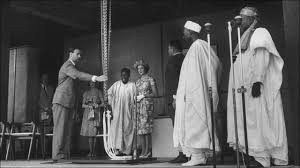
Sir Frederick Lugard (1858-1945)
His Position:
- First Governor-General of Nigeria (1914-1919)
- Former High Commissioner of Northern Nigeria (1900-1906)
- Former Governor of Hong Kong (1907-1912)
Background Information:
- Born in India to British parents
- Served as a soldier in various parts of the British Empire
- Had experience in colonial administration
- Believed in the policy of “Indirect Rule”
His Role in Amalgamation:
- Recommended the unification of Northern and Southern Nigeria
- Carried out the actual process of amalgamation
- Became the first leader of the unified Nigeria
- Established the administrative system for the new country
Why Lugard was Chosen:
- He had experience ruling Northern Nigeria
- He understood both northern and southern regions
- He was trusted by the British government
- He had proven administrative skills
Other Key People Involved:
- Lewis Harcourt: British Colonial Secretary who approved the amalgamation
- British Parliament: Passed the law making amalgamation official
- King George V: The British King who gave royal approval
Lesson 3: reasons for Nigeria’s amalgamation
Economic reasons
- Financial Problems in Northern Nigeria:
- Northern Nigeria was spending more money than it was making
- The region had few natural resources that could make money
- Southern Nigeria was very profitable from palm oil trade
- British government was tired of providing money to support the north
- Cost of Administration:
- Running two separate governments was expensive
- Needed to reduce the cost of colonial administration
- One government would be cheaper than two governments
- Could share resources between north and south
- Economic Efficiency:
- Combine the wealth of the south with the large population of the north
- Use southern profits to develop the northern region
- Create a bigger market for British goods
- Improve trade between northern and southern regions
Political reasons
- Administrative Convenience:
- Easier to govern one country than two separate ones
- Reduce conflicts between northern and southern administrations
- Create uniform laws and policies
- Simplify communication with London
- International Competition:
- Other European powers (France, Germany) were creating large colonies
- A bigger Nigeria would be more impressive internationally
- Could better compete with French West Africa
- Show British strength in Africa
- Strategic Considerations:
- Control important trade routes more effectively
- Better defense against external threats
- Coordinate military activities across the region
- Maintain British dominance in West Africa
Social reasons
- Unity of Purpose:
- Bring different ethnic groups under one government
- Promote national identity among Nigerians
- Encourage cooperation between different regions
- Reduce tribal conflicts through central authority
- Development Goals:
- Build infrastructure (roads, railways) across the entire region
- Develop education system for the whole country
- Improve healthcare services everywhere
- Modernize the entire territory together
Lesson 4: various phases of Nigeria’s amalgamation
Phase 1: pre-amalgamation period (1900-1913)
Characteristics:
- Two separate British territories existed
- Northern Nigeria Protectorate (established 1900)
- Southern Nigeria Protectorate (established 1900, included Lagos Colony)
- Different administrative systems
- Limited cooperation between the two regions
Key Events:
- 1900: Royal Niger Company’s charter revoked
- 1900: Northern Nigeria Protectorate created
- 1906: Lagos Colony merged with Southern Nigeria Protectorate
- 1912: Lugard recommended amalgamation to British government
Challenges:
- Northern Nigeria was making losses
- Different laws and systems in north and south
- Limited communication between regions
- Separate military forces
Phase 2: decision and preparation (1913-1914)
The Decision Process:
- Lugard submitted proposal to Colonial Office in London
- British Parliament debated the amalgamation
- Colonial Secretary Lewis Harcourt approved the plan
- Legal framework was established
Preparation Activities:
- Selection of Lagos as capital city
- Planning of new administrative structure
- Training of staff for unified government
- Preparation of laws for the new country
Key Decisions Made:
- Lagos would be the capital
- Lugard would be the first Governor-General
- Northern and Southern regions would maintain some separate identities
- New constitution would govern the unified country
Phase 3: actual amalgamation (1914)
The Historic Date: January 1, 1914
What Happened:
- Official ceremony held in Lagos
- British flag raised over the new Nigeria
- Lugard sworn in as first Governor-General
- New government offices established
- Announcement made to the world
Immediate Changes:
- One Governor-General for the whole country
- Unified military command
- Single system of currency
- Common foreign policy
- Shared government departments
Phase 4: post-amalgamation implementation (1914-1960)
Administrative Structure:
- Northern Nigeria Province
- Southern Nigeria Province (later divided into Eastern and Western regions)
- Lagos as federal capital
- Provincial and district administrations
Gradual Integration:
- Development of national institutions
- Building of connecting infrastructure
- Establishment of national services
- Creation of Nigerian identity
Challenges Faced:
- Resistance from some local leaders
- Differences in culture and religion
- Economic imbalances between regions
- Administrative difficulties
Lesson 5: positive and negative effects of British amalgamation
Positive effects
POLITICAL BENEFITS:
- National Unity:
- Created one large country instead of many small ones
- Brought different ethnic groups under one government
- Established Nigerian national identity
- Reduced conflicts between regions
- Strong Government:
- Created central authority to maintain law and order
- Established uniform legal system
- Built strong institutions of government
- Improved security across the territory
- International Recognition:
- Nigeria became recognized as one country internationally
- Gained stronger voice in world affairs
- Could participate in international organizations
- Became largest country in Africa by population
ECONOMIC BENEFITS:
- Economic Development:
- Combined resources of north and south for development
- Built railways connecting different regions
- Developed common currency system
- Created larger market for trade
- Infrastructure Development:
- Constructed roads linking north and south
- Built bridges across major rivers
- Established telegraph and postal services
- Developed ports and airports
- Resource Sharing:
- Southern wealth helped develop the north
- Northern agricultural products supplied the south
- Shared natural resources more efficiently
- Reduced economic waste and duplication
SOCIAL BENEFITS:
- Education and Culture:
- Established national education system
- Promoted English as common language
- Encouraged cultural exchange between regions
- Built universities and colleges
- Healthcare:
- Developed national health services
- Built hospitals across the country
- Fought diseases more effectively
- Improved overall health standards
- Communication:
- Better communication between different parts
- Improved transportation systems
- Enhanced trade and commerce
- Promoted national integration
Negative effects
POLITICAL PROBLEMS:
- Ethnic and Religious Tensions:
- Forced different groups to live under one government
- Created competition between ethnic groups
- Religious differences between Muslim north and Christian south
- Led to conflicts and civil war later
- Unequal Development:
- Northern region remained less developed
- Southern regions got more government attention
- Created resentment and jealousy
- Led to demands for separate countries
- Loss of Local Autonomy:
- Traditional rulers lost much of their power
- Local communities had less control over their affairs
- Imposed foreign system of government
- Reduced local decision-making
ECONOMIC PROBLEMS:
- Economic Exploitation:
- British continued to exploit Nigeria’s resources
- Profits went mainly to Britain, not Nigerians
- Created economic dependence on Britain
- Limited industrial development
- Uneven Economic Growth:
- Some regions developed faster than others
- Created economic inequality
- Led to migration problems
- Caused regional jealousy and conflicts
- Dependency on Raw Materials:
- Nigeria focused only on producing raw materials
- Did not develop manufacturing industries
- Became dependent on importing finished goods
- Created weak economic foundation
SOCIAL PROBLEMS:
- Cultural Conflicts:
- Different cultures forced to live together
- Some cultures dominated others
- Traditional ways of life were disrupted
- Created identity problems for many people
- Educational Imbalances:
- Southern regions got more schools
- Northern regions remained less educated
- Created inequality in opportunities
- Led to regional disparities
- Social Divisions:
- Created educated elite separate from masses
- Widened gap between rich and poor
- Introduced foreign social values
- Weakened traditional social structures
Summary and review
Key Points to Remember:
- Amalgamation Definition: The joining of Northern and Southern Nigeria into one country in 1914
- Who Did It: Sir Frederick Lugard, the first Governor-General of Nigeria
- Main Reasons: Economic (northern losses, administrative costs), Political (convenience, competition), Social (unity, development)
- Four Phases: Pre-amalgamation (1900-1913), Decision and preparation (1913-1914), Actual amalgamation (1914), Implementation (1914-1960)
- Effects: Both positive (unity, development, recognition) and negative (conflicts, exploitation, dependency)
Historical Significance: The amalgamation of Nigeria in 1914 was one of the most important events in Nigerian history. It created the Nigeria we know today, but also created many of the problems the country still faces.
Evaluation questions
Short Answer Questions:
- What does amalgamation mean?
- Who amalgamated Nigeria and in what year?
- Name three reasons for Nigeria’s amalgamation.
- What date did the amalgamation officially take place?
- Mention two positive effects of amalgamation.
- State two negative effects of amalgamation.
- What was Sir Frederick Lugard’s position during amalgamation?
Long Answer Questions:
- Explain four reasons why the British amalgamated Nigeria.
- Describe the various phases of Nigeria’s amalgamation.
- Discuss four positive and four negative effects of Nigeria’s amalgamation.
- Analyze the role of Sir Frederick Lugard in Nigeria’s amalgamation.
Essay Questions:
- “The amalgamation of Nigeria in 1914 was both a blessing and a curse.” Discuss this statement with relevant examples.
- Examine the economic reasons that led to the amalgamation of Nigeria and analyze their long-term effects.
ASSIGNMENT
Research Assignment: Interview an elderly person in your community about what they know about Nigeria before and after 1914. Write a short report (10 sentences) on what you learned.
Map Work: Draw a simple map showing:
- Northern Nigeria Protectorate (before 1914)
- Southern Nigeria Protectorate (before 1914)
- Unified Nigeria (after 1914)
- Mark Lagos as the capital
Creative Assignment: Write a short story (15 sentences) imagining you were present at the amalgamation ceremony in Lagos on January 1, 1914.
This term's Nigerian History topics
Basic 5 First Term · 7 topics
First Term Nigerian History Lesson Notes for Other Topics

Civil Rule in Nigeria - Third Republic (1992-1993)
Read the full lesson note.

Civil Rule in Nigeria (Cont'd) - Forth Republic (1999-Present)
Read the full lesson note.

Other Pre-Colonial Settlers In Lagos
Read the full lesson note.

Nigerian People - North West And North East
Read the full lesson note.

Nigerian People: South East And North Central
Read the full lesson note.

Nigerian People: South West And South-South
Read the full lesson note.
Indigenous Occupation And Mode Of Transportation In Lagos
Read the full lesson note.

Tradition And Origin People Of Awori, Ijebu, e.t.c
Read the full lesson note.

Location Of The Indigenous People Of Lagos State
Read the full lesson note.

Indigenous People Of Lagos State - Awori, Egun, Ijebu Etc.
Read the full lesson note.

British Rule In Nigeria, Traditional Nationalism, And Resistances
Read the full lesson note.

Detailed Study Of Major Constitutions
Read the full lesson note.

Meaning Of A Constitution
Read the full lesson note.

British Rule In Nigeria
Read the full lesson note.

British Rule In Nigeria 2
Read the full lesson note.
Lesson Notes for Other Classes

Basic 1 Lesson Note
The complete lesson note to guide your studies.

Basic 2 Lesson Note
The complete lesson note to guide your studies.

Basic 3 Lesson Note
The complete lesson note to guide your studies.

Basic 4 Lesson Note
The complete lesson note to guide your studies.

Basic 6 Lesson Note
The complete lesson note to guide your studies.

JSS1 Lesson Note
The complete lesson note to guide your studies.