
Musical Styles JSS2 Cultural & Creative Arts (CCA) Lesson Note
Download Lesson NoteTopic: Musical Styles
Musical Styles
Subject: Creative Arts (Cultural and Creative Arts)
Class: JSS2
Duration: 40 minutes
LESSON OBJECTIVES
By the end of this lesson, pupils should be able to:
- Explain what musical style means
- Describe characteristics of African musical style
- Describe characteristics of Western musical style
- List at least five African instruments and five Western instruments
- Identify the differences between African and Western musical styles
- Recognize instruments by sight and sound
MATERIALS NEEDED
- Pictures of African instruments (talking drum, shekere, ekwe, thumb piano, flute)
- Pictures of Western instruments (piano, guitar, violin, trumpet, saxophone)
- Audio samples of African and Western music
- Real instruments (if available): drum, shaker, recorder/flute
- Chart comparing African and Western musical styles
- World map showing Africa and Western countries
PREVIOUS KNOWLEDGE
Pupils have learned about different music genres and listening skills. They understand that music can be made with instruments and voices.
LESSON CONTENT
INTRODUCTION (4 minutes)
The teacher plays two music clips back-to-back: first, a traditional African drumming piece with lots of percussion, then a Western classical orchestra piece with strings and piano. After listening, the teacher asks: “Did these two pieces sound the same or different?” Pupils respond: “Different!” The teacher asks: “Why were they different?” Pupils might mention drums, different sounds, different feelings. The teacher explains: “They were different because they represent two different musical styles – African and Western. Today we’ll learn what makes each style special and the instruments used in each.”
STEP 1: Understanding Musical Styles (6 minutes)
What is Musical Style?
The teacher explains: Musical style is the particular way music is created, performed, and sounds based on the culture and traditions of different people. It’s like how different families cook jollof rice differently – the rice is the same, but the style of cooking makes it taste different.
Factors That Create Different Musical Styles:
- The instruments available in that culture
- The purpose of the music (worship, celebration, storytelling, entertainment)
- The traditions and beliefs of the people
- The language and how it sounds
- What the people consider beautiful or pleasing to the ear
The teacher uses the map to show Africa and Western countries (Europe, America) and explains that geography and culture create different musical styles.
STEP 2: African Musical Style (10 minutes)
The teacher points to Africa on the map. “This is our continent! African music has a very special style that’s recognized all over the world.”
Characteristics of African Musical Style:
- Rhythm is the Foundation
- African music puts rhythm first – the beat is the most important element
- Multiple rhythms play at the same time (polyrhythm)
- Very complex drum patterns that interlock like puzzle pieces
- People naturally want to dance when they hear African music
- Call and Response
- A leader sings or plays a line, the group responds
- Creates conversation between musicians and audience
- Everyone participates, not just performers
- Example: Leader: “Ay-ya-ya!” Group: “Ay-ya-ya!”
- Repetition and Variation
- Same patterns repeat over and over
- Small changes are added each time to keep it interesting
- Creates a trance-like, hypnotic effect
- Allows people to join in easily
- Community Participation
- Music is for everyone, not just trained musicians
- Audience claps, dances, and sings along
- No separation between performers and listeners
- Music is a communal activity
- Improvisation
- Musicians create new parts as they play
- Not everything is planned beforehand
- Each performance is unique and spontaneous
- Shows the skill and creativity of the musician
African Instruments:
The teacher shows pictures and explains each instrument:
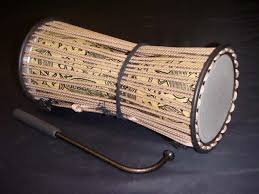
- Talking Drum (Dundun/Gangan): Hourglass-shaped drum that can “talk” by squeezing the strings to change pitch. Very important in Yoruba music.
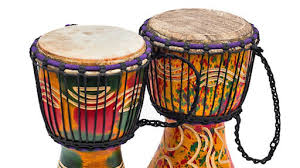
- Djembe: Large goblet-shaped drum from West Africa, played with bare hands. Makes deep bass and sharp high sounds.
- Shekere: Gourd covered with beads or shells in a net. Shaken and hit to create rhythm. Common in Nigerian music.
- Ekwe/Slit Drum: Wooden drum with slits carved in it. Hit with sticks to make different tones. Used for communication.
- Thumb Piano (Mbira/Kalimba): Small instrument with metal keys attached to a wooden board. Played by plucking with thumbs.
- Balafon: African xylophone made from wooden bars with gourds underneath for resonance.
- Kora: West African harp with 21 strings. Looks like a large gourd cut in half with a long neck.
- Traditional Flutes: Made from bamboo, wood, or animal horns. Blown to create melodies.
- Rattles and Bells: Made from gourds, seeds, shells, or metal. Worn on ankles or shaken in hands.
- Udu Pot: Clay pot with holes, played by hitting with hands. Makes deep, hollow sounds.
The teacher demonstrates sounds if instruments are available, or plays audio recordings.
STEP 3: Western Musical Style (10 minutes)
The teacher points to Europe and America on the map. “Western music comes from these parts of the world. It has a different style from African music.”
Characteristics of Western Musical Style:
- Melody and Harmony Focus
- Western music emphasizes melody (the tune) and harmony (chords)
- Rhythm is important but not the main focus
- Multiple notes played together create rich harmonies
- Often sounds “fuller” because of layered harmonies
- Written Music Notation
- Western music is usually written down on paper using special symbols
- Musicians read sheet music and play exactly what’s written
- Less improvisation, more following the composer’s instructions
- Requires learning to read musical notes
- Formal Performance
- Clear separation between performers and audience
- Audience sits quietly and listens without participating
- Performers are trained professionals
- Often performed in concert halls or churches
- Orchestra and Ensemble
- Many different instruments playing together in an organized way
- Conductor leads and coordinates all musicians
- Specific roles for each instrument section
- Very structured and organized
- Composition Focus
- Famous composers write music that’s performed for hundreds of years
- The composer’s vision is preserved exactly
- Emphasis on complex musical structures
- Music often tells stories or expresses specific emotions
Western Instruments:
The teacher shows pictures and explains each instrument:
String Instruments (played by bowing or plucking):
- Violin: Small stringed instrument held under the chin, played with a bow. Makes high, sweet sounds.
- Cello: Large stringed instrument played sitting down. Makes deep, rich sounds.
- Guitar: Six strings, strummed or plucked. Used in many music types from classical to rock.
- Piano: Keyboard instrument with 88 keys. Can play melody and harmony at the same time.
Wind Instruments (played by blowing): 5. Flute: Silver tube with holes, blown sideways. Makes clear, airy sounds. 6. Clarinet: Black wooden tube with reed. Makes smooth, warm sounds. 7. Saxophone: Brass instrument with reed. Used in jazz and classical music. 8. Trumpet: Brass instrument with valves. Makes bright, powerful sounds.
Percussion Instruments (played by hitting): 9. Drum Set: Multiple drums and cymbals played together in rock, pop, and jazz music. 10. Timpani: Large kettle drums used in orchestras. Can be tuned to different pitches.
Keyboard Instruments: 11. Organ: Large keyboard instrument often found in churches. Uses air to create sounds. 12. Synthesizer: Electronic keyboard that can create many different sounds.
The teacher plays audio samples of different Western instruments.
STEP 4: Comparing African and Western Styles (7 minutes)
The teacher creates a comparison chart on the board:
| African Style | Western Style |
| Rhythm is most important | Melody and harmony are most important |
| Passed down orally (by listening and practicing) | Written down on paper (sheet music) |
| Everyone participates (community music) | Performers and audience are separate |
| Lots of improvisation | Follow written music strictly |
| Call and response pattern | Structured compositions |
| Dance is part of music | Dancing is separate from concert music |
| Drums and percussion dominate | Variety of instrument families |
| Informal, relaxed atmosphere | Formal, structured performances |
Important Note: The teacher emphasizes: “Neither style is better than the other! They’re just different. Both are beautiful and valuable. In fact, many modern musicians combine African and Western styles to create new, exciting music. Nigerian artists use both African drums and Western guitars together!”
Examples of Mixed Styles:
- Highlife music (African rhythm + Western guitars)
- Afrobeat (African drums + Western horns and bass)
- Contemporary gospel (Western keyboards + African percussion)
EVALUATION (3 minutes)
Practical Activity: The teacher plays short music clips. Pupils identify if each is African style, Western style, or a mixture.
Questions:
- What is musical style?
- What is the most important element in African musical style?
- Name three African instruments.
- Name three Western instruments.
- In which style do audiences participate by clapping and dancing – African or Western?
- Which style uses written music notation?
- What instrument can “talk” – talking drum or violin?
CONCLUSION
The teacher summarizes: “Today we learned about two major musical styles – African and Western. African style focuses on rhythm, community participation, call and response, and uses instruments like talking drums, shekere, and thumb piano. Western style focuses on melody and harmony, written music, formal performance, and uses instruments like piano, violin, trumpet, and flute. Both styles are important and beautiful. As Nigerians, we’re lucky because we can enjoy both African traditional music and also learn Western classical music. Many of our modern musicians blend both styles to create something uniquely Nigerian!”
The teacher encourages pupils to appreciate all types of music and instruments.
Second Term Cultural & Creative Arts (CCA) Lesson Notes for Other Topics

Designing Patterns Using Basic Shapes
Explore lesson notes covering all topics.

Craft Making
Explore lesson notes covering all topics.
Music Staff (Stave)
Explore lesson notes covering all topics.

Colouring Patterns Of Basic Shape
Explore lesson notes covering all topics.

Musical Alphabets & Clefs
Explore lesson notes covering all topics.
Paper Craft Making
Explore lesson notes covering all topics.
Acting
Explore lesson notes covering all topics.
Developing Character In A Play
Explore lesson notes covering all topics.

Impersonation
Explore lesson notes covering all topics.
Mosaic
Explore lesson notes covering all topics.

Creating Music Solfa Notation
Explore lesson notes covering all topics.

Music Notes And Their Values
Explore lesson notes covering all topics.
Creating A Play With The Theme Of Honesty/ Integrity/ Right Attitude To Work
Explore lesson notes covering all topics.

Introduction To Weaving Using Paper
Explore lesson notes covering all topics.
Dance Motif
Explore lesson notes covering all topics.

Lesson Notes for Other Classes

Basic 2 Lesson Note
The complete lesson note to guide your studies.
Basic 3 Lesson Note
The complete lesson note to guide your studies.

Basic 4 Lesson Note
The complete lesson note to guide your studies.
Basic 5 Lesson Note
The complete lesson note to guide your studies.
JSS1 Lesson Note
The complete lesson note to guide your studies.

JSS3 Lesson Note
The complete lesson note to guide your studies.