
Introduction to Weaving Using Paper – Basic 5 Cultural & Creative Arts Lesson Note (Second Term)
Download Lesson NoteTopic: Introduction To Weaving Using Paper
Lesson note at a glance
- Subject
- Cultural & Creative Arts
- Class
- Basic 5
- Term
- Second Term
- Topic
- Introduction to Weaving Using Paper
- Order
- Topic 1 of 9 this term
- Reading time
- 2 min
LEARNING AREA
- Meaning and Types of Weaving
- Products of Weaving
- Weaving Materials
- Making Weaving Using Cardboard Paper
- Lesson Evaluation and Weekly Assessment (Test)
PERFORMANCE OBJECTIVES
By the end of the lesson, most of the pupils should have attained the following objectives:
- Identify weaving objects in the classroom or at home.
- Define weaving.
- State types of weaving.
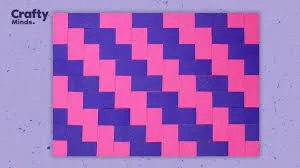
- Weave a mat with strips of paper using plain weave.
METHOD OF TEACHING
Choose a suitable and appropriate methods for the lessons.
Note – Irrespective of choosing methods of teaching always introduce an activities that will arouse pupil’s interest or lead them to the lessons
REFERENCE MATERIALS
Scheme of Work
9 – Years Basic Education Curriculum
Course Book
All Relevant Material
Online Information
CONTENT OF THE LESSON
LESSON 1 – INTRODUCTION TO WEAVING
Weaving is universally practiced in most urban areas and cities like Abeokuta, Kware, Ilorin, Akwete, Okene, Benin, Sokoto, Borno, Kano, Baiti and Lagos area among others.
Raffia and cotton are most widely used in cloth weaving in Nigeria.
MEANING OF WEAVING
Weaving is the uses of strips of materials interwoven to form patterns on traditional fabric.
PRODUCTS OF WEAVING
The following are the weaving items or products:
- Clothes
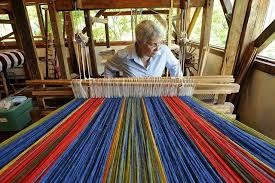
2. Mats

3. Baskets
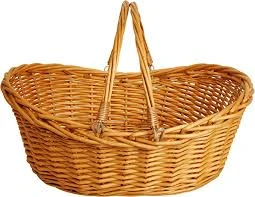
4. Bags
5. Box
6. Hand fans
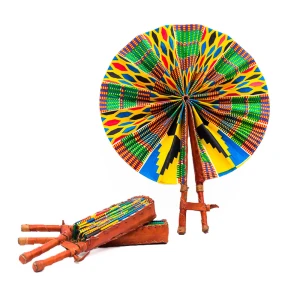
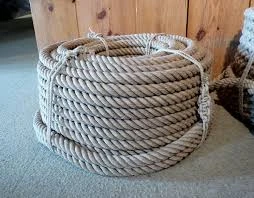
7. Ropes, etc.
LESSON 2 – TYPES OF WEAVING
Weaving is done on a loom. There are two types of loom namely – vertical and horizontal weaving. Both types of loom operate on the same principle.
- Vertical Weaving\
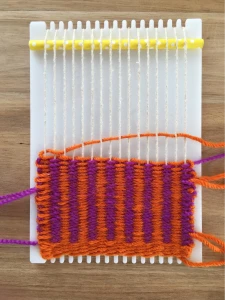
The vertical loom is used by women weavers.
This is the type of weaving loom that is vertical and upright. It can be easily moved from one location to another.
- Horizontal weaving
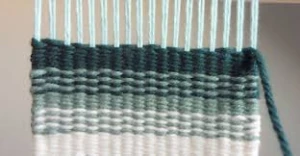
Horizontal loom is used by men weavers for traditional fabric weaving.
LESSON 3 – USING PAPER STRIPS TO WEAVE A MAT
STEPS
- Cut strips of cardboard with the same or different length by width.
- Use different colors so as to beautify the final weaving.
- Lay one of the strips of paper horizontally.
- Beginning with the second strip, interlace the vertical strips of paper with the remaining strips of paper horizontally.
- Ensure that they are neatly and closely knitted together.
- Tape all the edges of the weave together.
This term's Cultural & Creative Arts topics
Basic 5 Second Term · 9 topics
Second Term Cultural & Creative Arts (CCA) Lesson Notes for Other Topics
Introduction to Modelling: Making Objects with Paper Mache
Read the full lesson note.
Traditional Fabrics and Dresses
Read the full lesson note.

Singing Tonic Solfa of Twinkle Twinkle Little Star and Matching Songs
Read the full lesson note.
Musical Notes and Their Values
Read the full lesson note.

Methods of Modelling Objects with Clay Plastering
Read the full lesson note.
Importance of Traditional Dresses
Read the full lesson note.
Musical Notes: Rhythmic Clapping
Read the full lesson note.
Fashion Accessories
Read the full lesson note.
Musical Notes - Introduction to Notation
Read the full lesson note.
Costume and Make-up in Drama
Read the full lesson note.
Mosaic
Read the full lesson note.
Forms of Dance
Read the full lesson note.

Choral Singing
Read the full lesson note.
Care of Tools and Equipment used in Performing Arts and Entertainment
Read the full lesson note.
Play
Read the full lesson note.
Lesson Notes for Other Classes

Basic 1 Lesson Note
The complete lesson note to guide your studies.

Basic 2 Lesson Note
The complete lesson note to guide your studies.

Basic 3 Lesson Note
The complete lesson note to guide your studies.

Basic 4 Lesson Note
The complete lesson note to guide your studies.

Basic 6 Lesson Note
The complete lesson note to guide your studies.

JSS1 Lesson Note
The complete lesson note to guide your studies.

