Reproduction: Asexual Reproduction – SS2 Biology Lesson Note (First Term)
Download Lesson NoteLesson note at a glance
- Subject
- Biology
- Class
- SS2
- Term
- First Term
- Topic
- Reproduction: Asexual Reproduction
- Order
- Topic 1 of 9 this term
- Reading time
- 3 min
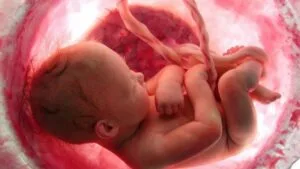
Asexual reproduction is a type of reproduction in which one parent produces offspring by itself. There is no fusion of nuclei, and the cells that form the offspring usually divide by mitosis, so the offspring are often identical to the parent. Forms include fission, budding, spore formation, fragmentation and vegetative propagation.
Behavioural objectives
By the end of the lesson, students should be able to:
- define reproduction and name its two forms;
- explain what asexual reproduction is and why the offspring are usually identical to the parent;
- list the five forms of asexual reproduction;
- describe fission, budding, spore formation, fragmentation and vegetative propagation;
- give examples of organisms that reproduce by each form.
What is reproduction?
Reproduction is the ability of living organisms to produce offspring, i.e. new individuals of their kind or the same species. Reproduction guarantees the continuity of life of all species of organisms. There are two forms of reproduction: sexual reproduction and asexual reproduction.
What is asexual reproduction?
In asexual reproduction, an individual produces an offspring by itself, i.e. only one parent is present. There is no fusion of nuclei, and the cells that give rise to the offspring usually divide by mitosis. As a result, asexual reproduction often produces offspring which are identical to the parent. In rare cases, the offspring may not be identical because of mutation.
Asexual reproduction is common among simple organisms and flowering plants.
What are the forms of asexual reproduction?
- Fission
- Budding
- Spore formation
- Fragmentation
- Vegetative propagation
Fission
Fission is commonly found in bacteria and protists. The parent organism simply divides into two or more parts, each of which can exist by itself, e.g. binary fission in bacteria.
Budding
In budding, the offspring develops as an outgrowth of the parent. The bud may form on an internal or external surface of the parent. Internal buds are formed in some sponges and released when the parent dies. External buds occur in Hydra and coral polyps. The buds break off from the parent without causing any injury and lead an independent life.
Spore formation
Spores are small unicellular bodies which are produced in large numbers. They are small, light and easily dispersed by air. Under favourable conditions, each spore can develop into an independent organism. Spores are commonly produced by bacteria, fungi, protists, algae, mosses and ferns.
Fragmentation
In fragmentation, a part of an organism breaks off from the parent organism and gives rise to a new individual. It is a form of regeneration that occurs in simple organisms like algae, coelenterates and sponges.
Vegetative propagation
Vegetative propagation occurs mainly in higher plants, where a new plant grows from any portion of an old one other than the seeds. New plants form from a vegetative part of the plant such as the roots, stems and leaves. Examples of vegetative structures are tubers, corms, bulbs and rhizomes.
Evaluation
- Define reproduction.
- Why are the offspring of asexual reproduction often identical to the parent?
- List the five forms of asexual reproduction.
- Name two organisms in which external buds occur.
- Why are spores easily dispersed by air?
Assignment
- Describe budding, and state the difference between internal and external buds.
- List four examples of vegetative structures used in vegetative propagation.
- State two groups of organisms that reproduce by fragmentation.
This term's Biology topics
SS2 First Term · 9 topics
First Term Biology Lesson Notes for Other Topics
Reproduction II - Sexual Reproduction
Read the full lesson note.
Reproductive Health
Read the full lesson note.
Cellular Respiration
Read the full lesson note.

Respiratory System
Read the full lesson note.
Excretory System
Read the full lesson note.
Tissues And Supporting Systems In Animals
Read the full lesson note.
Joints
Read the full lesson note.

Supporting Tissues In Plants
Read the full lesson note.
Reproduction
Read the full lesson note.
Movement
Read the full lesson note.
Some Properties And Functions Of The Cell III
Read the full lesson note.
Some Properties And Functions Of The Cell II
Read the full lesson note.
Some Properties And Functions Of The Cell
Read the full lesson note.
The Cell And It's Environment
Read the full lesson note.
The Cell
Read the full lesson note.
Lesson Notes for Other Classes

Basic 1 Lesson Note
The complete lesson note to guide your studies.
Basic 2 Lesson Note
The complete lesson note to guide your studies.
Basic 3 Lesson Note
The complete lesson note to guide your studies.
Basic 4 Lesson Note
The complete lesson note to guide your studies.
Basic 5 Lesson Note
The complete lesson note to guide your studies.
Basic 6 Lesson Note
The complete lesson note to guide your studies.