
Modeling: Production of Models with Paper – JSS1 Cultural & Creative Arts Lesson Note (Second Term)
Download Lesson NoteTopic: Modeling: Production Of Models With Paper
Lesson note at a glance
- Subject
- Cultural & Creative Arts
- Class
- JSS1
- Term
- Second Term
- Topic
- Modeling: Production of Models with Paper
- Order
- Topic 3 of 7 this term
- Reading time
- 4 min
DEFINITION OF MODELING
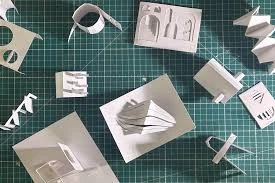
Modeling is the art of creating three-dimensional representations of objects using various materials. Paper modeling specifically involves using paper as the primary material to construct 3D forms, structures, and sculptures. It transforms flat sheets into dimensional objects through folding, cutting, gluing, and shaping techniques.
HISTORICAL BACKGROUND
Origins of Paper Modeling:
- Originated in China after paper invention (100 BCE)
- Japanese developed origami around 6th century
- European paper modeling emerged in 15th century
- Victorian era popularized paper crafts
- Modern applications in architecture and design
Development in Education:
- Used as teaching tool since 19th century
- Helps understand spatial relationships
- Develops fine motor skills
- Enhances creativity and problem-solving
TYPES OF PAPER MODELING
- Architectural Models
- Buildings and structures
- Urban planning layouts
- Interior design mockups
- Bridge and monument replicas
- Scale representations
- Geometric Models
- Polyhedra (cubes, pyramids)
- Mathematical shapes
- Abstract sculptures
- Educational demonstrations
- Decorative objects
- Object Replicas
- Vehicles (cars, planes, ships)
- Animals and figures
- Furniture miniatures
- Product prototypes
- Historical artifacts
- Artistic Sculptures
- Abstract forms
- Relief work
- Installations
- Mixed media pieces
- Conceptual art
MATERIALS FOR PAPER MODELING
Paper Types:
- Cardstock (heavy weight)
- Construction paper
- Bristol board
- Corrugated cardboard
- Newspaper (papier-mâché)
- Craft paper
- Card paper
Tools Required:
- Scissors
- Craft knives
- Rulers (metal edge)
- Cutting mats
- Pencils
- Erasers
- Compasses
- Scoring tools
Adhesives:
- White glue (PVA)
- Glue sticks
- Double-sided tape
- Clear tape
- Hot glue (supervised)
- Paste
Additional Materials:
- Paints and markers
- Colored pencils
- Decorative papers
- Embellishments
- Finishing sprays
BASIC PAPER MODELING TECHNIQUES
- Measuring and Marking
- Use rulers for accuracy
- Mark lightly with pencil
- Measure twice, cut once
- Consider scale and proportion
- Plan before cutting
- Cutting Techniques
- Straight cuts with rulers
- Curved cuts freehand
- Interior cuts with craft knife
- Clean edges important
- Safety first
- Folding Methods
- Valley folds (inward)
- Mountain folds (outward)
- Crisp creases essential
- Use bone folder or ruler
- Practice precision
- Scoring
- Creates clean fold lines
- Use blunt tool
- Don’t cut through paper
- Score on opposite side of fold
- Helps with thick paper
- Joining Techniques
- Tab and slot connections
- Overlapping edges
- Flap attachments
- Interlocking pieces
- Invisible joins
PAPER MODELING PROCESSES
Planning Stage:
- Conceptualize design
- Create sketches
- Determine scale
- List materials needed
- Plan construction sequence
Template Creation:
- Draw patterns
- Include tabs for joining
- Mark fold lines
- Label pieces
- Test with scrap paper
Construction Process:
- Transfer template to paper
- Cut out all pieces
- Score fold lines
- Pre-fold all creases
- Assemble systematically
- Apply adhesive carefully
- Hold until dry
- Add details and finishing
COMMON PAPER MODELS
- Basic Cube
- Six square faces
- Simple fold pattern
- Foundation for complex shapes
- Good beginner project
- Pyramid
- Square or triangular base
- Converging triangular faces
- Various heights possible
- Architectural significance
- Cylinder
- Rectangle rolled and joined
- Circular top and bottom
- Basis for many objects
- Can be decorated
- Cone
- Sector of circle
- Pointed top
- Various angles possible
- Used in many models
- House Model
- Combines basic shapes
- Roof variations
- Window and door details
- Landscaping possible
ADVANCED TECHNIQUES
- Curved Surfaces
- Multiple score lines
- Gentle bending
- Creating smooth curves
- Organic forms
- Pop-up Elements
- Spring mechanisms
- Folding techniques
- Moving parts
- Interactive features
- Modular Construction
- Repeating units
- Interlocking systems
- Complex structures
- Geometric patterns
- Mixed Media
- Combining materials
- Texture additions
- Color applications
- Surface treatments
APPLICATIONS OF PAPER MODELING
Educational Uses:
- Mathematics visualization
- Science projects
- Geography studies
- History dioramas
- Art education
Professional Applications:
- Architectural presentations
- Product design
- Film set planning
- Exhibition design
- Engineering prototypes
Personal Projects:
- Home decorations
- Gift making
- Hobby crafts
- Party decorations
- Seasonal displays
NIGERIAN CULTURAL MODELS
Traditional Architecture:
- Yoruba palace compounds
- Hausa traditional homes
- Igbo mbari houses
- Fulani temporary shelters
- Traditional granaries
Cultural Symbols:
- Traditional masks representations
- Musical instruments
- Ceremonial objects
- Traditional boats
- Market scenes
PROJECT IDEAS
Beginner Projects:
- Simple gift box
- Paper house
- Basic animals
- Geometric shapes
- Greeting cards (3D)
Intermediate Projects:
- Vehicle models
- Building replicas
- Character figures
- Dioramas
- Complex polyhedra
Advanced Projects:
- Architectural models
- Moving mechanisms
- Detailed sculptures
- Large installations
- Mixed media pieces
DESIGN PRINCIPLES
- Balance
- Visual weight distribution
- Symmetrical/asymmetrical
- Stability considerations
- Proportional elements
- Proportion
- Correct scaling
- Relative sizes
- Visual harmony
- Accurate representation
- Unity
- Cohesive design
- Consistent style
- Color coordination
- Thematic elements
- Emphasis
- Focal points
- Contrast elements
- Detail hierarchy
- Visual interest
FINISHING TECHNIQUES
Surface Treatments:
- Painting
- Drawing details
- Texture creation
- Pattern application
- Protective coating
Display Methods:
- Base mounting
- Hanging systems
- Case presentation
- Lighting effects
- Background settings
PRESERVATION AND STORAGE
Care Instructions:
- Avoid moisture
- Protect from dust
- Handle carefully
- Store flat or supported
- Control temperature
Documentation:
- Photograph completed work
- Keep templates
- Record measurements
- Note techniques used
- Create instruction sheets
COMMON CHALLENGES AND SOLUTIONS
Problem: Weak joints
- Solution: Reinforce with tabs
- Use appropriate adhesive
- Allow proper drying time
Problem: Warping
- Solution: Use proper paper weight
- Apply glue sparingly
- Weight during drying
Problem: Inaccurate cuts
- Solution: Sharp tools
- Careful measurement
- Practice cutting techniques
CONCLUSION
Paper modeling is a versatile art form that develops spatial thinking, creativity, and technical skills. From simple geometric shapes to complex architectural models, the possibilities are endless. This accessible medium allows students to explore three-dimensional design while learning about structure, form, and function. The skills acquired through paper modeling have applications in many fields and provide a foundation for understanding spatial relationships in our world.
KEY POINTS TO REMEMBER
- Paper modeling creates 3D objects from flat materials
- Requires planning, precision, and patience
- Basic shapes form complex structures
- Various techniques for different effects
- Applications in education and professional fields
- Develops spatial intelligence and creativity
- Accessible and affordable art form
- Combines mathematical and artistic thinking
This term's Cultural & Creative Arts topics
JSS1 Second Term · 7 topics
- Introduction to Local Craft
- Introduction to Tie and Dye
- Modeling: Production of Models with Paper
- Production of Beads
- Production of Collage Using Paper
- Mosaics
- Making of Models with Paper Folding Technique
Second Term Cultural & Creative Arts (CCA) Lesson Notes for Other Topics
Introduction to Modelling: Making Objects with Paper Mache
Explore lesson notes covering all topics.
Traditional Fabrics and Dresses
Explore lesson notes covering all topics.
Singing Tonic Solfa of Twinkle Twinkle Little Star and Matching Songs
Explore lesson notes covering all topics.
Musical Notes and Their Values
Explore lesson notes covering all topics.

Methods of Modelling Objects with Clay Plastering
Explore lesson notes covering all topics.
Importance of Traditional Dresses
Explore lesson notes covering all topics.
Musical Notes: Rhythmic Clapping
Explore lesson notes covering all topics.
Fashion Accessories
Explore lesson notes covering all topics.
Musical Notes - Introduction to Notation
Explore lesson notes covering all topics.
Costume and Make-up in Drama
Explore lesson notes covering all topics.
Mosaic
Explore lesson notes covering all topics.
Forms of Dance
Explore lesson notes covering all topics.
Choral Singing
Explore lesson notes covering all topics.

Care of Tools and Equipment used in Performing Arts and Entertainment
Explore lesson notes covering all topics.
Play
Explore lesson notes covering all topics.
Lesson Notes for Other Classes

Basic 1 Lesson Note
The complete lesson note to guide your studies.

Basic 2 Lesson Note
The complete lesson note to guide your studies.

Basic 3 Lesson Note
The complete lesson note to guide your studies.

Basic 4 Lesson Note
The complete lesson note to guide your studies.

Basic 5 Lesson Note
The complete lesson note to guide your studies.
Basic 6 Lesson Note
The complete lesson note to guide your studies.