Plane Shapes (Properties) – Basic 5 Mathematics Lesson Note (Third Term)
Download Lesson NoteLesson note at a glance
- Subject
- Mathematics
- Class
- Basic 5
- Term
- Third Term
- Topic
- Plane Shapes (Properties)
- Order
- Topic 3 of 8 this term
- Reading time
- 3 min

Behavioural Objectives:
- By the end of the lesson, students should be able to identify and describe the properties of rhombus, square, rectangle, and other quadrilaterals.
- Students should be able to recognize and discuss the component parts of a circle and solve problems involving circles and other shapes.
Learning Resources and Materials:
- Whiteboard and markers
- Shapes cut-outs (rhombus, square, rectangle, circle)
- Real objects representing shapes (playing cards, windowpane, coins)
- Worksheets for practice
- Ruler and compass for drawing circles
Building Background / Connection to prior knowledge:
- Review previously learned shapes and their properties
- Connect new concepts to real-life situations and objects
Embedded Core Skills:
- Shape recognition
- Problem solving
- Critical thinking
Content:
Properties of Plane Shapes
Rhombus:
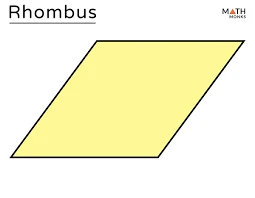
- Type: A rhombus is a quadrilateral with all sides of equal length.
- Basic Properties:
- All sides are equal
- Opposite angles are equal
- Real-life Example: A playing card can be in the shape of a rhombus. ♦
Square:

- Type: A square is a special type of rhombus and rectangle with all sides of equal length.
- Basic Properties:
- All sides are equal
- All angles are right angles (90 degrees)
- Real-life Example: A windowpane can be in the shape of a square. ⬜
Rectangle:
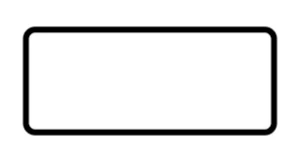
- Type: A rectangle is a quadrilateral with opposite sides of equal length and all angles equal to 90 degrees.
- Basic Properties:
- Opposite sides are equal and parallel
- All angles are right angles (90 degrees)
- Real-life Example: A book can have the shape of a rectangle. 📖
Quadrilaterals:
- Identification: Quadrilaterals are polygons with four sides.
- Basic Properties:
- The sum of all interior angles equals 360 degrees
- Opposite sides are parallel in some quadrilaterals like parallelograms
- Real-life Example: A picture frame often has the shape of a quadrilateral. 🖼️
Circle:

- Component Parts:
- Radius: The distance from the center of the circle to any point on its circumference
- Diameter: The distance across the circle through its center, equal to twice the radius
- Circumference: The perimeter or distance around the circle
- Center: The point inside the circle from which all points on the circumference are equidistant
- Real-life Example: A coin can be a real object representing a circle. 🪙
Solving Problems:
- Quantitative Reasoning: Calculate the perimeter of a square given the length of one side
- Real-life Problems: Determine the area of a rectangular field given its length and width
- Problem-solving Strategies: Understand the properties of shapes to apply them in real-life situations
Class Activity Discussion:
- What is a rhombus?
- A rhombus is a type of quadrilateral with all sides of equal length.
- Can you give an example of a rhombus in real life?
- Yes, a playing card, like the diamond suit, can be in the shape of a rhombus.
- What is a square?
- A square is a special type of rhombus and rectangle with all sides of equal length.
- What makes a square different from other shapes?
- All sides of a square are equal, and all angles are right angles.
- Give an example of a square in real life.
- A windowpane can be in the shape of a square.
- What is a rectangle?
- A rectangle is a quadrilateral with opposite sides of equal length and all angles equal to 90 degrees.
- Can you explain the properties of a rectangle?
- Opposite sides are equal and parallel, and all angles are right angles.
- How can you recognize quadrilaterals?
- Quadrilaterals are polygons with four sides.
- What are the basic properties of quadrilaterals?
- The sum of all interior angles equals 360 degrees, and opposite sides may be parallel.
- What are the component parts of a circle?
- Radius, diameter, circumference, and center are the main components of a circle.
This term's Mathematics topics
Basic 5 Third Term · 8 topics
Third Term Mathematics Lesson Notes for Other Topics
Numbers 1-250
Read the full lesson note.
Data Collection
Read the full lesson note.
Numbers 241-250
Read the full lesson note.
Numbers 231-240
Read the full lesson note.
Two-Dimensional Shapes
Read the full lesson note.

Numbers 221-230
Read the full lesson note.
Weight
Read the full lesson note.
Numbers 211-220
Read the full lesson note.
Length Measurement
Read the full lesson note.
Numbers 201-210
Read the full lesson note.
Money (Continued)
Read the full lesson note.
Numbers 190-200
Read the full lesson note.
Nigerian Currencies
Read the full lesson note.
Numbers 181-190
Read the full lesson note.
Subtraction
Read the full lesson note.
Lesson Notes for Other Classes

Basic 1 Lesson Note
The complete lesson note to guide your studies.
Basic 2 Lesson Note
The complete lesson note to guide your studies.
Basic 3 Lesson Note
The complete lesson note to guide your studies.

Basic 4 Lesson Note
The complete lesson note to guide your studies.
Basic 6 Lesson Note
The complete lesson note to guide your studies.

JSS1 Lesson Note
The complete lesson note to guide your studies.