
Two-Dimensional Shapes Basic 2 Mathematics Lesson Note
Download Lesson NoteTopic: Two-Dimensional Shapes
Learning Objectives
By the end of this week, pupils should be able to:
- Count and identify numbers from 570-590 and order numbers 1-590
- Skip count in 2s, 3s, and 10s
- Write numbers 570-590 in numerals and words
- Identify the shapes of squares, circles, rectangles, and triangles
- Identify sides and edges in squares, rectangles, and triangles
- Count the number of sides in squares, rectangles, and triangles
- Solve real-life problems involving 2D shapes
Lesson Content
Day 1: Number Work (570-590)
New Number Range:
- Count from 570-590: 570, 571, 572… 590
- Order numbers from 1-590
- Write clearly: 585 = five hundred and eighty-five
- Skip counting practice in 2s, 3s, and 10s
Day 2: Introduction to Two-Dimensional Shapes
What are Two-Dimensional (2D) Shapes? Two-dimensional shapes are flat shapes that have length and width but no thickness. They are shapes we can draw on paper.
The Four Main 2D Shapes:
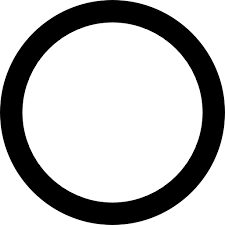
- Circle: Round shape with no corners
Square: Four equal sides and four corners

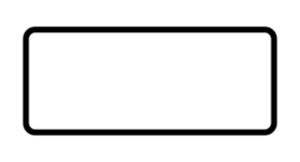
Rectangle: Four sides with opposite sides equal, four corners
Triangle: Three sides and three corners

Where Do We See 2D Shapes?
- Around us in everyday objects
- In buildings and architecture
- In art and design
- In nature
Day 3: Circles and Squares
Circle:
- Shape: Perfectly round
- Sides: No straight sides
- Corners: No corners
- Examples: Wheels, coins, plates, oranges (when viewed from top), clocks
Square:
- Shape: Four equal sides
- Sides: 4 straight sides (all the same length)
- Corners: 4 corners (all the same size)
- Examples: Windows, tiles, some books, dice, chess boards
Identifying Circles and Squares:
- Circles are always round with no straight edges
- Squares have 4 equal sides and 4 equal corners
Day 4: Rectangles and Triangles
Rectangle:
- Shape: Four sides with opposite sides equal
- Sides: 4 straight sides (2 long sides, 2 short sides)
- Corners: 4 corners (all the same size)
- Examples: Doors, tables, books, phones, TV screens
Triangle:
- Shape: Three sides forming a pointed shape
- Sides: 3 straight sides (can be different lengths)
- Corners: 3 corners
- Examples: Roof tops, traffic signs, musical triangles, pizza slices
Identifying Rectangles and Triangles:
- Rectangles are longer than they are wide
- Triangles always have exactly 3 sides and 3 corners
Day 5: Counting Sides and Real-Life Applications
Counting Sides:
- Circle: 0 sides (it’s curved)
- Triangle: 3 sides
- Square: 4 sides
- Rectangle: 4 sides
Finding 2D Shapes in Our Environment:
- Classroom: Look for shapes in desks, windows, boards
- Home: Find shapes in furniture, decorations, appliances
- School: Identify shapes in buildings, playgrounds, signs
Problem-Solving with Shapes:
- Recognizing shapes helps us understand our world
- Shapes are used in construction and design
- Understanding shapes helps in art and creativity
Examples in Class
Shape Identification Examples:
Circle Examples:
- Clock face, dinner plates, coins, car wheels, oranges (from top view)
Square Examples:
- Window panes, floor tiles, some picture frames, dice
Rectangle Examples:
- Classroom door, book covers, phone screens, table tops, blackboard
Triangle Examples:
- Roof of houses, traffic warning signs, musical instrument (triangle), pizza slice
Counting Sides Examples:
Demonstration:
- Show a triangle: “Let’s count together: 1, 2, 3 sides”
- Show a square: “Let’s count: 1, 2, 3, 4 sides – all equal!”
- Show a rectangle: “1, 2, 3, 4 sides – opposite sides are equal”
- Show a circle: “No straight sides, just one curved line”
Exercises
Exercise 1: Number Work
Write in words:
- 575 = _______________
- 583 = _______________
- 590 = _______________
Skip count: 4. 2s: 2, 4, 6, ___, 10, ___, 14 5. 10s: 10, 20, ___, 40, ___, 60
Exercise 2: Shape Recognition
Name the shape:
- ○ = _____
- □ = _____
- ▭ = _____
- △ = _____
Exercise 3: Counting Sides
Count the sides:
- Triangle has _____ sides
- Square has _____ sides
- Rectangle has _____ sides
- Circle has _____ sides
Exercise 4: Shape Hunt
Look around your classroom and find:
- One circular object: _____
- One square object: _____
- One rectangular object: _____
- One triangular object: _____
Exercise 5: True or False
- A square has 4 equal sides (True/False)
- A circle has 3 corners (True/False)
- A rectangle has 4 sides (True/False)
- A triangle has 3 sides (True/False)
- All rectangles are squares (True/False)
Exercise 6: Shape Sorting
Group these objects by shape: Book, plate, dice, door, coin, roof, window, pizza slice
- Circles: _____
- Squares: _____
- Rectangles: _____
- Triangles: _____
Exercise 7: Drawing Shapes
Draw these shapes:
- Draw a circle
- Draw a square
- Draw a rectangle
- Draw a triangle
Exercise 8: Real-Life Shape Problems
- Mary sees a round plate, a square tile, and a rectangular book. How many sides do all these shapes have together?
- In John’s room, there are 2 square windows and 1 rectangular door. How many sides are there in total?
- A traffic sign is triangular, and a coin is circular. Which shape has more corners?
- If you see 3 rectangular books and 2 square tiles, how many four-sided shapes do you see in total?
Exercise 9: Shape Properties
Complete the table:
| Shape | Number of Sides | Number of Corners |
| Circle | _____ | _____ |
| Triangle | _____ | _____ |
| Square | _____ | _____ |
| Rectangle | _____ | _____ |
Fun Activities
- Shape Hunt: Walk around school to find different shapes
- Shape Art: Create pictures using only 2D shapes
- Shape Sorting Game: Sort classroom objects by shape
- Shape Memory Game: Flash cards with different shapes
Teaching Resources/Aids
- Cut-out shapes: Paper or cardboard shapes for handling
- Shape posters: Visual displays of shapes with examples
- Real objects: Various items representing different shapes
- Drawing materials: For creating and practicing shapes
- Shape sorting trays: For organizing shape activities
Practical Activities
- Shape Gallery Walk: Display shapes around classroom for identification
- Shape Building: Use sticks and clay to construct 2D shapes
- Shape Collage: Create artwork using cut-out shapes
- Real Object Matching: Match real objects to shape categories
Real-Life Applications
Architecture and Construction:
- Buildings use rectangles and squares for stability
- Triangular roofs help water run off
- Circular windows and decorations for beauty
Art and Design:
- Artists use shapes to create beautiful pictures
- Logos and signs use simple shapes
- Patterns in fabric and decoration
Safety and Communication:
- Traffic signs use different shapes for different meanings
- Warning signs often use triangles
- Circular signs for certain instructions
Homework
- Find and draw 5 objects at home that are different shapes
- Count how many rectangular and square objects are in one room
- Practice writing numbers 580-590
- Look for triangular shapes in your neighborhood
Assessment
- Can the child identify the four main 2D shapes?
- Do they correctly count sides and corners?
- Can they find shapes in their environment?
- Can they solve shape-related problems?
- Can they count to 590 accurately?
Extension Activities
- Create a shape book with pictures and descriptions
- Design a house using only 2D shapes
- Make shape patterns and sequences
- Investigate why certain shapes are used for specific purposes
Cultural Connections
Nigerian Context:
- Traditional patterns in Nigerian textiles using geometric shapes
- Architecture in Nigerian buildings and traditional structures
- Art and crafts using geometric patterns
- Cultural symbols and their geometric meanings
Vocabulary Building
Key Terms:
- Two-dimensional (2D): Flat shapes with length and width
- Sides: The straight lines that form a shape
- Corners: Where two sides meet
- Edge: The boundary of a shape
- Curved: Not straight (like a circle)
Assessment Questions
- “How many sides does a triangle have?”
- “What shape has no corners?”
- “Name three rectangular objects in this room.”
- “What’s the difference between a square and a rectangle?”
- “Which shape would you use for a wheel and why?”
Third Term Mathematics Lesson Notes for Other Topics
Squares And Rectangles
Explore lesson notes covering all topics.

Time
Explore lesson notes covering all topics.

Weight
Explore lesson notes covering all topics.

Capacity
Explore lesson notes covering all topics.

Line Of Symmetry
Explore lesson notes covering all topics.

Everyday Statistics
Explore lesson notes covering all topics.

Length: Measurement in Centimetre & Metres
Explore lesson notes covering all topics.

Perimeter of Rectangle, Square & Triangles
Explore lesson notes covering all topics.
Data Collection
Explore lesson notes covering all topics.
Three-Dimensional Shapes
Explore lesson notes covering all topics.

Money
Explore lesson notes covering all topics.
Capacity
Explore lesson notes covering all topics.
Weight
Explore lesson notes covering all topics.
Length Measurement
Explore lesson notes covering all topics.

Area
Explore lesson notes covering all topics.
Lesson Notes for Other Classes
Basic 3 Lesson Note
The complete lesson note to guide your studies.

Basic 4 Lesson Note
The complete lesson note to guide your studies.
Basic 5 Lesson Note
The complete lesson note to guide your studies.
JSS1 Lesson Note
The complete lesson note to guide your studies.
JSS2 Lesson Note
The complete lesson note to guide your studies.

JSS3 Lesson Note
The complete lesson note to guide your studies.