
Meaning of Illness – Basic 3 Social Studies Lesson Note (Second Term)
Download Lesson NoteLesson note at a glance
- Subject
- Social Studies
- Class
- Basic 3
- Term
- Second Term
- Topic
- Meaning of Illness
- Order
- Topic 4 of 16 this term
- Reading time
- 6 min
WHAT IS ILLNESS?
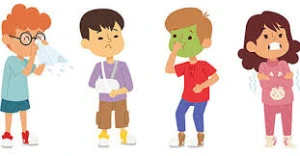
Illness is when someone is not feeling well or healthy.
Simple definition: Illness means being sick or having something wrong with your body that makes you feel bad.
Other words for illness:
- Sickness
- Disease
- Ailment
- Health problem
- Medical condition
When someone is ill:
- They don’t feel normal
- Their body is not working properly
- They may need medicine or rest
- They may need to see a doctor
- SIGNS THAT SOMEONE IS ILL
COMMON SIGNS OF ILLNESS:
- PHYSICAL SIGNS
Things you can see or feel:
- Fever – body feels hot
- Headache – head hurts
- Coughing – making cough sounds
- Sneezing – nose makes sudden loud sounds
- Runny nose – liquid coming from nose
- Stomach ache – belly hurts
- Vomiting – throwing up food
- Rash – red spots on skin
- Tiredness – feeling very weak
Example: Kemi has a fever, headache, and runny nose. She is ill with a cold.
- BEHAVIORAL SIGNS
Changes in how someone acts:
- Not wanting to eat food
- Sleeping more than usual
- Not playing or being active
- Crying more often
- Being cranky or irritable
- Not talking much
- Staying in bed
Example: Tolu usually plays football, but today he just wants to sleep and doesn’t want to eat. He might be getting ill.
- TYPES OF ILLNESS
- MINOR ILLNESSES
Small sicknesses that go away quickly:
- Common cold – runny nose, sneezing, cough
- Headache – head pain
- Stomach upset – belly feels bad
- Small cuts – tiny wounds on skin
- Bruises – blue or purple marks from bumps
Characteristics:
- Get better in a few days
- Don’t need to go to hospital
- Can be treated at home
- Not dangerous
Example: Ada has a cold with runny nose and cough. She will feel better in 3-4 days.
- SERIOUS ILLNESSES
Big sicknesses that need medical help:
- Malaria – fever, shaking, weakness
- Pneumonia – bad cough, difficulty breathing
- Appendicitis – severe stomach pain
- Broken bones – bones crack or break
- High fever – very hot body temperature
Characteristics:
- Take longer to get better
- Need doctor’s treatment
- May need hospital care
- Can be dangerous if not treated
Example: Emeka has malaria with high fever and shaking. He needs to see a doctor immediately.
- CHRONIC ILLNESSES
Long-lasting sicknesses:
- Asthma – difficulty breathing sometimes
- Diabetes – problems with blood sugar
- Sickle cell disease – blood problem
- Epilepsy – seizures or fits
Characteristics:
- Last for a very long time
- Need ongoing medical care
- Require special medicines
- People learn to manage them
Example: Sister Funmi has asthma, so she needs to use her inhaler and avoid dusty places.
- CAUSES OF ILLNESS
- GERMS AND INFECTIONS
Tiny living things that make us sick:
- Bacteria – very small living things
- Viruses – even smaller than bacteria
- Parasites – worms and other creatures
- Fungi – like mold and yeast
How germs spread:
- Through dirty hands
- Through coughing and sneezing
- Through contaminated food and water
- Through insect bites
Example: Malaria is caused by parasites spread by mosquito bites.
- ACCIDENTS AND INJURIES
Getting hurt from accidents:
- Falls – falling down and getting hurt
- Cuts – sharp things cutting the skin
- Burns – hot things hurting the skin
- Bumps – hitting hard objects
Example: Bola fell from her bicycle and broke her arm. This is an injury, not a germ illness.
- POOR HABITS
Bad things we do that make us sick:
- Not washing hands regularly
- Eating dirty food
- Not exercising enough
- Not sleeping enough
- Eating too much junk food
Example: Chidi got stomach ache because he ate food that was not clean.
- HEREDITARY CAUSES
Illnesses passed from parents to children:
- Some illnesses run in families
- Parents pass them to their children
- Cannot be prevented completely
- Can often be managed with medicine
Example: Taiwo has sickle cell disease because both his parents carry the sickle cell gene.
- HOW ILLNESS AFFECTS PEOPLE
- EFFECTS ON THE SICK PERSON
How illness affects the individual:
- Physical discomfort – feeling pain or unwell
- Cannot do normal activities – like playing or studying
- Need rest and medicine
- May miss school or work
- Feel worried or scared
Example: When Amaka has malaria, she cannot go to school, play with friends, or help at home.
- EFFECTS ON THE FAMILY
How illness affects family members:
- Worry about the sick person
- Take care of the sick family member
- Spend money on medicine and hospital
- Change daily routine
- May catch the illness if it spreads
Example: When baby Kemi is sick, mother cannot go to work because she needs to take care of her.
- EFFECTS ON SCHOOL
How illness affects education:
- Missing classes and lessons
- Falling behind in studies
- Spreading illness to other pupils
- Teachers worry about sick pupils
Example: Tolu missed one week of school due to illness and now needs extra help to catch up.
- PREVENTION OF ILLNESS
- GOOD HYGIENE HABITS
Keeping clean to avoid germs:
- Wash hands frequently with soap
- Brush teeth twice daily
- Take baths regularly
- Keep clothes clean
- Cut nails short and clean
- HEALTHY EATING
Eating good food to stay strong:
- Eat fruits and vegetables
- Drink clean water
- Avoid dirty food
- Eat balanced meals
- Don’t eat too much junk food
- GOOD LIVING HABITS
Healthy lifestyle choices:
- Get enough sleep (8-10 hours for children)
- Exercise regularly
- Stay away from sick people
- Use mosquito nets
- Wear clean clothes
- MEDICAL CARE
Getting proper medical attention:
- See doctor when feeling unwell
- Take medicines as prescribed
- Get vaccinations to prevent diseases
- Go for regular check-ups
CLASS EXERCISES
- Fill in the blanks:
- Illness means being _______ or having something wrong with your body
- When someone is ill, they don’t feel _______
- A _______ is when your body feels hot
- _______ habits can help prevent illness
- True or False:
- Illness and sickness mean the same thing: _____
- All illnesses are very dangerous: _____
- Germs can spread through dirty hands: _____
- Only old people get sick: _____
- Good hygiene helps prevent illness: _____
- List 5 signs that someone is ill:
- Choose the correct answer: What is a minor illness? a) Broken bone b) Common cold c) Malaria
Which spreads malaria? a) Dirty hands b) Mosquito bites c) Cold weather
What should you do when you feel sick? a) Ignore it b) Tell an adult c) Play harder
- Match the illness to its type:
- Common cold → Minor illness
- Malaria → _______
- Asthma → _______
- Small cut → _______
- Circle the causes of illness: Germs, Exercise, Accidents, Clean food, Poor hygiene, Good sleep, Injuries, Hereditary factors
- List 3 ways illness affects families:
- Complete these prevention tips:
- Wash _______ frequently with soap
- Eat _______ and vegetables
- Get enough _______ every night
- See a _______ when feeling unwell
- Answer these questions:
- What is illness? _______
- What are two signs that someone is ill? _______
- How do germs spread? _______
- Why is it important to prevent illness? _______
- Group these illnesses: Cold, Broken arm, Diabetes, Headache, Pneumonia, Bruise
Minor illnesses: _______ Serious illnesses: _______
- Scenarios – Identify if the person is ill:
- Mary has fever and headache: _______
- John is running and playing happily: _______
- Peter is vomiting and feels weak: _______
- Jane is sleeping more than usual and won’t eat: _______
- Write 3 things you can do to stay healthy:
This term's Social Studies topics
Basic 3 Second Term · 16 topics
- Meaning of Drug Abuse
- Ways of Knowing Someone Who Has Abused Drugs
- Effects of Drug Abuse
- Meaning of Illness
- Common Illnesses in the Community
- Symptoms of Common Illnesses in the Community
- Causes of Common Illness: Dysentery
- Prevention of Common Diseases
- Meaning of Drug Abuse
- Ways of Knowing Someone Who Has Abused Drugs
- Effects of Drug Abuse
Second Term Social Studies Lesson Notes for Other Topics
Effects of Taking Substance into the Body
Read the full lesson note.
Meaning of Overdose
Read the full lesson note.
Overdose Effects
Read the full lesson note.

How to Help People Suffering from Food or Drug Overdose
Read the full lesson note.

Food
Read the full lesson note.

Food Safety
Read the full lesson note.
Reasons for Taking Substance into the Body
Read the full lesson note.
Resources Utilization
Read the full lesson note.
Labour and Force
Read the full lesson note.
Transport and Communication
Read the full lesson note.
Gender Discrimination
Read the full lesson note.
Group Conflict and Cooperation
Read the full lesson note.
International Organizations
Read the full lesson note.

Peace Education
Read the full lesson note.

Concepts of Drug and Drug Abuse
Read the full lesson note.
Lesson Notes for Other Classes

Basic 1 Lesson Note
The complete lesson note to guide your studies.

Basic 2 Lesson Note
The complete lesson note to guide your studies.

Basic 4 Lesson Note
The complete lesson note to guide your studies.

Basic 5 Lesson Note
The complete lesson note to guide your studies.
Basic 6 Lesson Note
The complete lesson note to guide your studies.

JSS1 Lesson Note
The complete lesson note to guide your studies.

