Practical Demonstration of a Rak’ah – Basic 2 Islamic Studies Lesson Note (Second Term)
Download Lesson NoteLesson note at a glance
- Subject
- Islamic Studies
- Class
- Basic 2
- Term
- Second Term
- Topic
- Practical Demonstration of a Rak’ah
- Order
- Topic 5 of 9 this term
- Reading time
- 3 min
Learning Objectives
By the end of the lesson, pupils should be able to:
- Explain the meaning of a Rak’ah
- Show a practical demonstration of a Rak’ah
- State the steps that make up a complete Rak’ah
Materials Needed
- Prayer mats
- Qiblah direction indicator
- Pictures showing prayer positions
- Open space for demonstration
Introduction
- Greet with “Assalamu Alaikum”
- Ask: “What do Muslims do five times a day?”
- Explain that prayer has special movements
- Each set of movements is called a Rak’ah
Main Content
What is a Rak’ah?
- Meaning: One complete unit of prayer
- Contains: Standing, bowing, and prostrating
- Number: Different prayers have different numbers of Rak’ahs
- Importance: Each Rak’ah brings us closer to Allah
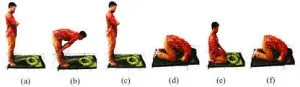
The Seven Steps of One Rak’ah
Step 1: Qiyam (Standing)
- Stand straight facing Qiblah
- Hands by your sides or folded
- Recite Surah Al-Fatihah and another Surah
- Look at the place where you will prostrate
Step 2: Ruku’ (Bowing)
- Say “Allahu Akbar” and bow down
- Put hands on knees
- Keep back straight
- Say “Subhana Rabbiya’l-Adheem” (Glory to my Lord, the Great)
Step 3: Standing Up from Ruku’
- Say “Sami’a Allahu liman hamidah” (Allah hears whoever praises Him)
- Stand up straight
- Say “Rabbana wa laka’l-hamd” (Our Lord, to You belongs all praise)
Step 4: First Sujud (Prostration)
- Say “Allahu Akbar” and go down
- Put forehead, nose, hands, knees, and toes on ground
- Say “Subhana Rabbiya’l-A’la” (Glory to my Lord, the Most High)
Step 5: Sitting Between Sujuds
- Say “Allahu Akbar” and sit up
- Sit on your heels
- Say “Rabb ighfir li” (My Lord, forgive me)
Step 6: Second Sujud (Prostration)
- Say “Allahu Akbar” and prostrate again
- Same position as first Sujud
- Say “Subhana Rabbiya’l-A’la” again
Step 7: Standing Up (if more Rak’ahs)
- Say “Allahu Akbar” and stand up
- Ready for next Rak’ah
- If last Rak’ah, sit for Tashahhud
Different Prayers and Their Rak’ahs
- Fajr: 2 Rak’ahs
- Dhuhr: 4 Rak’ahs
- Asr: 4 Rak’ahs
- Maghrib: 3 Rak’ahs
- Isha: 4 Rak’ahs
Activity Time
Activity 1: Step-by-Step Practice
Teacher demonstrates each step, pupils follow.
Activity 2: Position Practice
Practice each position properly.
Activity 3: Saying the Words
Learn what to say in each position.
Activity 4: Complete Rak’ah
Put all steps together for one complete Rak’ah.
Important Points to Remember
- Always face Qiblah (direction of Ka’bah)
- Say “Allahu Akbar” when changing positions
- Keep movements slow and respectful
- Concentrate on what you’re saying
- Make sure your body is clean and clothes are proper
Benefits of Performing Rak’ah Correctly
- Shows respect to Allah
- Helps us remember Allah
- Brings peace to our hearts
- Teaches us discipline
- Connects us with Muslims worldwide
Summary
- A Rak’ah has seven main steps
- Each step has special movements and words
- Different prayers have different numbers of Rak’ahs
- Practice helps us pray better
- Prayer brings us closer to Allah
Assessment
Multiple Choice Exercise
- How many steps are in one Rak’ah? a) Five b) Six c) Seven
- What do we say when bowing (Ruku’)? a) Allahu Akbar b) Subhana Rabbiya’l-Adheem c) Assalamu Alaikum
- How many times do we prostrate in one Rak’ah? a) One time b) Two times c) Three times
- How many Rak’ahs are in Fajr prayer? a) 2 b) 3 c) 4
- What do we put on the ground during Sujud? a) Only forehead b) Forehead, hands, knees, toes c) Only hands
Homework
- Practice one Rak’ah at home with family
- Ask parents to help you with the positions
Answer Key
- c) Seven
- b) Subhana Rabbiya’l-Adheem
- b) Two times
- a) 2
- b) Forehead, hands, knees, toes
This term's Islamic Studies topics
Basic 2 Second Term · 9 topics
- Joining of Two Letter Words
- Süratul-Nasr Verses (Q 110 Verses 1: 2)
- Süratul-Nasr (Q 110 Verse 3)
- Iqämah (Ready to Pray)
- Practical Demonstration of a Rak’ah
- At-Tashähud (The Word of Testimony)
- Brief History of Prophet Yusüf
- Brief History of Prophet Isä
- History of Prophet Muhammad (SAW) from Birth to His Marriage
Second Term Islamic Studies Lesson Notes for Other Topics
Introduction of Wäw and Yäw as Elongation Letters
Read the full lesson note.
Süratul-Mā'Ūn (Q107) Verses 4-7
Read the full lesson note.
Introduction of Wäw and Yäw as Consonant
Read the full lesson note.
Things that Spoil Salah
Read the full lesson note.

Identification of Arabic Vowels and Tanwin (Nunation)
Read the full lesson note.

Süratul-Mā'Ūn (Q107) Verses 1-3
Read the full lesson note.

Hijrah(The Migration of the Prophet SAW from Makkah to Madinah) - 2
Read the full lesson note.
Tayammum (Dry Ablution)
Read the full lesson note.

Hijrah (The Migration of the Prophet SAW from Makkah to Madinah) - 1
Read the full lesson note.
Moral Lessons from the Life and Teaching of Prophet Muhammad (SAW)
Read the full lesson note.
Life History of Prophet Muhammad (SAW) Il
Read the full lesson note.
Al-Qur'an: Qur'ån 3 (Suratul-Al-Imrän) verses 103-105
Read the full lesson note.

Tawhid and Fiqh: Salätul-Janäzah (Funeral Prayer)
Read the full lesson note.
Tawhid & Fiqh: Good Manners
Read the full lesson note.
Sirah/Ta'dib: Child's Right in Islam
Read the full lesson note.
Lesson Notes for Other Classes

Basic 1 Lesson Note
The complete lesson note to guide your studies.

Basic 3 Lesson Note
The complete lesson note to guide your studies.

Basic 4 Lesson Note
The complete lesson note to guide your studies.
Basic 5 Lesson Note
The complete lesson note to guide your studies.

Basic 6 Lesson Note
The complete lesson note to guide your studies.

JSS1 Lesson Note
The complete lesson note to guide your studies.