
Track Event – Long Distance Races Basic 4 Physical & Health Education Lesson Note
Download Lesson NoteTopic: Track Event – Long Distance Races
LEARNING AREA
- Introductory Activities
- Understanding Long Distance Running
- Types of Long Distance Races (300m, 500m)
- Steeplechase in Long Distance Racing
- Standing and Starting Position
- Take-off and Pacing Techniques
- Running Form and Technique
- Arm Action for Distance Running
- Finishing Techniques
- Training and Strategy
PERFORMANCE OBJECTIVES
By the end of the lesson, most of the pupils should have attained the following objectives –
- explain the characteristics of long distance running.
- identify different types of long distance races including 300m and 500m.
- understand steeplechase as a specialized long distance event.
- demonstrate proper standing and starting positions for distance races.
- show correct take-off and pacing techniques.
- display efficient running form for sustained effort.
- execute proper arm action for distance running.
- demonstrate effective finishing techniques.
- develop basic strategies for long distance racing.
INSTRUCTIONAL MATERIALS
The teacher will teach the lesson with the aid of:
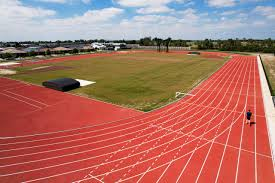
- Athletic track/field or marked running area
2. Measuring tape for distance marking
3. Stopwatch/timer for pacing practice
4. Cones or markers for course layout

7. Water bottles for hydration
8. Whistle for commands and intervals

9.Charts showing running techniques
10. Pictures/videos of steeplechase events
11. Obstacles for steeplechase practice (if available)
12. First aid kit for safety
METHOD OF TEACHING
Choose a suitable and appropriate methods for the lessons.
Note – Irrespective of choosing methods of teaching, always introduce an activities that will arouse pupil’s interest or lead them to the lessons.
REFERENCE MATERIALS
- Scheme of Work
- 9 – Years Basic Education Curriculum
- Physical Education Curriculum
- Athletics Handbook
- International Association of Athletics Federations (IAAF) Rules
- Distance Running Training Manual
- All Relevant Material
- Online Information
CONTENT OF THE LESSON
LESSON 1 – UNDERSTANDING LONG DISTANCE RUNNING
WHAT ARE LONG DISTANCE RACES?
Long distance races are running events that require sustained effort over extended distances, emphasizing endurance, pacing strategy, and efficient energy management rather than pure speed.
KEY CHARACTERISTICS OF LONG DISTANCE RUNNING:
- Endurance Focus: Requires cardiovascular fitness and stamina
- Pacing Strategy: Managing energy throughout the race
- Efficient Technique: Conserving energy through proper form
- Mental Toughness: Overcoming fatigue and discomfort
- Tactical Racing: Strategic positioning and race management
- Aerobic Energy: Primarily uses oxygen-based energy systems
DIFFERENCES FROM SPRINT RACES:
- Longer Duration: Minutes rather than seconds
- Pacing Required: Cannot run at maximum speed throughout
- Energy Systems: Aerobic vs anaerobic energy production
- Strategy Important: Tactical decisions affect outcome
- Different Training: Emphasis on endurance building
LESSON 2 – TYPES OF LONG DISTANCE RACES
CLASSIFICATION OF DISTANCE RACES:
MIDDLE DISTANCE (800m – 1500m):
- Bridge between sprints and long distance
- Combination of speed and endurance
- Tactical racing very important
LONG DISTANCE (3000m and above):
- Pure endurance events
- Pacing and strategy crucial
- Sustained effort required
SPECIFIC DISTANCE EVENTS:
300 METERS
- Classification: Extended sprint/short middle distance
- Duration: 35-45 seconds for youth athletes
- Energy System: Anaerobic lactic (speed endurance)
- Strategy: Fast start, maintain speed, strong finish
Characteristics of 300m:
- One curve and one straight (3/4 lap)
- Requires speed endurance
- Lactate tolerance important
- Strategic positioning crucial
Racing Strategy for 300m:
- First 100m: Controlled fast start (95% effort)
- Middle 100m: Maintain speed (90% effort)
- Final 100m: Fight lactate buildup, strong finish
500 METERS
- Classification: Middle distance event
- Duration: 70-90 seconds for youth athletes
- Energy System: Aerobic and anaerobic mix
- Strategy: Even pacing with tactical positioning
Characteristics of 500m:
- One and a quarter laps of track
- Requires endurance and speed
- Pacing becomes critical
- Tactical awareness needed
Racing Strategy for 500m:
- First 200m: Controlled start, good position
- Middle 200m: Settle into race pace
- Final 100m: Gradual acceleration to finish
LONGER DISTANCE EVENTS (For Reference):
800 METERS:
- Classification: Classic middle distance
- Strategy: Even pace with tactical kick
- Key Skills: Lactate tolerance, tactical awareness
1500 METERS:
- Classification: Metric mile
- Strategy: Controlled pace, positioning, finishing kick
- Key Skills: Endurance, tactical racing, speed reserve
3000 METERS:
- Classification: Long distance
- Strategy: Even pacing, sustained effort
- Key Skills: Pure endurance, mental toughness
LESSON 3 – STEEPLECHASE IN LONG DISTANCE RACING
WHAT IS STEEPLECHASE?
Steeplechase is a specialized distance running event that combines running with jumping over obstacles (barriers) and a water jump, typically run over 3000 meters.
STEEPLECHASE CHARACTERISTICS:
DISTANCE AND OBSTACLES:
- Standard Distance: 3000 meters (7.5 laps)
- Total Barriers: 28 barriers + 7 water jumps = 35 obstacles
- Barrier Height: 91.4cm for men, 76.2cm for women (youth heights vary)
- Water Jump: Barrier followed by water pit
OBSTACLE LAYOUT:
- Barriers per Lap: 4 regular barriers + 1 water jump
- Barrier Spacing: Evenly distributed around track
- Water Jump Location: Usually on inside of track
STEEPLECHASE TECHNIQUES:
BARRIER CLEARANCE:
- Approach: Maintain running rhythm
- Takeoff: Step on barrier with lead foot
- Trail Leg: Swing efficiently over barrier
- Landing: Continue running immediately
WATER JUMP TECHNIQUE:
- Barrier Step: Step on barrier with inside foot
- Water Entry: Land in water with outside foot
- Water Exit: Quick, efficient exit from water
- Rhythm Return: Resume normal running quickly
PACING STRATEGY:
- Early Race: Conservative pace, focus on obstacles
- Middle Race: Settle into rhythm with barriers
- Final Kilometers: Maintain form as fatigue increases
- Last 400m: Racing tactics while managing obstacles
TRAINING FOR STEEPLECHASE:
SKILL DEVELOPMENT:
- Practice barrier technique regularly
- Water jump specific training
- Rhythm maintenance over obstacles
- Flexibility and coordination work
FITNESS REQUIREMENTS:
- Endurance Base: Like other distance events
- Power: For efficient barrier clearance
- Coordination: Combining running and jumping
- Mental Toughness: Additional complexity increases difficulty
LESSON 4 – STANDING AND STARTING POSITION
Unlike sprints, long distance races typically use a standing start rather than starting blocks.
STANDING START TECHNIQUE:
STARTING POSITION:
- Feet Placement: Shoulder-width apart
- Stance: Comfortable, relaxed position
- Body Position: Slight forward lean
- Arms: Relaxed at sides
- Eyes: Looking ahead at track
STARTING COMMANDS:
“RUNNERS TO YOUR MARKS”:
- Move to starting line
- Find comfortable position
- Prepare mentally for race
“SET” (Optional in distance races):
- Take ready position
- Slight crouch if used
- Focus on start
GUN/WHISTLE:
- Begin race with controlled effort
- Avoid going out too fast
- Focus on positioning and pace
STARTING STRATEGY:
POSITIONING:
- Lane Assignment: May start in lanes for first curve
- Strategic Position: Inside lane preferred for distance
- Avoid Trouble: Stay clear of potential crowding
EFFORT LEVEL:
- Controlled Start: 80-85% of maximum effort
- Avoid Early Lead: Usually not beneficial in distance races
- Good Position: Top third of field typically ideal
FIRST 100-200 METERS:
- Settle In: Find sustainable pace quickly
- Positioning: Establish good racing position
- Relax: Stay calm and controlled
- Assess Field: Be aware of other runners
LESSON 5 – TAKE-OFF AND PACING TECHNIQUES
TAKE-OFF (RACE START):
ACCELERATION PHASE:
- Gradual Build: Unlike sprints, build speed gradually
- Smooth Transition: From standing to running pace
- Avoid Rushing: Don’t panic in early positioning
- Find Rhythm: Establish sustainable rhythm quickly
POSITIONING STRATEGY:
- Inside Lane: Try to secure inside position
- Avoid Boxes: Don’t get trapped behind slower runners
- Stay Alert: Watch for gaps and opportunities
- Be Patient: Early race positioning less critical than sprints
PACING TECHNIQUES:
UNDERSTANDING PACE:
- Even Pace: Maintaining consistent speed throughout
- Negative Split: Running second half faster than first
- Positive Split: Running first half faster than second
- Variable Pace: Changing speed based on tactics
PACING STRATEGIES:
EVEN PACE STRATEGY (RECOMMENDED FOR BEGINNERS):
- Goal: Run each segment at same speed
- Benefits: Energy conservation, predictable race
- Method: Use time markers, internal rhythm
- Best For: 800m and longer distances
TACTICAL PACING:
- Early Conservative: Start slower, finish faster
- Middle Surge: Increase pace mid-race
- Respond to Moves: React to competitors’ changes
- Final Kick: Save energy for strong finish
PACE JUDGMENT SKILLS:
INTERNAL MONITORING:
- Breathing Pattern: Monitor breathing rhythm
- Effort Level: Assess subjective effort (1-10 scale)
- Muscle Tension: Stay relaxed and efficient
- Heart Rate: Learn to sense heart rate levels
EXTERNAL MARKERS:
- Split Times: Use lap times to monitor pace
- Competition: Use other runners as pace guides
- Track Markers: Use 100m marks for timing
- Coach Signals: Listen for pace feedback
LESSON 6 – RUNNING FORM AND TECHNIQUE
Efficient running form is crucial for distance running to conserve energy over extended periods.
DISTANCE RUNNING FORM:
BODY POSITION:
- Posture: Upright with slight forward lean
- Head: Up, eyes looking ahead 10-20 meters
- Shoulders: Relaxed, not hunched
- Core: Engaged but not tense
- Overall: Smooth, efficient movement
FOOT STRIKE:
- Contact Point: Midfoot or forefoot preferred
- Ground Time: Minimal ground contact time
- Cadence: 180-190 steps per minute ideal
- Sound: Quiet, efficient foot placement
STRIDE CHARACTERISTICS:
- Length: Moderate stride, not overstriding
- Frequency: Higher turnover rather than longer steps
- Efficiency: Maximum distance with minimum energy
- Adaptability: Adjust to terrain and pace changes
BREATHING TECHNIQUE:
BREATHING PATTERN:
- Rhythm: Coordinate with running rhythm
- Depth: Deep, controlled breathing
- Method: Both nose and mouth for oxygen intake
- Relaxation: Keep breathing smooth and calm
COMMON BREATHING PATTERNS:
- 3:2 Pattern: 3 steps inhale, 2 steps exhale
- 2:2 Pattern: 2 steps inhale, 2 steps exhale (higher intensity)
- Natural: Let breathing find natural rhythm
- Recovery: Deeper breathing during recovery periods
ENERGY CONSERVATION:
EFFICIENCY PRINCIPLES:
- Minimize Vertical Oscillation: Reduce up-down movement
- Forward Momentum: Direct energy forward
- Relaxation: Stay loose in non-essential muscles
- Rhythm: Maintain consistent rhythm
COMMON FORM ERRORS:
- Overstriding: Taking steps too long
- Heel Striking: Landing on heels heavily
- Tension: Carrying unnecessary muscle tension
- Poor Posture: Leaning too far forward or backward
LESSON 7 – ARM ACTION FOR DISTANCE RUNNING
Proper arm action contributes significantly to running efficiency and balance in distance events.
DISTANCE RUNNING ARM TECHNIQUE:
ARM POSITION:
- Angle: Arms bent at approximately 90 degrees
- Hand Position: Relaxed, lightly cupped
- Shoulder Position: Relaxed, not elevated
- Elbow Position: Close to body, not flaring out
ARM MOVEMENT:
- Direction: Forward and backward, not across body
- Range: Moderate swing, not excessive
- Rhythm: Coordinate with leg movement
- Efficiency: Smooth, controlled movement
HAND POSITION:
- Fingers: Lightly closed, not clenched fists
- Thumbs: Resting on top of fingers
- Wrists: Neutral position, not bent
- Tension: Minimal, relaxed grip
ARM ACTION FUNCTIONS:
BALANCE AND COORDINATION:
- Counterbalance: Arms balance leg movement
- Stability: Help maintain upright posture
- Rhythm: Assist in maintaining consistent rhythm
- Direction: Help maintain straight running line
ENERGY EFFICIENCY:
- Momentum: Contribute to forward momentum
- Reduced Rotation: Prevent excessive body rotation
- Power Transfer: Help transfer power through kinetic chain
- Endurance: Efficient arms reduce overall energy cost
DISTANCE VS SPRINT ARM ACTION:
DISTANCE RUNNING ARMS:
- More Relaxed: Less aggressive action
- Energy Conservation: Focus on efficiency over power
- Consistent: Maintain same action throughout race
- Sustainable: Must work for extended periods
COMPARED TO SPRINTING:
- Less Power: Not driving for maximum speed
- More Endurance: Must function for minutes/hours
- Different Angle: May be slightly more acute
- Relaxation Priority: Relaxation more important than power
LESSON 8 – FINISHING TECHNIQUES
The finish in distance races requires different tactics and techniques compared to sprints.
APPROACHING THE FINISH:
FINAL 400 METERS:
- Assessment: Evaluate position and remaining energy
- Positioning: Move to good tactical position
- Preparation: Prepare for final effort
- Stay Alert: Watch for moves by competitors
FINAL 200 METERS:
- Decision Point: Commit to finishing strategy
- Acceleration: Begin gradual acceleration if possible
- Form Focus: Maintain good running form
- Mental Preparation: Prepare for discomfort
FINAL 100 METERS:
- Full Commitment: Give maximum available effort
- Form Maintenance: Fight to maintain technique
- Drive: Use arms to assist final push
- Run Through: Continue effort past finish line
FINISHING STRATEGIES:
KICK FINISH:
- Energy Reserve: Save energy for strong finish
- Timing: Begin kick at optimal distance
- Acceleration: Gradual then rapid speed increase
- Best For: Runners with good speed reserve
SUSTAINED EFFORT:
- Even Pressure: Maintain consistent effort
- Form Focus: Emphasize technique maintenance
- Mental Toughness: Fight through fatigue
- Best For: Runners with superior endurance
TACTICAL FINISH:
- Respond to Competition: React to others’ moves
- Positioning: Use tactical positioning
- Wait and Respond: Time final move precisely
- Best For: Experienced tactical runners
FINISHING FORM:
BODY POSITION:
- Maintain Posture: Keep upright posture
- Head Position: Keep head up, drive with eyes
- Arm Drive: Increase arm action slightly
- Leg Drive: Focus on maintaining leg turnover
COMMON FINISHING ERRORS:
- Too Early: Starting kick too far from finish
- Form Breakdown: Losing technique under fatigue
- Giving Up: Mentally quitting before finish
- Poor Positioning: Being in wrong tactical position
LESSON 9 – RACE STRATEGY AND TACTICS
PRE-RACE PREPARATION:
RACE PLANNING:
- Know the Distance: Understand specific event demands
- Study Competition: Know other runners’ strengths
- Plan Strategy: Decide on pacing and tactics
- Prepare Mentally: Visualize race scenarios
WARM-UP PROTOCOL:
- Easy Jogging: 10-15 minutes easy running
- Dynamic Stretching: Leg swings, arm circles
- Strides: 4-6 × 50m accelerations
- Mental Preparation: Focus and visualization
DURING THE RACE:
RACE MANAGEMENT:
- Stay Calm: Don’t panic with early moves
- Monitor Effort: Check in with effort level regularly
- Tactical Awareness: Watch other runners
- Adapt: Adjust strategy based on race development
PROBLEM SOLVING:
- Getting Boxed In: Patience and tactical movement
- Going Out Too Fast: Settle and try to recover
- Falling Behind: Gradual move back to contention
- Unexpected Surges: Decide whether to respond
POST-RACE:
COOL-DOWN:
- Easy Jogging: 10-15 minutes easy pace
- Stretching: Static stretching for major muscles
- Hydration: Replace fluids lost during race
- Recovery: Begin recovery process immediately
RACE ANALYSIS:
- Evaluate Performance: Compare to goals and expectations
- Learn Lessons: Identify what worked and what didn’t
- Plan Improvements: Set goals for future races
- Celebrate Success: Acknowledge achievements
PRESENTATION
To deliver the lesson, the teacher adopts the following steps:
- To introduce the lesson, the teacher revises previous lessons on sprint racing. Based on this, he/she asks pupils about the differences between running fast for short distances versus longer distances;
- Explains what long distance running is and demonstrates the difference in pacing compared to sprints;
Pupil’s Activities – Practice walking at different speeds to understand pace control and energy management.
- Teaches the specific distances (300m and 500m) and their characteristics;
Pupil’s Activities – Walk/jog the specific distances to understand the length and time involved.
- Introduces steeplechase concept with simple obstacle demonstration;
Pupil’s Activities – Practice stepping over low obstacles and maintaining running rhythm.
- Demonstrates proper standing start and take-off for distance races;
Pupil’s Activities – Practice standing starts with controlled acceleration and proper positioning.
- Shows efficient distance running form and arm action;
Pupil’s Activities – Practice distance running form over short segments, focusing on technique.
- Teaches finishing techniques and race strategy concepts;
Pupil’s Activities – Practice finishing techniques over 50-100m segments with different strategies.
- Organizes practice races over appropriate distances with emphasis on pacing;
Pupil’s Activities – Participate in 200-400m practice races focusing on even pacing and technique.
CONCLUSION
To conclude the lesson for the week, the teacher revises all long distance running concepts and links them to the following week’s lesson on endurance training methods.
LESSON EVALUATION
Asks pupils to:
- Explain the differences between long distance and sprint racing
- Demonstrate proper standing start for distance races
- Show efficient distance running form over 100 meters
- Practice pacing by running 200m at even effort
- Display understanding of basic race strategy concepts
WORKBOOK
WEEKLY ASSESSMENT (TEST)
- Long distance races emphasize _______ over pure speed. A. Jumping B. Endurance
- A 300m race is approximately _______ of a standard track. A. 3/4 lap B. 1/2 lap
- Steeplechase combines running with jumping over _______. A. Hurdles B. Barriers and water
- Distance races typically use a _______ start. A. Standing B. Block
- _______ is maintaining consistent speed throughout a race. A. Even pacing B. Sprint finish
- In distance running, arms should be bent at approximately _______ degrees. A. 90 B. 180
- The _______ is a specialized distance event with obstacles. A. Steeplechase B. Marathon
- Distance running requires primarily _______ energy systems. A. Anaerobic B. Aerobic
- A strong _______ at the end of a race is called a kick. A. Start B. Finish
- List the five main techniques covered in long distance racing: a. _________________ b. _________________ c. _________________ d. _________________ e. _________________
Second Term Physical & Health Education Lesson Notes for Other Topics

Game (Basketball)
Explore lesson notes covering all topics.

Game (Basketball - Identification And Bouncing)
Explore lesson notes covering all topics.

Game (Basketball - Advanced Bouncing)
Explore lesson notes covering all topics.

Game (Imitation Of Movements And Sounds)
Explore lesson notes covering all topics.

Safety In Basketball
Explore lesson notes covering all topics.
Swimming (Introduction And Skills)
Explore lesson notes covering all topics.

Safety Rules In Swimming
Explore lesson notes covering all topics.

Swimming (Strokes And Techniques)
Explore lesson notes covering all topics.

Recreation
Explore lesson notes covering all topics.

Gymnastics Activities With Aparatus
Explore lesson notes covering all topics.
Introduction To Directions (Four Cardinal Points)
Explore lesson notes covering all topics.
Gymnastics
Explore lesson notes covering all topics.
Physical Fitness
Explore lesson notes covering all topics.

Maintenance Of Sports Facilities And Equipment
Explore lesson notes covering all topics.

Hockey Game
Explore lesson notes covering all topics.

Lesson Notes for Other Classes

Basic 2 Lesson Note
The complete lesson note to guide your studies.
Basic 3 Lesson Note
The complete lesson note to guide your studies.

Basic 5 Lesson Note
The complete lesson note to guide your studies.

JSS1 Lesson Note
The complete lesson note to guide your studies.

JSS2 Lesson Note
The complete lesson note to guide your studies.

JSS3 Lesson Note
The complete lesson note to guide your studies.