
Computer Networking SS3 Data Processing Lesson Note
Download Lesson NoteTopic: Computer Networking
SPECIFIC OBJECTIVES: At the end of the lesson, pupils should be able to
- List and explain each type of network
INSTRUCTIONAL TECHNIQUES:
- Identification,
- explanation,
- questions and answers,
- demonstration,
- videos from source
INSTRUCTIONAL MATERIALS:
- Videos,
- loudspeaker, pictures,
- Data Processing for Senior Secondary Education by Hiit Plc,
- WAPB Computer Studies for Senior Secondary I by Adekunle et al,
- On-line Materials.
NOTE
TYPES OF NETWORKS
- Personal area network-PAN
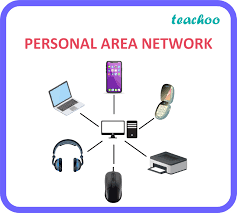
This is a computer network organised around a person. Personal area networks typically involve a mobile computer, a cell phone and/or a handheld computing device such as a PDA. You can use these networks to transfer files including email and calendar appointments, digital photos and music.
- Local area network(LAN)
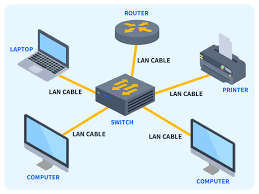 A local area network (LAN) is a network that connects computers and devices in a limited geographical area such as a home, school, computer laboratory, office building, or closely positioned group of buildings. Each computer or device on the network is a node.
- Metropolitan area network(MAN)
A metropolitan area network (MAN) is a large computer network that usually spans a city or a large campus.
- Wide area network(WAN)
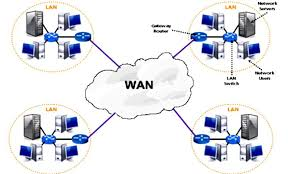
A wide area network (WAN) is a computer network that covers a large geographic area such as a city, or country, or spans even intercontinental distances, using a communications channel that combines many types of media such as telephone lines, cables, and airwaves. A WAN often uses transmission facilities provided by common carriers, such as telephone companies.
- Client-Server Network
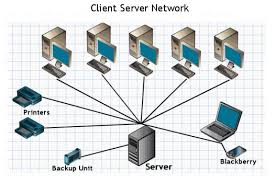
Client-server network is designed for end-users, called clients, to access resources such as files, songs, video collections, or some other service from a central computer called a server.
- Peer-To-Peer (P2p) Network
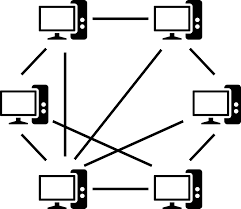
In its simplest form, a peer-to-peer (P2P) network is created when two or more PCs are connected and share resources without going through a separate server computer. A P2P network can be an ad hoc connection—a couple of computers connected via a Universal Serial Bus to transfer files.
EVALUATION:
- List and explain all the types of networks
CLASSWORK: As in evaluation
CONCLUSION: The teacher commends the students positively

First Term Data Processing Lesson Notes for Other Topics
Classification Of Computers
Explore lesson notes covering all topics.
History Of Computer
Explore lesson notes covering all topics.
Data And Information
Explore lesson notes covering all topics.
Digitalization Of Data
Explore lesson notes covering all topics.
History Of Computing
Explore lesson notes covering all topics.
Introduction to Computer Networking
Explore lesson notes covering all topics.
Internet I - Electronic Mail/ E-Mail Accounts
Explore lesson notes covering all topics.
Internet II - Internet & Search Engines
Explore lesson notes covering all topics.
Computer Virus
Explore lesson notes covering all topics.
Maintenance of Computer I
Explore lesson notes covering all topics.
Maintenance of Computer II
Explore lesson notes covering all topics.

Career Opportunities in Data Processing
Explore lesson notes covering all topics.
Types of Network Devices
Explore lesson notes covering all topics.

Lesson Notes for Other Classes

JSS1 Lesson Note
The complete lesson note to guide your studies.

JSS2 Lesson Note
The complete lesson note to guide your studies.

SS1 Lesson Note
The complete lesson note to guide your studies.

SS2 Lesson Note
The complete lesson note to guide your studies.