
Symptoms of Common Illnesses in the Community Basic 3 Social Studies Lesson Note
Download Lesson NoteTopic: Symptoms of Common Illnesses in the Community
- WHAT ARE SYMPTOMS?
Symptoms are signs that show someone is sick or not feeling well.
Simple definition: Symptoms are the things you notice when your body is telling you that something is wrong.
Types of symptoms:
- Visible symptoms – things you can see (like rash, swelling)
- Feeling symptoms – things the sick person feels (like pain, dizziness)
- Behavioral symptoms – changes in how someone acts (like not eating, sleeping too much)
Why symptoms are important:
- They help us know when someone is sick
- They help doctors know what illness someone has
- They tell us when to get medical help
- They help us take care of sick people
- SYMPTOMS OF MALARIA
Malaria is the most common illness in Nigeria.
MAIN SYMPTOMS OF MALARIA:
- FEVER

- High body temperature (feeling very hot)
- Body temperature goes up and down
- Person feels hot to touch
- May reach 39°C or higher
- SHIVERING AND CHILLS
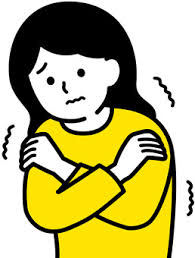
- Body shaking uncontrollably
- Feeling very cold even when it’s hot
- Teeth chattering
- Wrapping in blankets but still feeling cold
- HEADACHE

- Severe head pain
- Pain in forehead and back of head
- Feels like head is pounding
- Light may hurt the eyes
- BODY WEAKNESS

- Feeling very tired and weak
- Cannot do normal activities
- Wants to lie down all the time
- No energy to play or work
- VOMITING

- Throwing up food and liquid
- Stomach feels sick
- Cannot keep food down
- May vomit yellow or green liquid
- LOSS OF APPETITE
- Not wanting to eat
- Food doesn’t taste good
- Stomach feels full
- May feel sick when seeing food
Example: 8-year-old Kemi has high fever, is shivering under three blankets, has a bad headache, and vomited twice. Her mother knows these are malaria symptoms.
- SYMPTOMS OF COMMON COLD
Common cold spreads easily in schools and homes.
MAIN SYMPTOMS OF COMMON COLD:
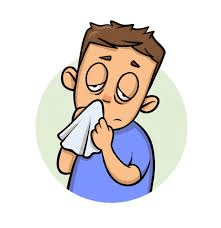
- RUNNY NOSE
`
- Clear liquid coming from nose
- Need to blow nose frequently
- Nose feels blocked
- May be yellow or green later
- SNEEZING

- Sudden loud sounds from nose
- Happens many times
- Spreads germs to others
- Cannot control it
- COUGH
- Making coughing sounds
- Dry cough or with mucus
- Throat feels scratchy
- Worse at night
- SORE THROAT
- Throat hurts when swallowing
- Feels rough and painful
- Difficulty eating
- Voice may sound hoarse
- MILD HEADACHE
- Light head pain
- Not as severe as malaria headache
- Comes and goes
- Better with rest
- TIREDNESS
- Feeling sleepy and weak
- Less energy than usual
- Want to rest more
- Not severe weakness
Example: Tolu started sneezing yesterday, now has runny nose and cough. His throat hurts when he swallows. These are cold symptoms.
- SYMPTOMS OF DIARRHEA
Diarrhea is common, especially during rainy season.
MAIN SYMPTOMS OF DIARRHEA:
- LOOSE WATERY STOOL
- Passing liquid waste instead of solid
- Going to toilet many times (3+ times per day)
- Cannot control bowel movements
- May be yellow, green, or brown
- STOMACH CRAMPS

- Sharp pain in belly
- Pain comes and goes
- Hurts before going to toilet
- Like squeezing pain
- NAUSEA
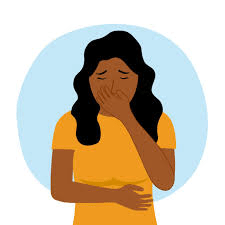
- Feeling like vomiting
- Stomach feels unsettled
- May actually vomit
- Cannot eat properly
- DEHYDRATION
- Loss of body water
- Dry mouth and lips
- Less urination
- Feeling dizzy
- WEAKNESS
- Feeling tired and weak
- Body loses water and nutrients
- Cannot do normal activities
- May faint if severe
Example: Baby Amaka has been passing watery stool 5 times today, has stomach cramps, and her lips look dry. These are diarrhea symptoms.
- SYMPTOMS OF TYPHOID FEVER
Typhoid fever is serious and needs medical attention.
MAIN SYMPTOMS OF TYPHOID FEVER:
- PROLONGED FEVER
- High fever for many days (1-2 weeks)
- Temperature stays high
- Doesn’t go down easily
- Usually 39-40°C
- SEVERE HEADACHE
- Very bad head pain
- Constant headache
- Worse than malaria headache
- May affect vision
- STOMACH PAIN
- Deep belly pain
- Pain in middle of stomach
- Constant dull ache
- Gets worse with time
- LOSS OF APPETITE
- Complete refusal to eat
- Food smells make person sick
- Weight loss
- Weakness from not eating
- ROSE-COLORED SPOTS
- Small red spots on chest and belly
- Flat, rose-colored rash
- May appear after 1 week
- Not everyone gets them
- CONSTIPATION OR DIARRHEA
- Difficulty passing stool or loose stool
- May alternate between both
- Stomach discomfort
- Bloated feeling
Example: Uncle Bola has had high fever for 8 days, severe headache, stomach pain, and doesn’t want to eat anything. The doctor suspects typhoid fever.
- SYMPTOMS OF OTHER COMMON ILLNESSES
- CHICKENPOX SYMPTOMS
- Red spots that become blisters
- Fever and headache
- Itchy skin all over body
- Tiredness
- MEASLES SYMPTOMS
- Red rash starting from face
- High fever
- Cough and runny nose
- Red, watery eyes
- ASTHMA SYMPTOMS
- Difficulty breathing
- Wheezing sounds when breathing
- Chest tightness
- Coughing, especially at night
- CONJUNCTIVITIS (APOLLO) SYMPTOMS
- Red, watery eyes
- Eyes stick together in morning
- Burning feeling in eyes
- Discharge from eyes
- WHEN TO SEEK MEDICAL HELP
EMERGENCY SYMPTOMS (NEED IMMEDIATE HELP):
- High fever that won’t go down
- Difficulty breathing
- Unconsciousness (cannot wake up)
- Severe dehydration (very dry mouth, no tears)
- Continuous vomiting for more than 24 hours
- Blood in stool or vomit
SYMPTOMS THAT NEED DOCTOR’S ATTENTION:
- Fever lasting more than 3 days
- Severe headache with stiff neck
- Persistent cough for more than 1 week
- Weight loss without trying
- Any symptom getting worse instead of better
- HELPING SOMEONE WITH SYMPTOMS
GENERAL CARE FOR SICK PEOPLE:
- Give plenty of clean water
- Let them rest in comfortable place
- Keep them away from others (if contagious)
- Don’t give medicines without doctor’s advice
- Watch symptoms carefully
- Tell adults immediately
WHAT NOT TO DO:
- Don’t ignore serious symptoms
- Don’t give adult medicines to children
- Don’t force sick person to eat if vomiting
- Don’t let sick children play with healthy children
- Don’t wait too long before seeking help
CLASS EXERCISES
- Fill in the blanks:
- Symptoms are _______ that show someone is sick
- Malaria causes high _______ and shivering
- Common cold causes _______ nose and sneezing
- Diarrhea involves passing _______ stool frequently
- True or False:
- Symptoms help doctors know what illness someone has: _____
- All illnesses have the same symptoms: _____
- High fever is a symptom of malaria: _____
- Runny nose is a symptom of diarrhea: _____
- Symptoms tell us when to get medical help: _____
- Match the illness to its main symptom:
- Malaria → High fever and shivering
- Common cold → _______
- Diarrhea → _______
- Typhoid fever → _______
- List 3 symptoms of malaria:
- List 3 symptoms of common cold:
- Choose the correct answer: Which symptom means someone might have malaria? a) Runny nose b) High fever and shivering c) Red eyes
What is the main symptom of diarrhea? a) Headache b) Cough c) Watery stool
How long does typhoid fever usually last? a) 1 day b) 1-2 weeks c) 1 month
- Circle the emergency symptoms: Mild headache, High fever that won’t go down, Runny nose, Difficulty breathing, Slight cough, Unconsciousness, Sneezing
- Complete these symptom descriptions:
- Malaria fever: High _______ with _______
- Cold symptoms: _______ nose and _______
- Diarrhea: _______ watery stool and stomach _______
- Typhoid: _______ fever for many _______
- Answer these questions:
- What are symptoms? _______
- Why are symptoms important? _______
- When should you call a doctor immediately? _______
- What should you do when someone has symptoms? _______
- Identify the illness: Based on symptoms, what illness might these people have?
- Kemi: High fever, shivering, headache, vomiting: _______
- Tolu: Runny nose, sneezing, cough, sore throat: _______
- Ada: Watery stool 6 times, stomach cramps: _______
- Emeka: High fever for 10 days, severe headache, stomach pain: _______
- Group symptoms by type: High fever, Runny nose, Watery stool, Headache, Shivering, Cough, Stomach cramps, Sneezing
Malaria symptoms: _______ Cold symptoms: _______ Diarrhea symptoms: _______
- Safety scenarios: What should you do if you see these symptoms?
- A child with very high fever who won’t wake up: _______
- Someone who has been vomiting for 2 days: _______
- A person with difficulty breathing: _______
Second Term Social Studies Lesson Notes for Other Topics

Resources Utilization
Explore lesson notes covering all topics.

Labour and Force
Explore lesson notes covering all topics.

Transport and Communication
Explore lesson notes covering all topics.

Gender Discrimination
Explore lesson notes covering all topics.

Group Conflict and Cooperation
Explore lesson notes covering all topics.

International Organizations
Explore lesson notes covering all topics.

Peace Education
Explore lesson notes covering all topics.

Concepts of Drug and Drug Abuse
Explore lesson notes covering all topics.

Synthetic and Naturally Occurring Drugs
Explore lesson notes covering all topics.
Prevention of Common Diseases
Explore lesson notes covering all topics.
Causes of Common Illness: Dysentery
Explore lesson notes covering all topics.

Common Illnesses in the Community
Explore lesson notes covering all topics.
Meaning of Illness
Explore lesson notes covering all topics.
Effects of Drug Abuse
Explore lesson notes covering all topics.

Ways of Knowing Someone who has Abused Drugs
Explore lesson notes covering all topics.
Lesson Notes for Other Classes

Basic 2 Lesson Note
The complete lesson note to guide your studies.

Basic 4 Lesson Note
The complete lesson note to guide your studies.

Basic 5 Lesson Note
The complete lesson note to guide your studies.

Basic 6 Lesson Note
The complete lesson note to guide your studies.

JSS1 Lesson Note
The complete lesson note to guide your studies.

JSS2 Lesson Note
The complete lesson note to guide your studies.