
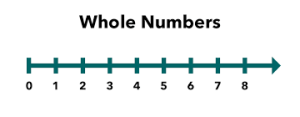
Whole Numbers Basic 5 Mathematics Lesson Note
Download Lesson NoteTopic: Whole Numbers
Behavioural Objectives:
By the end of the lesson, pupils should be able to:
- Count and write numbers in thousands and millions
- Use an abacus to form given numbers
- Identify the place value of digits in whole numbers and decimal numbers
- Compare and order whole numbers up to 1,000,000
- Round numbers to the nearest 10, 100, 1,000, or 10,000
- Apply rounding of large numbers to real life situations
- Solve quantitative reasoning problems related to place value and whole numbers
Keywords:
- Count
- Millions
- Abacus
- Place value
- Decimal
- Whole numbers
- Quantitative reasoning
Set Induction:
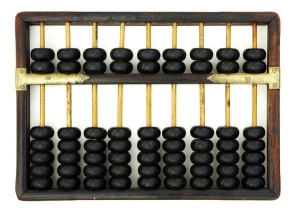
The teacher will begin by showing pupils an abacus and a number chart. The teacher will then ask them if they have ever seen or used these tools before, engaging them in a discussion about how numbers are used in daily activities like shopping or counting people.
Entry Behaviour:
Pupils are already familiar with basic counting and writing of numbers up to hundreds.
Learning Resources and Materials:
- Abacus
- Number charts
- Place value charts
- Flashcards with numbers
- Quantitative reasoning worksheets
Building Background/Connection to Prior Knowledge:
The teacher will ask the pupils how they count objects around them. The teacher will link their responses to counting larger quantities, such as money in denominations, and introduce the concept of thousands and millions.
Embedded Core Skills:
- Critical thinking
- Problem solving
- Mathematical reasoning
Learning Materials:
- Abacus
- Number charts
- Worksheets for place value and quantitative reasoning
Reference Books:
Lagos State Scheme of Work, Primary 5 Mathematics Textbook
Instructional Materials:
- Abacus
- Number charts
- Place value charts
- Flashcards with numbers
Content:
1. Counting and Writing of Numbers in Thousands and Millions
- Introduction to large numbers like thousands and millions
- Practice writing numbers in their ranges
2. Usage of Abacus and Number Charts
- How to use an abacus to represent numbers
- Reading and identifying numbers using a number chart
3. Place Value of Digits in Whole Numbers
- Explanation of place value in large numbers
- Identifying the value of each digit in whole numbers
4. Place Value of Digits in Decimal Numbers
- Writing of digits in decimal numbers
- Introduction to place value in decimal numbers
- Recognizing the value of each digit in decimal numbers
5. Quantitative Reasoning
- Solving problems related to place value and whole numbers
Explanation:
1. Count and Write Numbers in Thousands and Millions:
Understanding that numbers are grouped in thousands (e.g., 1,000, 10,000) and millions (e.g., 1,000,000).
Writing numbers in words and digits (e.g., 5,432 is written as five thousand four hundred thirty-two)
Recognizing and writing large numbers up to a million
Example 1: Write thirty-seven thousand in figures.
- Answer: Thirty-seven thousand three hundred fifty-nine
- Example 2: Count ten thousands. You have counted one hundred eight hundred ninety-one digits.
- Answer: 863,801
Example 3: Count by thousands from 2,000 to 10,000.
- Answer: 2000, 3000, 4000, 5000, 6000, 7000, 8000, 9000, 10000
Example 4: Write the number 2,341,789 in words.
- Answer: Two million three hundred forty-one thousand seven hundred eighty-nine
Example 5: Count by hundreds from 100 to 1000.
- Answer: 100, 200, 300, 400, 500, 600, 700, 800, 900, 1000
2. Use an Abacus to Form Given Numbers:
Placing beads on the abacus to represent numbers (units, tens, hundreds, thousands, etc.)
Example 1: Represent the number 2,341 on an abacus.
- Answer: 2 beads on thousands, 3 beads on hundreds, 4 beads on tens, and 1 bead on units
Example 2: Show the number 4,752 on an abacus.
- Answer: 4 beads on thousands, 7 beads on hundreds, 5 beads on tens, and 2 beads on units
Example 3: Order the number 1,236,543 on an abacus.
- Answer: 1 bead on millions, 2 beads on hundred thousands, 3 beads on ten thousands, 6 beads on thousands, 5 beads on hundreds, 4 beads on tens, 3 beads on units
Example 4: Represent the number 67,839 on an abacus.
- Answer: 6 beads on ten thousands, 7 beads on thousands, 8 beads on hundreds, 3 beads on tens, 9 beads on units
Example 5: Show the number 12,345 on an abacus.
- Answer: 1 bead on ten thousands, 2 beads on thousands, 3 beads on hundreds, 4 beads on tens, 5 beads on units
3. Identify the Place Value of Digits in Whole Numbers and Decimal Numbers:
Identifying place value in both whole numbers and decimals
Example 1: What is the place value of each digit in 5,432?
- Answer: 5 is in the thousands place
- Example 2: Identify the place value of 7 in 137,428
- Answer: 7 is in the thousands place
Example 3: What is the place value of 4 in 546,721?
- Answer: 4 is in the ten thousands place
Example 4: Identify the place value of 2 in 74,241.
- Answer: 2 is in the hundreds place
Example 5: What is the place value of 8 in 987,654?
- Answer: 8 is in the hundred thousands place
First Term Mathematics Lesson Notes for Other Topics
Subtraction Of Numbers
Explore lesson notes covering all topics.

Addition Of Numbers
Explore lesson notes covering all topics.

Addition Of Whole Numbers
Explore lesson notes covering all topics.
Equivalent Fractions
Explore lesson notes covering all topics.

Fractions
Explore lesson notes covering all topics.

Ordering Of Whole Numbers
Explore lesson notes covering all topics.

Place Value Of Numbers
Explore lesson notes covering all topics.

Counting Of Whole Numbers
Explore lesson notes covering all topics.
Whole Numbers (270-300) And Number Writing
Explore lesson notes covering all topics.

Fractions (3/4)
Explore lesson notes covering all topics.

Mixed Operations (Addition And Subtraction)
Explore lesson notes covering all topics.

Subtraction Of Two 2-Digit Numbers (Without Renaming)
Explore lesson notes covering all topics.

Addition Of Two 2-Digit Numbers
Explore lesson notes covering all topics.

Fractions (1/2 And 1/4)
Explore lesson notes covering all topics.

Place Value
Explore lesson notes covering all topics.

Lesson Notes for Other Classes

Basic 2 Lesson Note
The complete lesson note to guide your studies.
Basic 3 Lesson Note
The complete lesson note to guide your studies.

Basic 4 Lesson Note
The complete lesson note to guide your studies.

JSS1 Lesson Note
The complete lesson note to guide your studies.
JSS2 Lesson Note
The complete lesson note to guide your studies.

JSS3 Lesson Note
The complete lesson note to guide your studies.