
Number Line Basic 5 Mathematics Lesson Note
Download Lesson NoteTopic: Number Line
Learning Objectives: pupils should be able to
- Add and subtract numbers using number lines
- Solve quantitative Reasoning problems related to addition and subtraction of integers using number lines
- Use reading of thermometer and height of a building to solve problems and measuring the weight of a building
Learning Activities:
- Pupils read aloud in turns and say “+” 2% +7 on sticky note and place them on the floor in the classroom in sequence
- Pupils in small groups, use the number line to add and subtract place a sequence like numbers 3,4 pupils stand a sample addition or subtraction each cards from students (eg. 1 + 2 = 3, or 5 = 4 + 1, or 1 + 1 = 2) have to guess about the movement of the volunteers according to the flash card picked
- Pupils in groups use their to represent numbers on the sp which then their represent the number line
Embedded Core Skills
- Critical thinking and problem solving skills
- Communication and Collaboration
- Leadership skills and Personal Development
Learning Resources
- Counting paper
- Number line
- Sicky notes
- Charts
- Number line, thermometers, measuring tapes, rulers, pictures of real-life situations that involve addition and subtraction in a similar way and looking at a shopping cart, a receipt
Content

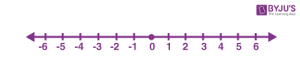
A number line is a visual representation of the set of real numbers, typically arranged horizontally with zero placed in the middle. It can be used to help understand concepts such as addition, subtraction, and the order of numbers. Mathematical operations such as addition and subtraction can be represented by moving along the number line.
In mathematics, a number line is often used to help visualize the concept of addition. When adding two numbers, the number line can be used to represent the first number as a point on the line, and the second number as the distance to move from that point.
For example, if we want to add 3 and 4, we would start at the point on the number line that represents 3, and then move 4 units to the right. The final point would represent the sum of 3 and 4, which is 7.
This can be visualized as starting on the number 3 and then moving 4 units to the right and land on 7.
Another way to think about it is to imagine a point on the number line as a starting point and the other number we want to add is the distance we need to travel. The final point is where we will land if we move that distance from the starting point.
This helps students understand the concept of addition and how it relates to the real numbers.
Here is an example of a number line that can be used to calculate 8 + 7:
0 1 2 3 4 5 6 7 8 9 10 11 12 13 14 15 16 17 18 19
We can carry by locating the point on the number line that represents 8, which is the number on the number line. Then, we can move 7 steps to the right to find the sum of 8 + 7, which is 15.
We can see this as starting at 8, then moving 7 steps to the right and land on 15.
It’s important to note that in this example, the numbers on the number line are not necessarily the only numbers that can be added to; you can add any real number to 8 and move along the number line accordingly.
Here is an example of a number line that can be used to calculate 8 + 5 (incorrectly):
1 4 5 6 7 8 |-|-|-|-|-|
Real life problems involving addition and subtraction of numbers with number line like reading the thermometer, etc
- Reading a thermometer: Suppose you have a thermometer that reads 15 degrees and you want to determine the temperature. The position of the mercury in the digital reading on the thermometer can be represented as a point on a number line, and the temperature can be determined by reading the value at that point. If the thermometer reads 15 degrees, then the temperature is 15 degrees. If you look and see that the temperature has risen to 22 degrees, you know that the number line to visualize that the temperature is +7 degrees.
- Measuring the height of a building: If you want to measure the height of a building, you could use a number line to help you determine the building’s height. You would start at the base of the building, which you can call 0, and then measure upwards. As you measure higher, the distance you have traveled can be represented as a point on the number line. If you measure 50 meters up, then the height of the building is 50 meters, which can be represented as the point 50 on the number line.
- Using a recipe: When you are making a cake and you need a number line to help you keep track of the cups of items you need to add. If a recipe calls for 2 cups of flour and 3 cups of sugar, then you need a total of 5 cups. You could help you keep track of how much you are spending and make sure you don’t exceed your budget.
- Shopping: When you are shopping, you can use a number line to help you keep track of how much money you are spending. If you have $20 and you want to buy a shirt that costs $15, you can represent this as starting at $20 and moving $15 to the left, which would leave you with $5 left in your pocket. This would help you keep track of how much you still have to spend and how much you have spent so far.
- Time management: When managing your time, you may use a number line to help you visualize how much time you have spent on a task and what the next task you spend on each task. This would help you keep track of how much time you have spent and how much time you have left to complete your tasks.
- Distance: If you want to calculate how far it is, you may use a number line to help you determine how much gas is in the tank. You could start at zero, and add the amount of gas you put in, or see how much gas you have to put in.
Importance of Number line
- It is used for easy addition and subtraction operations
- It helps in the learning of addition and subtraction of whole numbers
- It helps in visualizing mathematical operations such as addition and subtraction
- The number line provides a good understanding of the relationship between numbers
- It helps students understand the concepts of positive and negative numbers
- It is used to represent decimal numbers and fractions
- It is used in solving problems in various fields such as in measurement, time management and budgeting
- It helps in perform comparison between different sets of measurement
- It is useful in trading, business and accounting
Second Term Mathematics Lesson Notes for Other Topics

Money
Explore lesson notes covering all topics.

Shopping
Explore lesson notes covering all topics.

Open Sentences
Explore lesson notes covering all topics.

Division Of Numbers
Explore lesson notes covering all topics.
Multiplication Of Three 1-Digit Numbers
Explore lesson notes covering all topics.
Multiplication Of Numbers
Explore lesson notes covering all topics.
Addition Of Fractions With Same Denominators
Explore lesson notes covering all topics.

Multiplication Of 2-Digit Numbers
Explore lesson notes covering all topics.
Introduction To Multiplication
Explore lesson notes covering all topics.
Open Sentences
Explore lesson notes covering all topics.

Odd And Even Numbers
Explore lesson notes covering all topics.
Subtraction Of Two 3-Digit Numbers
Explore lesson notes covering all topics.
Addition Of Two 3-Digit Numbers
Explore lesson notes covering all topics.
Subtraction With Regrouping
Explore lesson notes covering all topics.

Addition Of Two 2-Digit Numbers
Explore lesson notes covering all topics.

Lesson Notes for Other Classes

Basic 2 Lesson Note
The complete lesson note to guide your studies.
Basic 3 Lesson Note
The complete lesson note to guide your studies.

Basic 4 Lesson Note
The complete lesson note to guide your studies.

JSS1 Lesson Note
The complete lesson note to guide your studies.
JSS2 Lesson Note
The complete lesson note to guide your studies.

JSS3 Lesson Note
The complete lesson note to guide your studies.