
Fractions (1/2 And 1/4) Basic 2 Mathematics Lesson Note
Download Lesson NoteTopic: Fractions (1/2 And 1/4)
Learning Objectives
By the end of this week, pupils should be able to:
- Count and identify numbers from 1-370
- Write numbers 350-370 and 1-370 in numerals and words
- Understand the meaning of fractions (1/2 and 1/4)
- Divide collections of objects into halves and quarters
- Find 1/2 and 1/4 of given numbers of objects
- Read and write fractions correctly
Lesson Content
Day 1: Counting to 370
New Number Range:
- Practice counting from 1-370
- Focus on numbers 350-370: 350, 351, 352… 370
- Learn to read and write these numbers
- Practice both forward and reverse counting
Day 2-3: Understanding Fractions
What are Fractions? Fractions are parts of a whole thing or group of things.
Half (1/2):
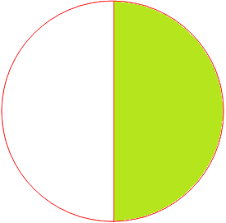
- When we divide something into 2 equal parts
- Each part is called “one half”
- We write it as 1/2
- Both parts must be exactly the same size
Quarter (1/4):
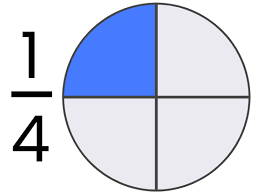
- When we divide something into 4 equal parts
- Each part is called “one quarter”
- We write it as 1/4
- All four parts must be exactly the same size
Day 4: Fractions with Objects
Finding 1/2 of Objects:
Example: 1/2 of 8 eggs
- Divide 8 eggs into 2 equal groups
- 8 ÷ 2 = 4
- So 1/2 of 8 = 4 eggs
Example: 1/2 of 12 balls
- Divide 12 balls into 2 equal groups
- 12 ÷ 2 = 6
- So 1/2 of 12 = 6 balls
Finding 1/4 of Objects:
Example: 1/4 of 8 oranges
- Divide 8 oranges into 4 equal groups
- 8 ÷ 4 = 2
- So 1/4 of 8 = 2 oranges
Day 5: Practice and Application
More Examples:
- 1/2 of 10 pencils = 5 pencils
- 1/2 of 16 sweets = 8 sweets
- 1/4 of 12 books = 3 books
- 1/4 of 16 toys = 4 toys
Examples in Class
Visual Examples with Shapes:
Circle divided in half:
Rectangle divided into quarters:

Real-Life Examples:
Sharing Food:
- “Mom bought 8 apples. She gives half to you and half to your sister.”
- 1/2 of 8 apples = 4 apples for each child
Classroom Supplies:
- “We have 12 colored pencils. We put 1/4 in each corner of the table.”
- 1/4 of 12 = 3 pencils in each corner
Collection Examples:
- 1/2 of 6 oranges = 3 oranges
- 1/2 of 14 marbles = 7 marbles
- 1/4 of 20 buttons = 5 buttons
- 1/4 of 16 stickers = 4 stickers
Exercises
Exercise 1: Number Practice
Write these numbers:
- Three hundred and fifty-five = ___
- Three hundred and sixty-eight = ___
- 352 in words = ___
- 367 in words = ___
Exercise 2: Understanding Fractions
- Draw a circle and divide it into 2 equal parts. Color 1/2.
- Draw a square and divide it into 4 equal parts. Color 1/4.
- What does 1/2 mean? ___
- What does 1/4 mean? ___
Exercise 3: Finding 1/2
Find half of these:
- 1/2 of 8 eggs = ___ eggs
- 1/2 of 10 oranges = ___ oranges
- 1/2 of 12 balls = ___ balls
- 1/2 of 16 pencils = ___ pencils
- 1/2 of 6 books = ___ books
Exercise 4: Finding 1/4
Find one quarter of these:
- 1/4 of 8 boxes = ___ boxes
- 1/4 of 12 sweets = ___ sweets
- 1/4 of 16 toys = ___ toys
- 1/4 of 20 marbles = ___ marbles
Exercise 5: Mixed Practice
- 1/2 of 14 = ___
- 1/4 of 12 = ___
- 1/2 of 18 = ___
- 1/4 of 16 = ___
Exercise 6: Word Problems
- Mary has 10 stickers. She gives half to her friend. How many stickers does she give away?
- A box contains 16 chocolates. If we eat 1/4 of them, how many chocolates do we eat?
- There are 12 children in a group. Half of them are boys. How many boys are there?
- A pizza is cut into 8 equal pieces. John eats 1/4 of the pizza. How many pieces does he eat?
Fun Activities
- Fraction Art: Use paper plates, circles, and squares to make fraction art
- Sharing Game: Use real objects like blocks or sweets to practice sharing equally
- Fraction Hunt: Find things that can be divided into halves and quarters around the classroom
Homework
- Practice finding 1/2 and 1/4 of different numbers at home
- Help parents divide food or items equally
- Draw 5 shapes and divide them into halves and quarters
Assessment
- Can the child count to 370 accurately?
- Do they understand what fractions mean?
- Can they find 1/2 and 1/4 of given collections?
- Can they divide objects into equal parts?
- Do they understand that all parts must be equal in fractions?
First Term Mathematics Lesson Notes for Other Topics
Subtraction Of Numbers
Explore lesson notes covering all topics.

Addition Of Numbers
Explore lesson notes covering all topics.

Addition Of Whole Numbers
Explore lesson notes covering all topics.
Equivalent Fractions
Explore lesson notes covering all topics.

Fractions
Explore lesson notes covering all topics.

Ordering Of Whole Numbers
Explore lesson notes covering all topics.

Place Value Of Numbers
Explore lesson notes covering all topics.

Counting Of Whole Numbers
Explore lesson notes covering all topics.
Whole Numbers (270-300) And Number Writing
Explore lesson notes covering all topics.

Fractions (3/4)
Explore lesson notes covering all topics.

Mixed Operations (Addition And Subtraction)
Explore lesson notes covering all topics.

Subtraction Of Two 2-Digit Numbers (Without Renaming)
Explore lesson notes covering all topics.

Addition Of Two 2-Digit Numbers
Explore lesson notes covering all topics.

Place Value
Explore lesson notes covering all topics.

Ordering Of Numbers Using Symbols
Explore lesson notes covering all topics.

Lesson Notes for Other Classes
Basic 3 Lesson Note
The complete lesson note to guide your studies.

Basic 4 Lesson Note
The complete lesson note to guide your studies.
Basic 5 Lesson Note
The complete lesson note to guide your studies.

JSS1 Lesson Note
The complete lesson note to guide your studies.
JSS2 Lesson Note
The complete lesson note to guide your studies.

JSS3 Lesson Note
The complete lesson note to guide your studies.